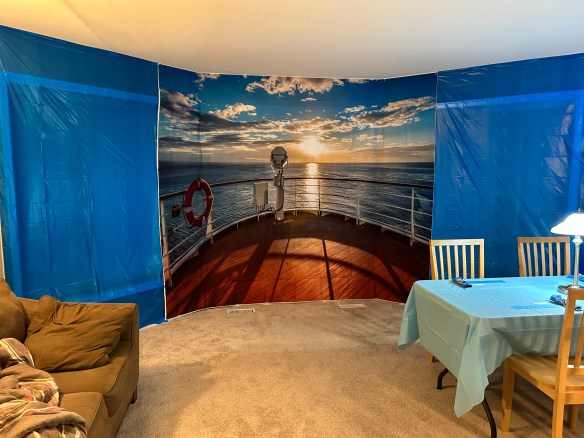
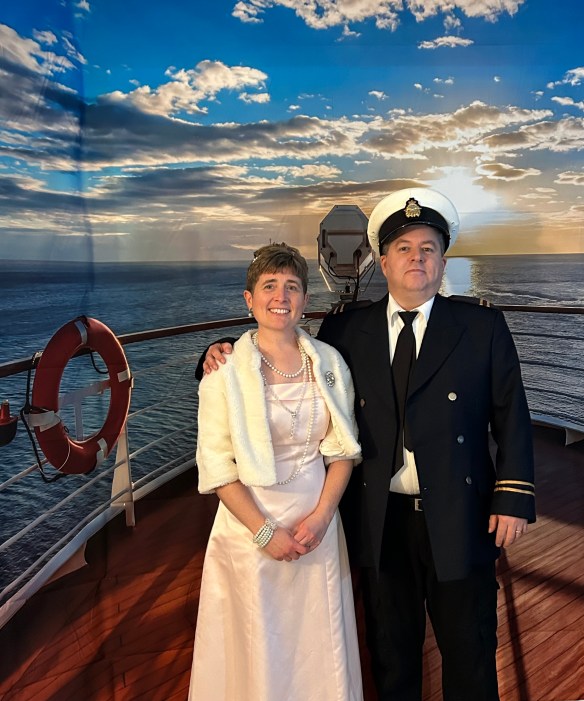
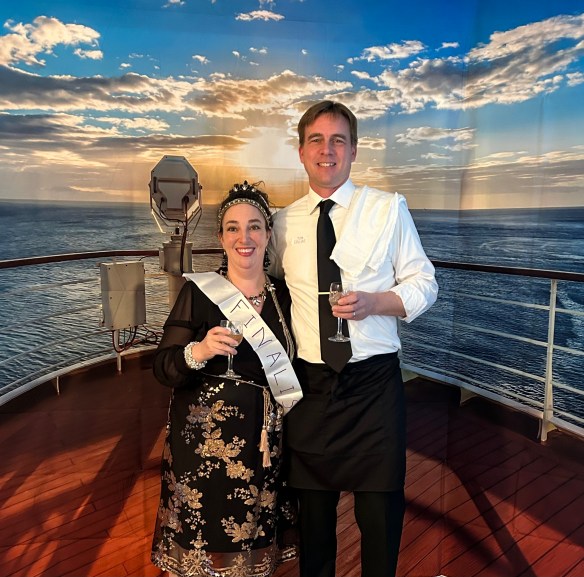
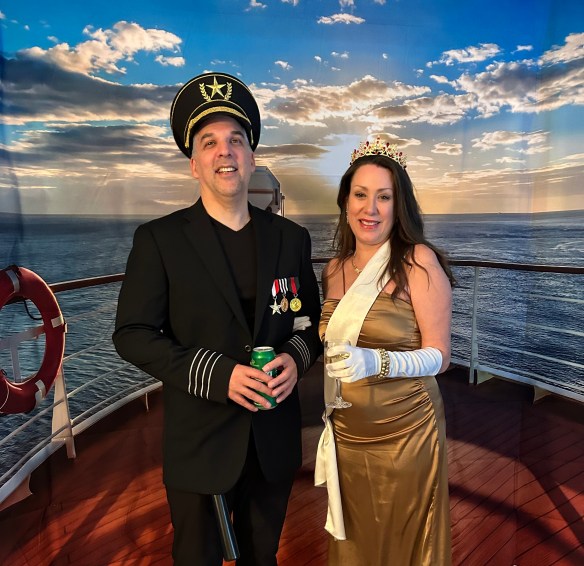
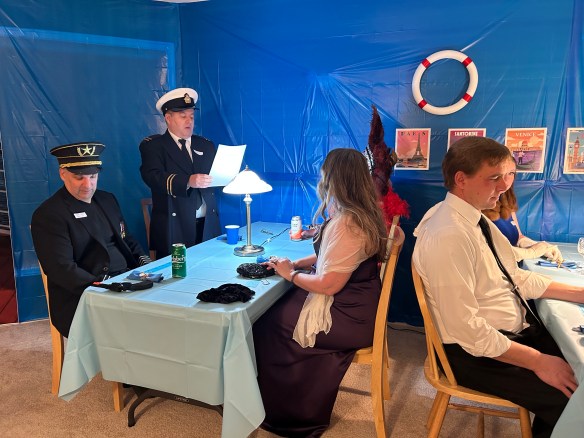
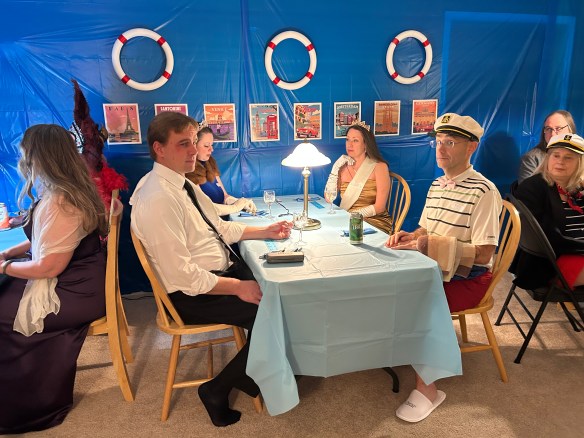
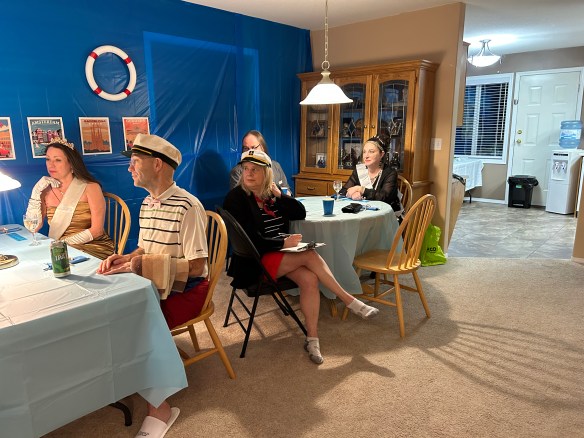
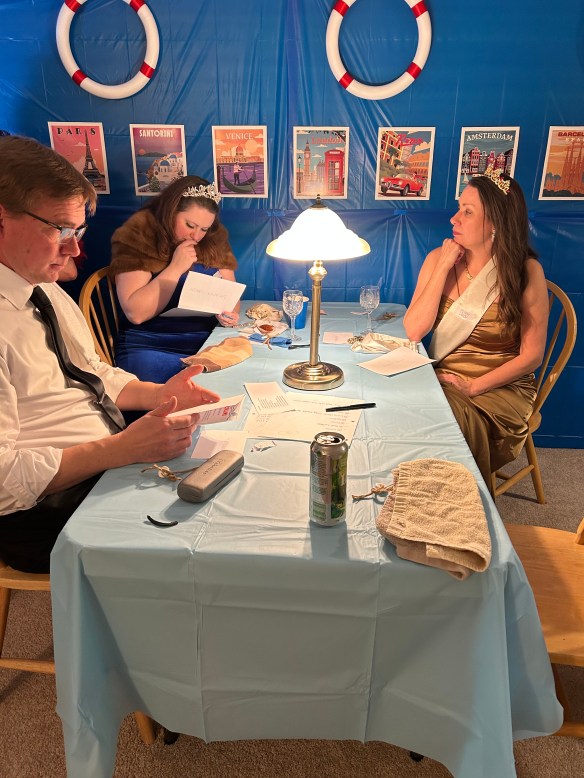
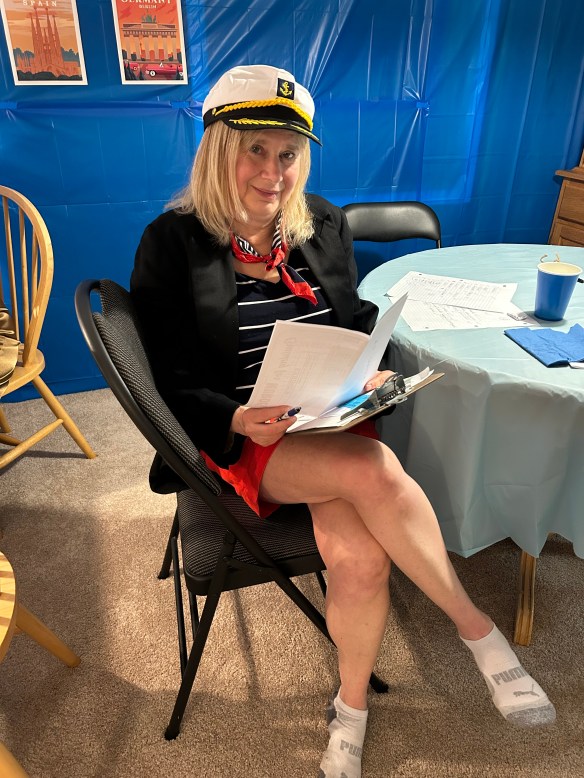
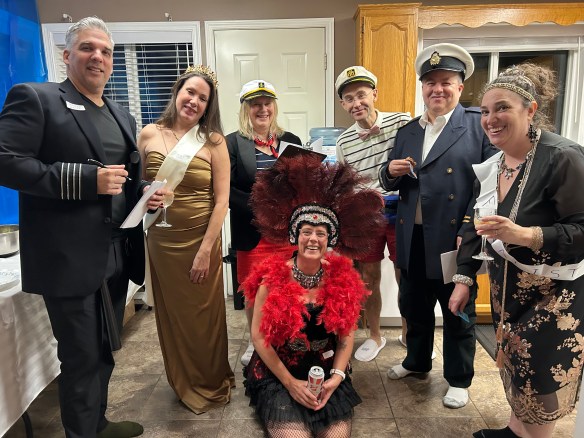
We had a murder at sea this year! Passengers and crew of the Mystery of the Seas gathered at the captain’s cocktail reception for a night of romance and intrigue.
I’m so thankful to have a group of friends who really get into the spirit of these parties. The quality of costumes was top notch, as always, although first-timers Tim and Mona almost went to the wrong house—that would’ve been hard to live down.
The story didn’t specify where we were sailing, so I opted to pretend we were cruising the Greek isles. That made it easier to focus the buffet (I love Greek food), the games, and the decor.
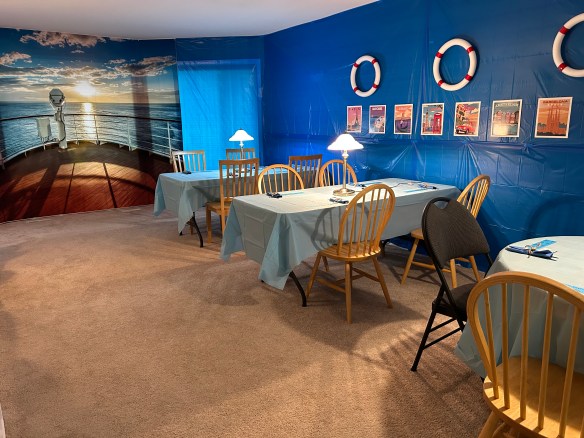
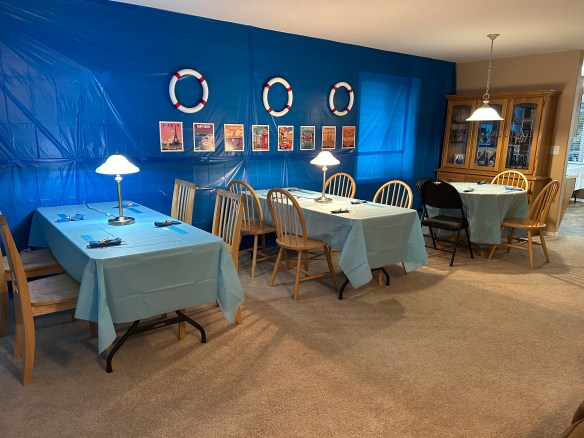
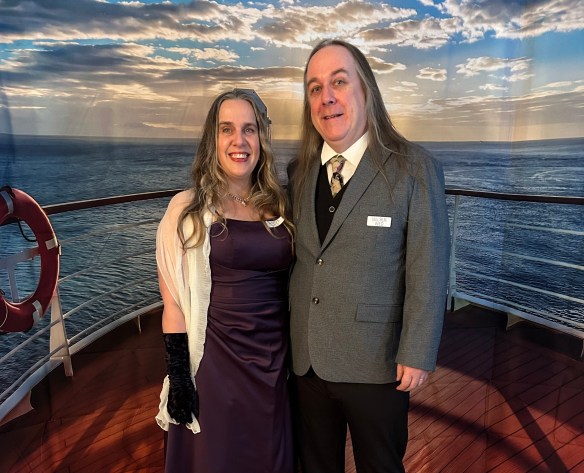
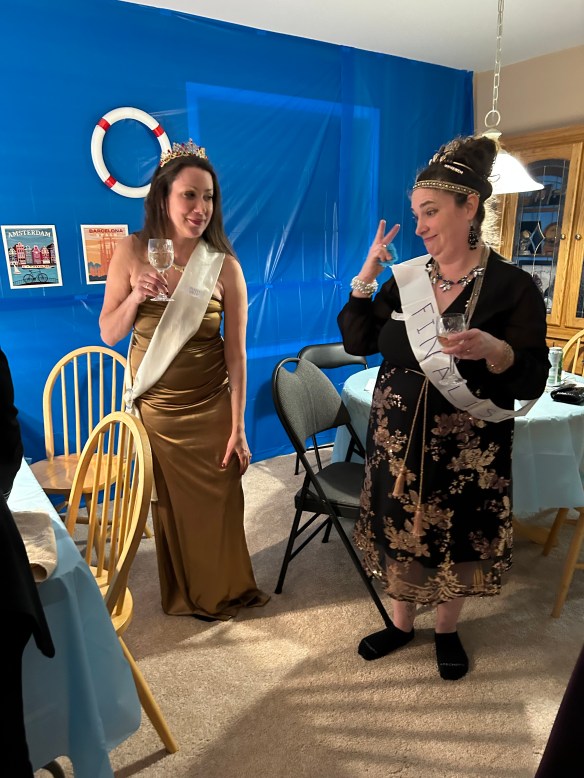
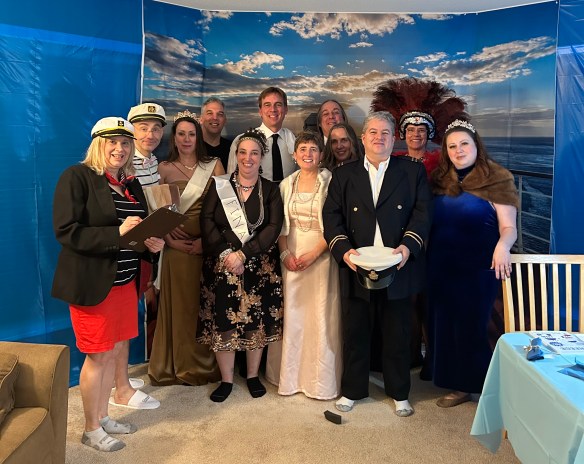
Speaking of decor…the photo backdrop was amazing! It really looked like we were standing on the bow of a ship. And I’ve said it before but I’ll say it again: those plastic tablecloths are a super cheap yet effective way to transform a room.
A fun night!
The photo backdrop was super impressiveI hung a few homemade life preservers and some cheap travel postersThe full setupVery Greek!One of the passengers (a beauty pageant contestant) and the ship’s purserChris as the captain and me as his (estranged) wife. I love, love, love this photo.Another pageant contestant and the head bartenderThese two were supposedly celebrating their 10th anniversaryThe port authority officer and another pageant contestant. Can you imagine knocking on the wrong door dressed like that?Chris reading the introduction that set the rules for the eveningThe purser character was written more like a cruise director…she was in charge of all ship activitiesA nice shot of the full cast. We had to rush to get it before Brayden went out for the night…too bad we weren’t centered in front of the backdrop!
Once again, I did all my real-time blogging on Facebook. Here’s the collection of posts for posterity:
June 15 – ATHENS, GREECE
Welcome to our latest adventure: a cruise of Greece and Turkey. I’m a huge history buff but have never been to Athens or the Aegean area before, so this is awesome.
Naturally, we started with the Acropolis, where the Parthenon has stood for close to 2,500 years. It’s been damaged partly by time, but mostly by a Venetian siege in the late 17th century and the pillaging of a British lord in the early 19th century. Restoration work is ongoing. The place does look amazing all lit up at night!
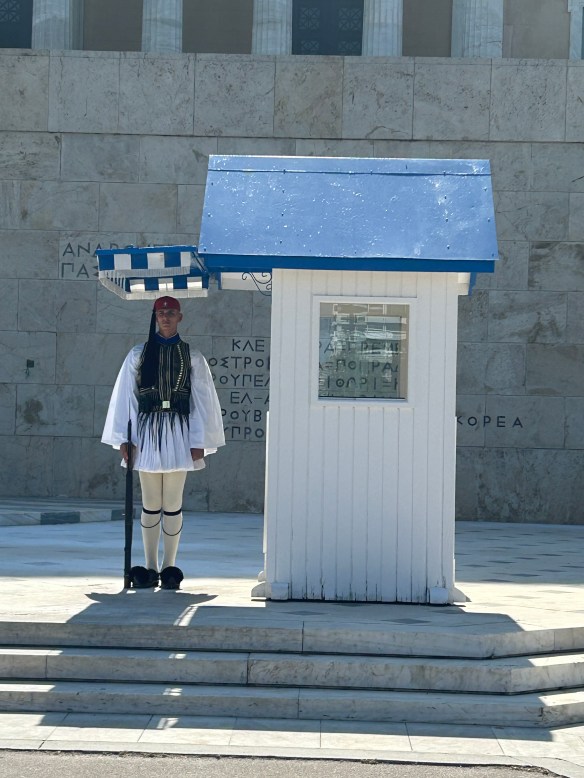
We also made our way to the former royal palace turned Greek Parliament. The Evzones in traditional uniform guard the Tomb of the Unknown Soldier just in front of the building. They perform a ceremonial changing of the guard each hour; we caught a few minutes of it.
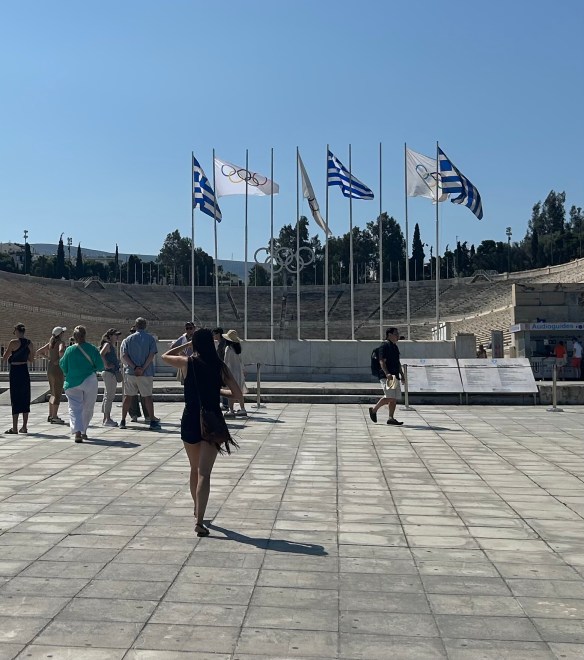
Our final stop was the Panathenaic Stadium. This is where the Olympic flame gets handed over to the host nation. Fun fact: it’s the only stadium in the world built entirely of marble.
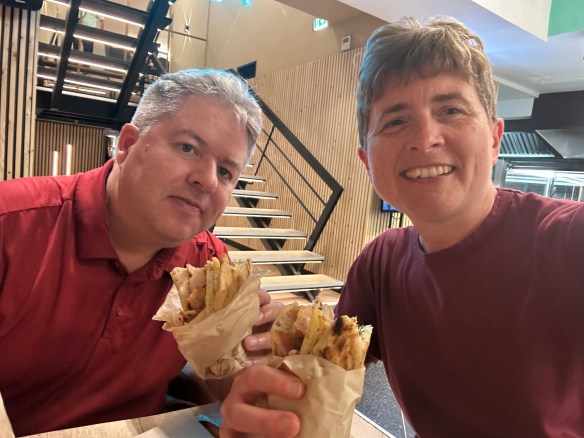
I love, love, love the food (and the prices) here in Athens! We have seriously never had a bad meal in Greece, and we’re coming in way under my food budget.
Tomorrow we board our ship!
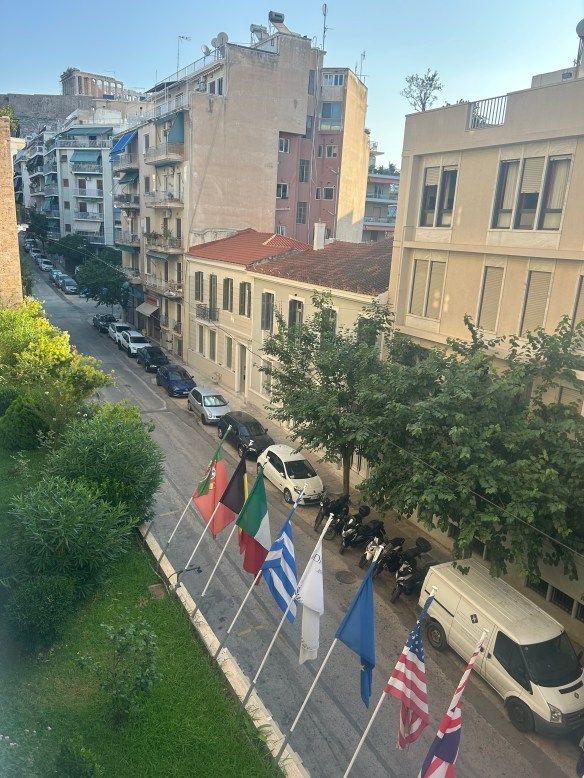
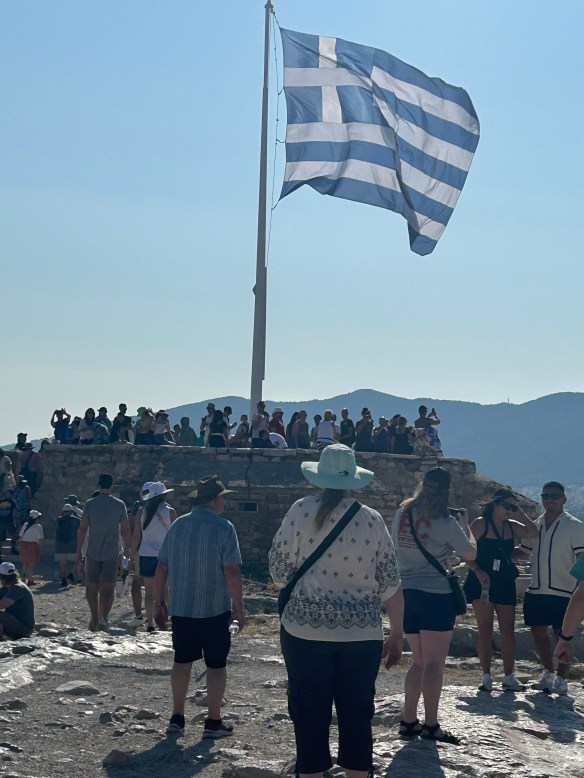
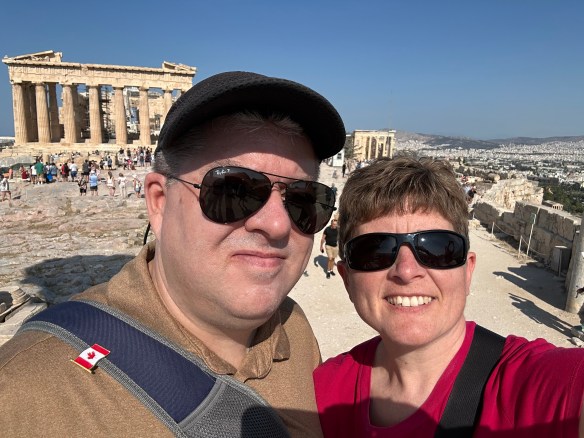
We can see the Parthenon from our hotel balconyIn front of the ParthenonIn 1941, two teenage boys scaled the Acropolis and replaced the Nazi flag with a Greek flag in one of the first acts of resistanceStanding atop the AcropolisGuarding the Tomb of the Unknown SoldierThe Panathenaic Stadium, where the Olympic torch gets handed to the host nationLove the food!Gorgeous lights of the Acropolis
June 16 – ATHENS
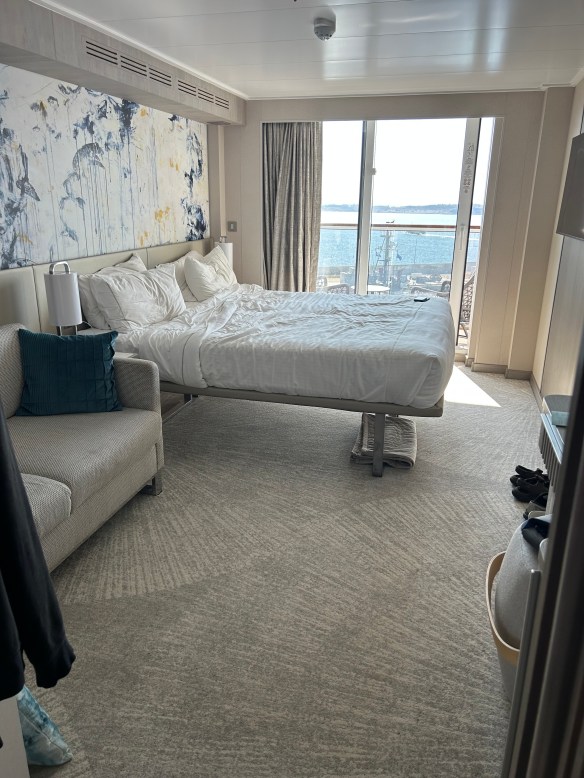
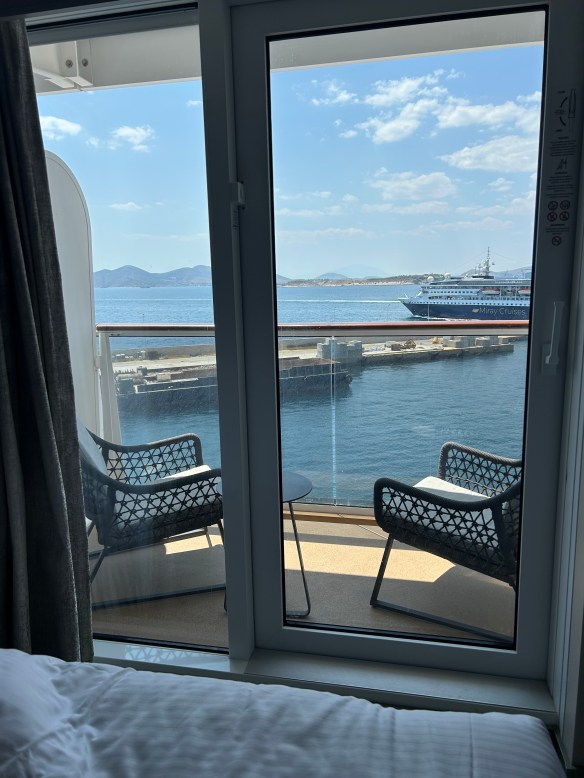
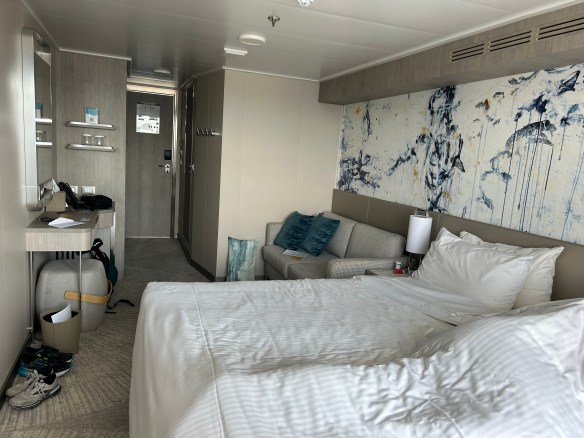
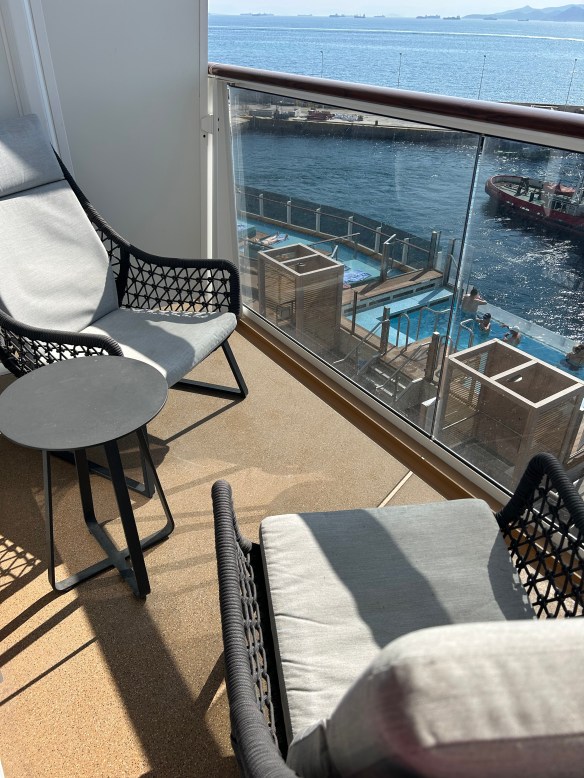
I haven’t seen too much of the ship yet, but the staterooms certainly are beautiful (padded balcony chairs…what a luxury!) Our cabin seems incredibly spacious, but that may just be because a) we’re minimalist packers and b) we’re used to squeezing four people in a room.
We have reservations at the specialty Italian restaurant tonight, but Chris has a tender tummy after a bout of food poisoning last night (shortly after I raved about how we’ve never had a bad meal in Greece). So we won’t be getting our money’s worth, but I’ll do my best!
Getting ready to sail…
So much space!Padded deck chairs are a nice touch. A bit of a strange view, as we overlook the ship’s infinity pools two decks down.
June 17 – METEORA, GREECE
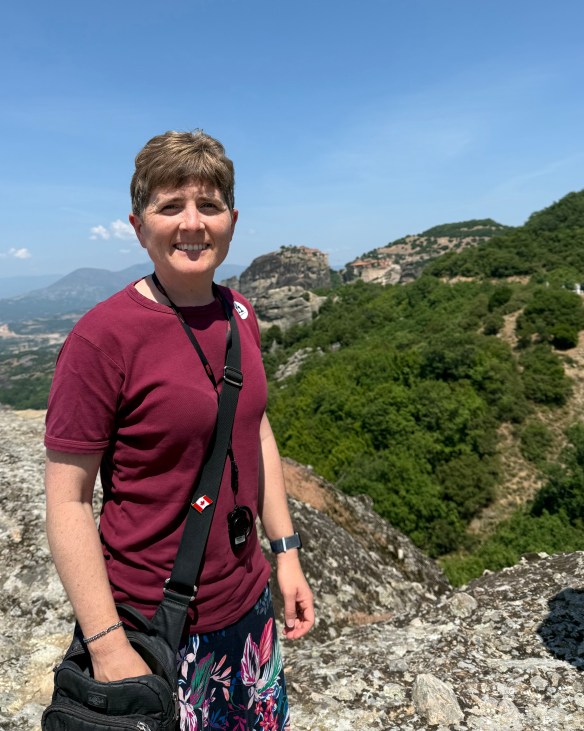
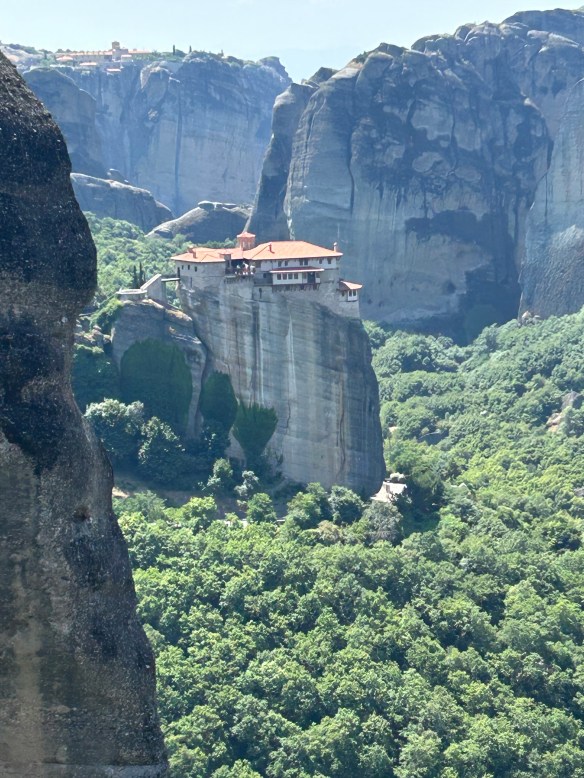
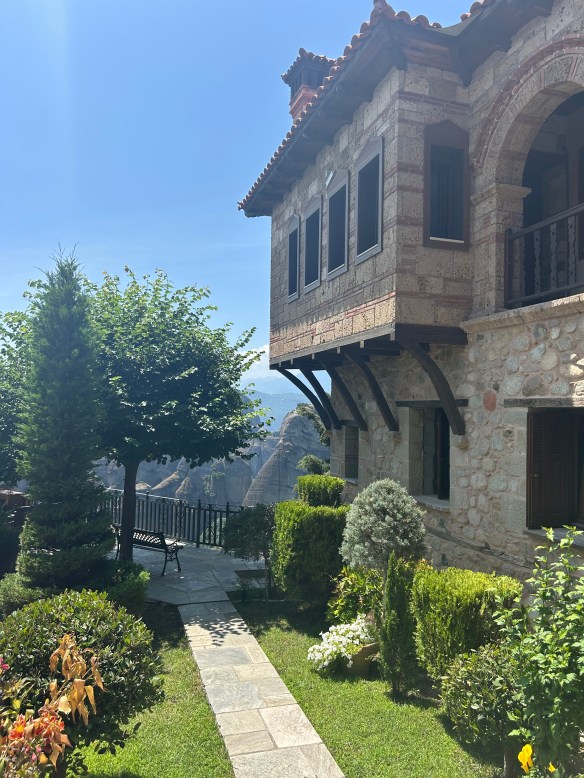
Back in the 1300s, a group of monks wanted an isolated place to hide from waves of invading Turks, so they built monasteries high on the rocks of Meteora. It would have been hard to find a more inaccessible location: the only way to get people, building materials, or anything else up to the top was via removable ladders or hoisting ropes. Today there are stone steps, but you still have to work at it. We toured a couple of the monasteries and admired the spectacular views.
Our first Turkish port tomorrow!
June 18 – EPHESUS, TURKEY
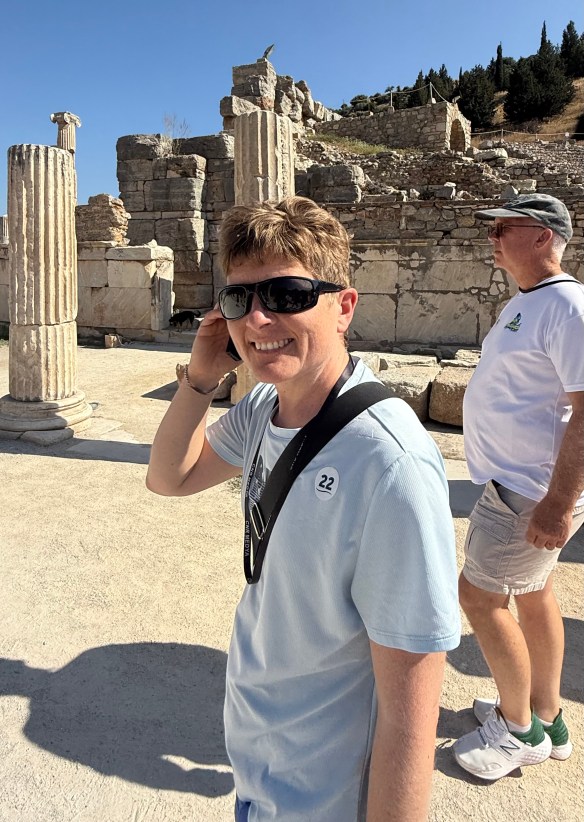
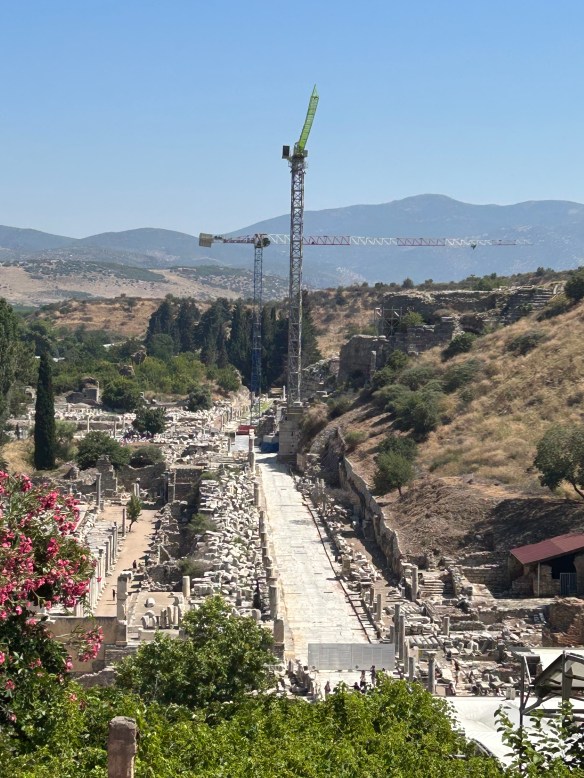
Ephesus is one of the largest archaeological sites in the eastern Mediterranean. The ancient city in present-day Turkey came to prominence under the Roman Empire as the capital of Asia Minor. (Now I’ve stood on every continent except Antarctica—so cool!)
The Temple of Artemis, one of the Seven Wonders of the Ancient World, once stood here. The Gospel of John was written here. Cleopatra briefly lived here. The significance of this place just goes on and on.
It was hot and there were plenty of people, but we were there early and our guide did a great job avoiding the worst of the crowds. By the time we finished, the buses were literally lined up for miles just waiting to get into the parking lot. (!)
Overall, I actually liked Ephesus better than Pompeii, which is really saying something.
In other news…Chris finally had a few bites last night after two days of eating absolutely nothing, so things are looking up there.
Tomorrow is the port I’ve been looking forward to most: Istanbul!
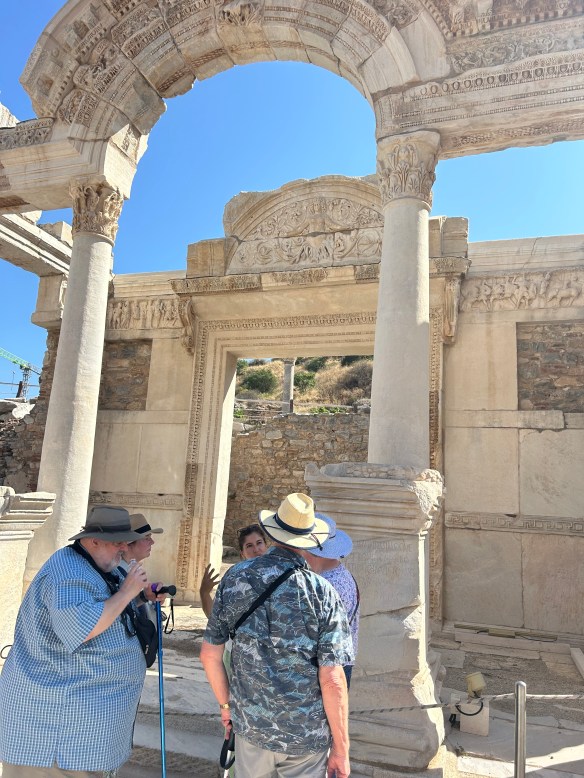
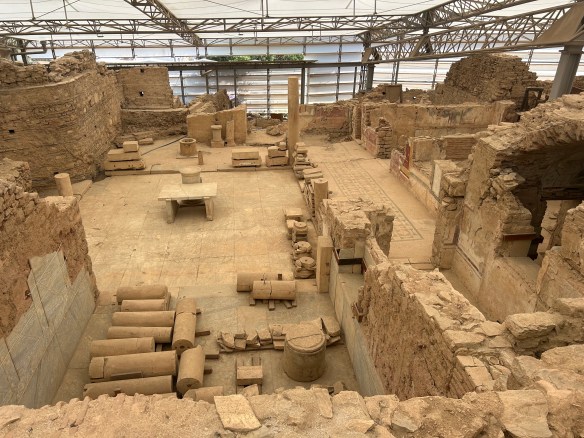
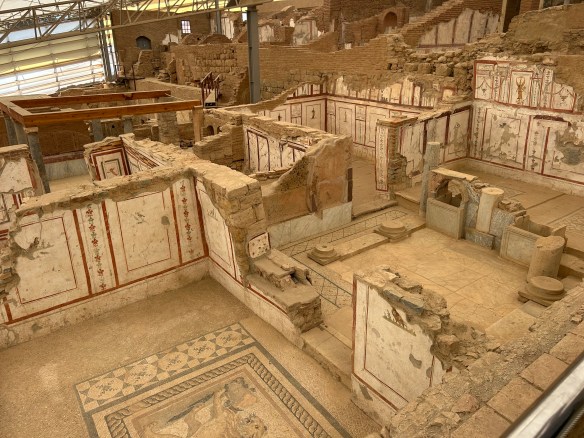
The Temple of Hadrian dates from the second century. Note the Medusa head carved over the top of the inner door–this was believed to ward off evil.The Terrace Houses are six luxury Roman residences featuring mosaics on the floor and frescos on the walls. The oldest structure dates to the first century BC.Terrace HousesMore frescos and mosaics in the Terrace HousesLooking over the commercial agoraThe Library of Celsus once held 12,000 scrolls. The building faces east so that the reading rooms could make best use of the morning light.
June 19 – ISTANBUL, TURKEY
The only city in the world that straddles two continents, Istanbul has a long history as the capital of the Roman, Byzantine, and Ottoman empires. It’s been on my bucket list for a long time, and I’m so stoked to be here!
A brief overview: Founded as Byzantium in 656 BC, the city was renamed Constantinople in 330 AD and became the capital of the Roman Empire. When the western part of the empire collapsed in 476, Constantinople remained the capital of the eastern part (AKA the Byzantine Empire). Then in 1453, Sultan Mehmed II conquered the city and declared it the capital of the Ottoman Empire. The name was officially changed to Istanbul in 1930 when the Republic of Turkey was formed.
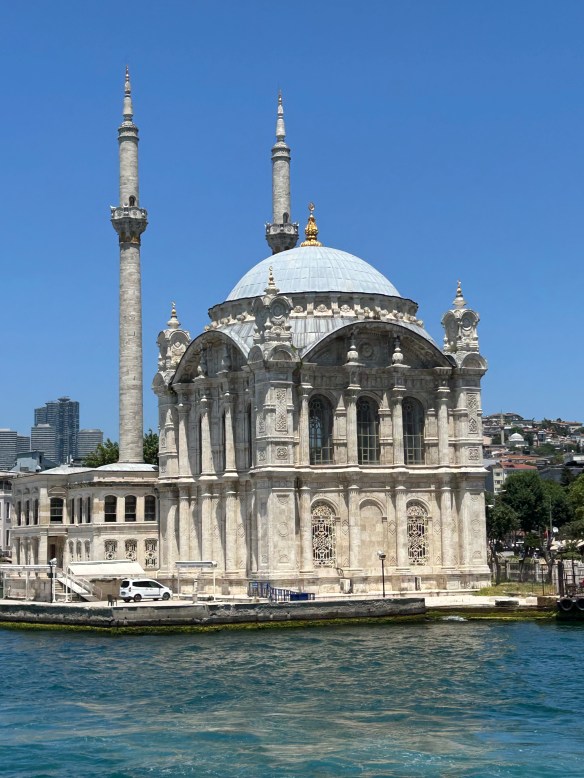
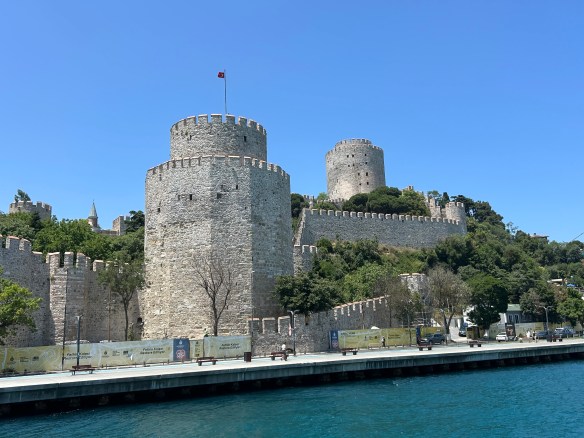
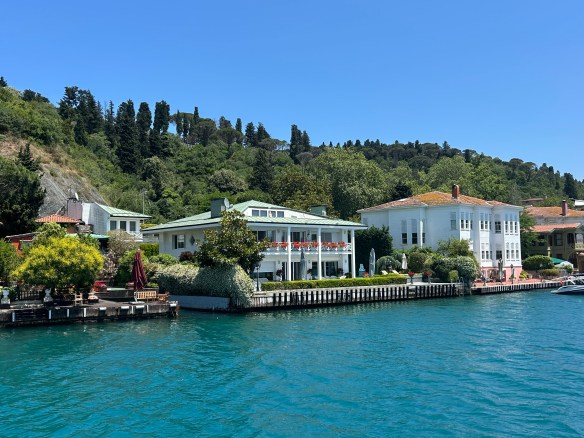
The Bosphorus Strait connects the Sea of Marmara with the Black Sea and divides the city between Europe and Asia. We took a day cruise along its shores to see some very cool highlights.
The ship is in port overnight, so we get another full day to explore tomorrow!
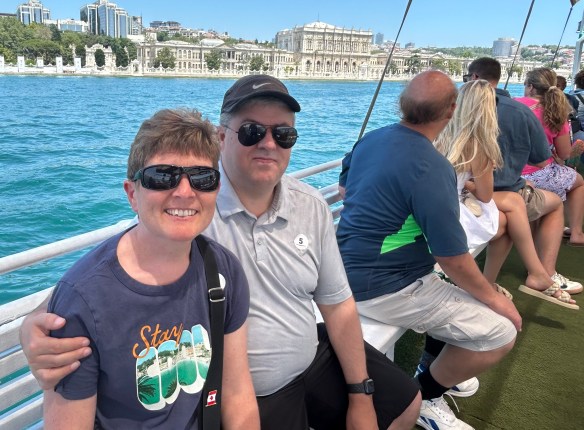
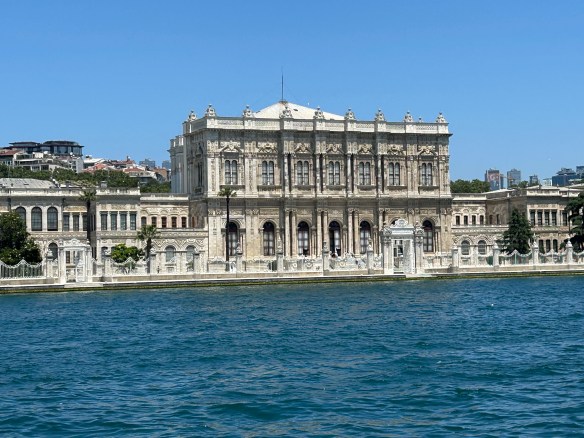
Near Dolmabahce Palace, home to six sultans from 1856 to 1924European-style Dolmabahce PalaceOne of two bridges that connect the continents. You have to pay to go from Europe to Asia but not the other way.A mosque on the European sideA military fortress built by Mehmet II in the 15th century. He was planning his conquest and wanted to guard against enemy help coming from the Black Sea.Some beautiful homes on the Asian side
June 20 – ISTANBUL, TURKEY
While Turkey is officially a secular state, 99% of the population is Muslim, and the call to prayer echoes across Istanbul five times a day. I heard it at 4:30 this morning and couldn’t get back to sleep, but seize the day, right?
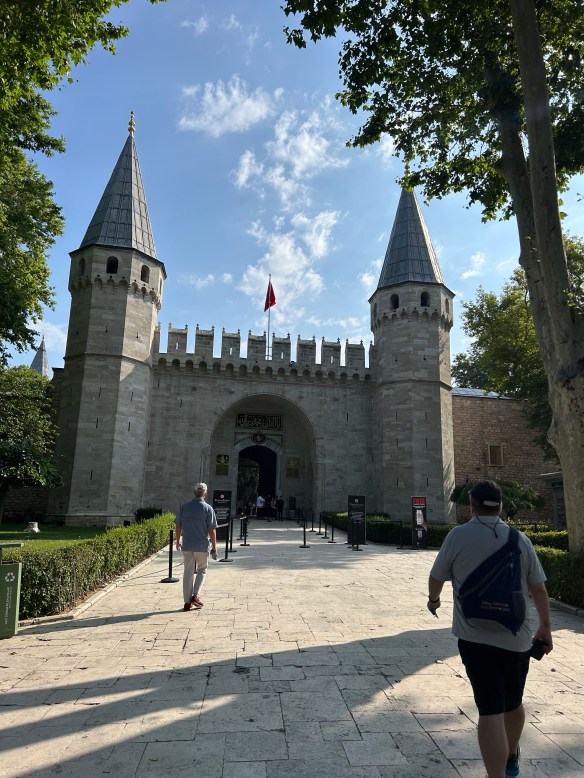
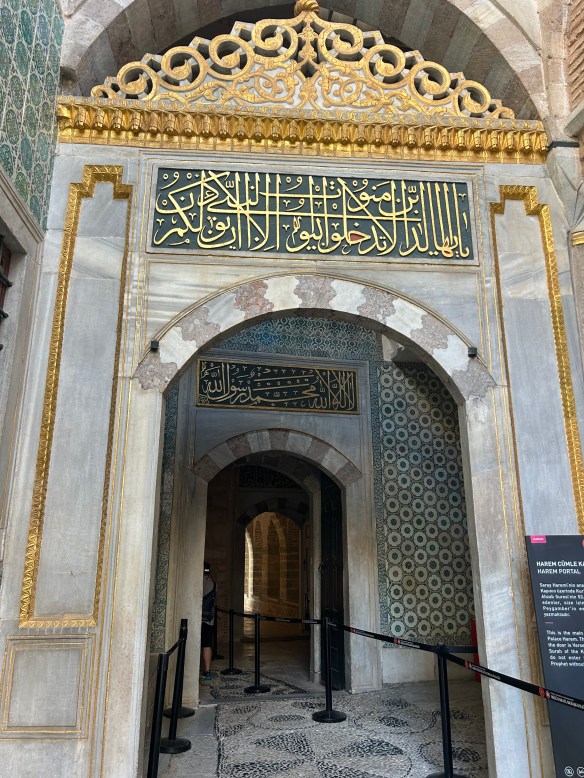
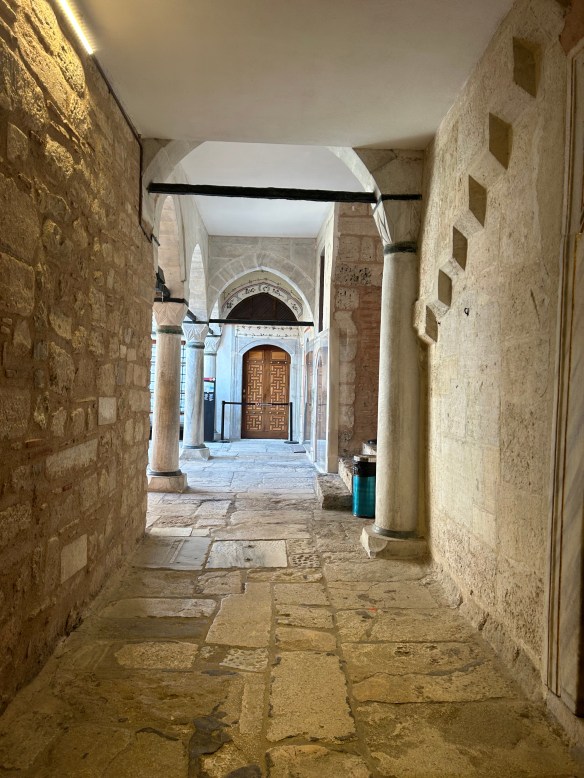
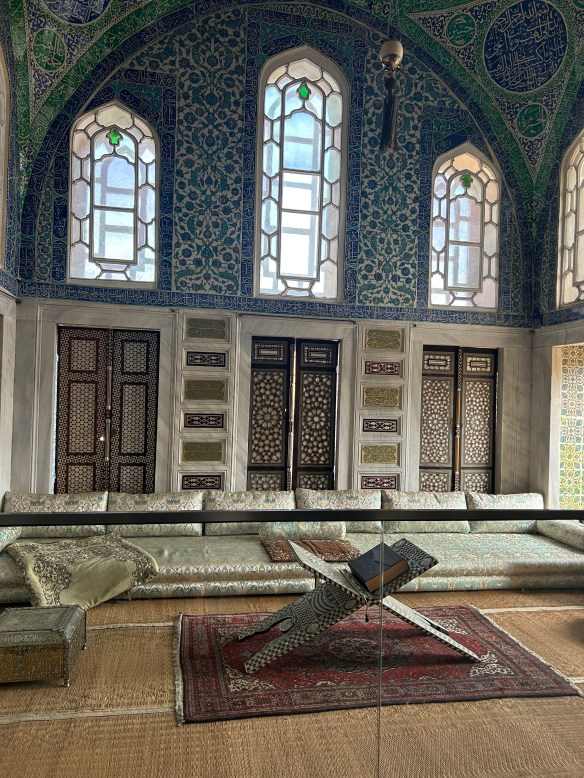
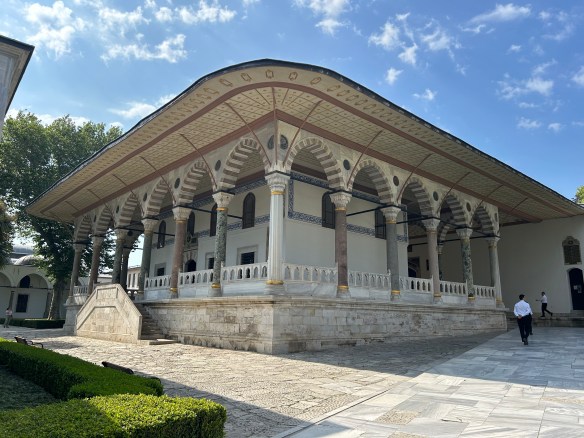
Our main goal for today was to see Topkapi Palace. This was the home of the Ottoman sultans for 400 years. The main attraction is the harem, where the female members of the sultan’s family (his mother, wives, concubines, and children) lived with their servants/guards (eunuchs). Fun fact: Since Islam does not allow the enslavement of Muslim women, most of the concubines were Jews or Christians, given to the sultans as gifts.
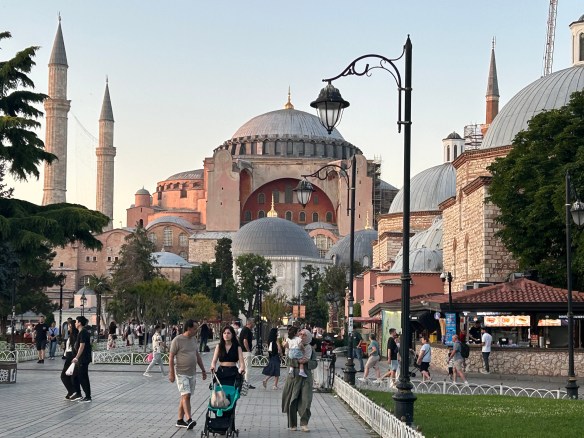
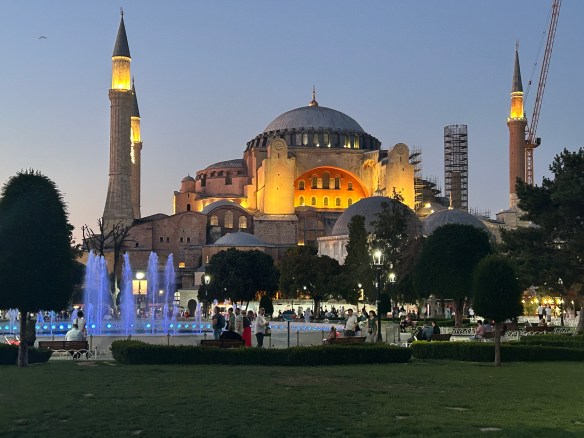
We also saw the other sights in the historic centre, like Hagia Sophia. Completed during the Byzantine era in 537 AD, it was originally a Christian cathedral. When the Ottomans took over, they converted it to a mosque. It was turned into a museum in 1935 and (controversially) turned back into a mosque in 2020. The lines were long and the entry fee was high, so we took a few pictures of the exterior and moved on.
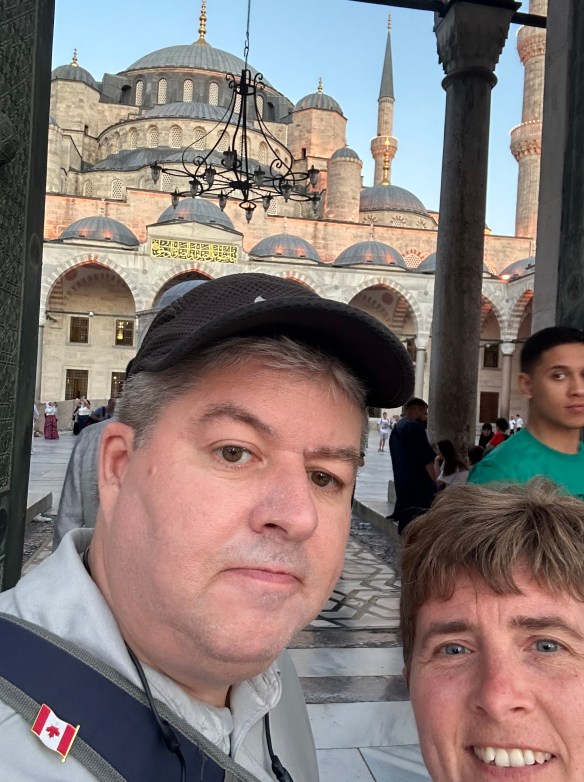
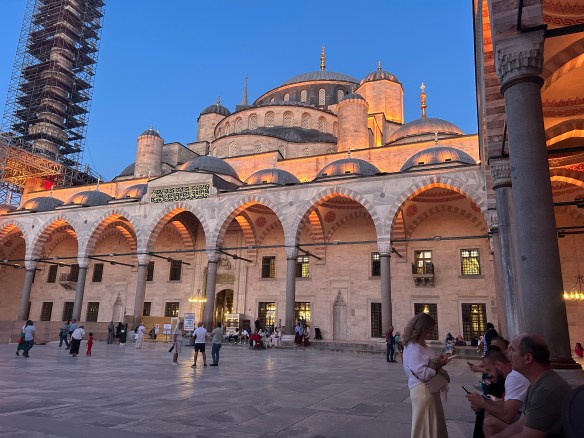
The nearby Sultanahmet Mosque is an Ottoman-era mosque from the 17th century. It’s popularly known as the Blue Mosque because of the 20,000 blue tiles that decorate the interior (which unfortunately we didn’t get to see). Legend has it that the builder misheard the sultan’s request for “altın minareler” (gold minarets) as “altı minare” (six minarets), but only the mosque in Mecca was supposed to have that many. To make up for the error, the sultan ordered a seventh minaret to be built at the Mecca mosque.
Thankfully the public tram system is cheap and efficient—there are 20 million people in this city and I’ve seen how most of them drive.
Day at sea tomorrow…
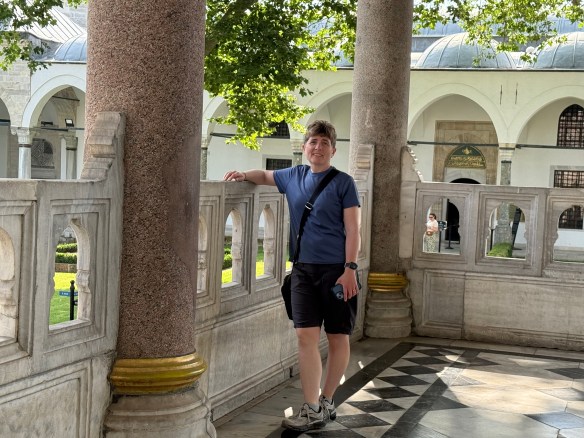
Main entrance of Topkapi PalaceEntrance to the haremThe concubine passagewayThe sultan’s hammam (bath house)The sultan’s throne in the imperial hallThe imperial hallThe sultan’s prayer roomOutside of the audience chamberAudience chamber entranceInside the audience chamberBy the audience chamberThe Blue Mosque with its six minarets, though you can’t see them all in this photo. Is it terrible that it makes me think of Star Wars?Entering the inner courtyard of the Blue MosqueIn the inner courtyard of the Blue MosqueInner courtyard of the Blue MosqueHagia SophiaHagia Sophia all lit up
June 21 – AT SEA
A full day at sea gave us a chance to relax on this beautiful ship. We joined a couple trivia games, watched an interesting Q&A with the captain and chief engineer, and checked out the action on the ship’s go-kart track. Might catch a show in the theatre tonight, but we’ll see.
Tomorrow: Mykonos!
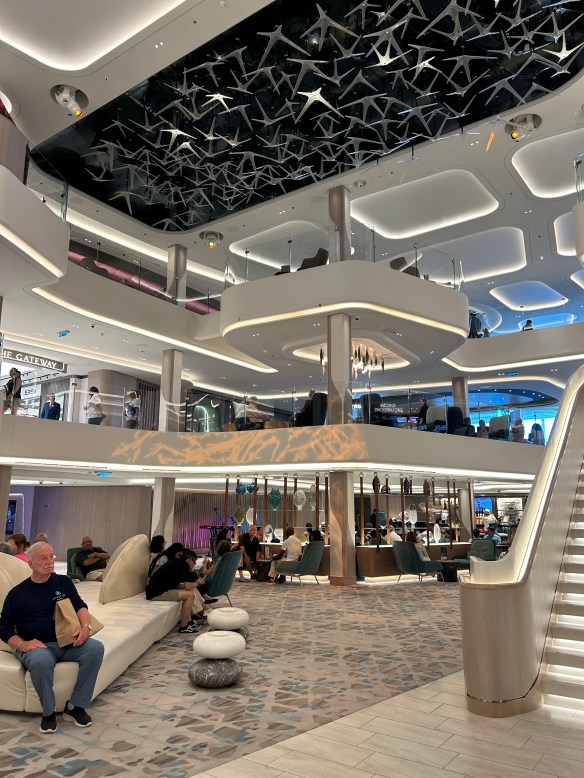
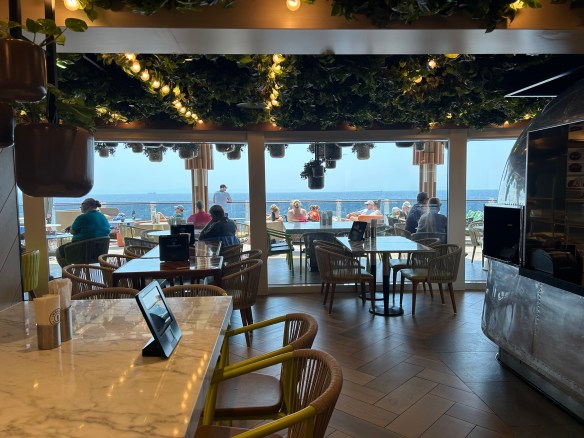
The atriumThe entrance to the arcade was pretty impressiveOne restaurant was basically a collection of themed food trucks. You order from any of them via a tablet at your table and the food gets delivered within minutes. Very cool.The food hall has indoor and outdoor seating. I love the decor.Outdoors at the food hallSpectators can score points by shooting at targets on the go-karts as they whizz byReal-life Mario Kart!Shooting at random driversWe came in second in the triviaThe main dining room is absolutely gorgeous
June 22 – MYKONOS, GREECE
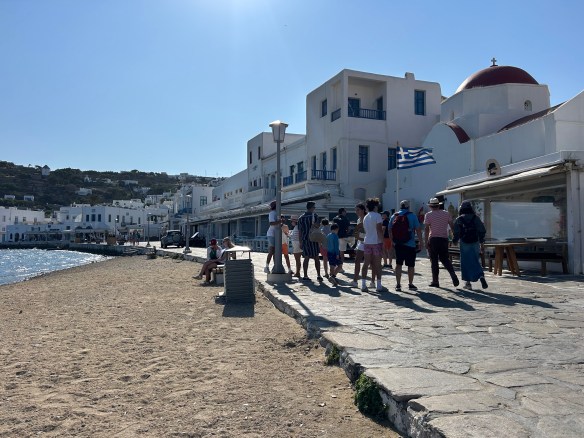
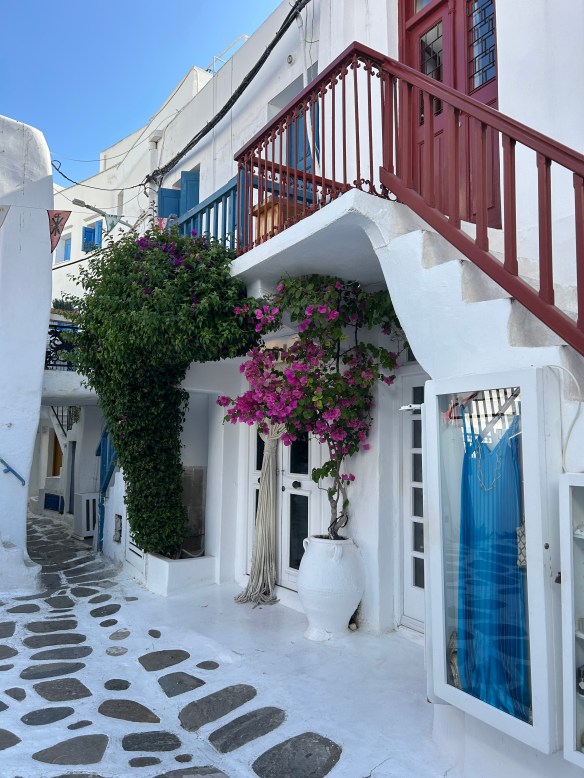
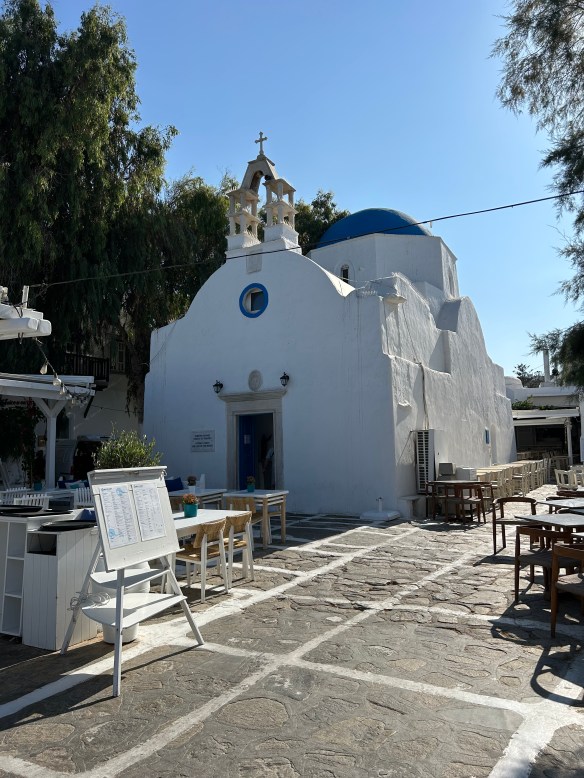
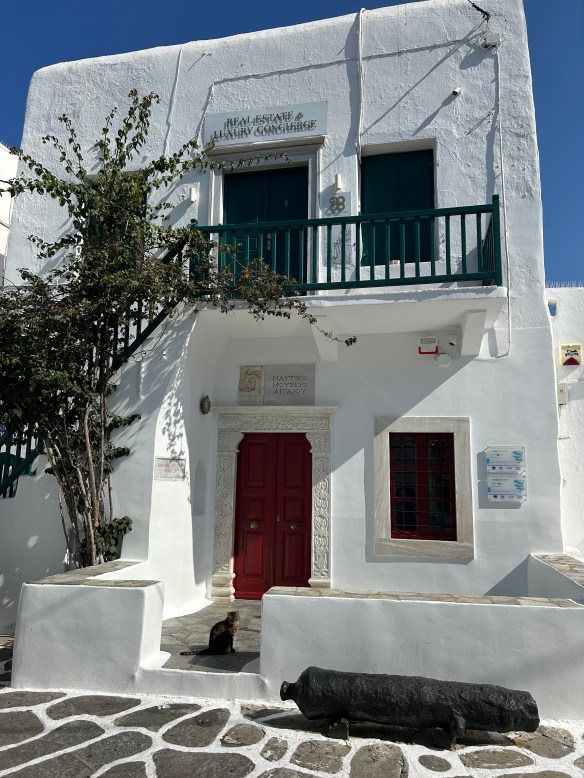
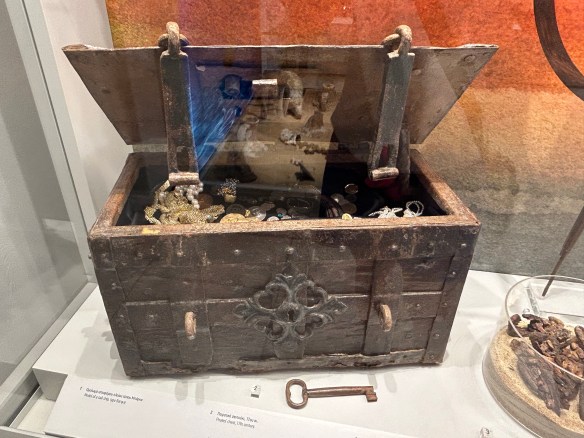
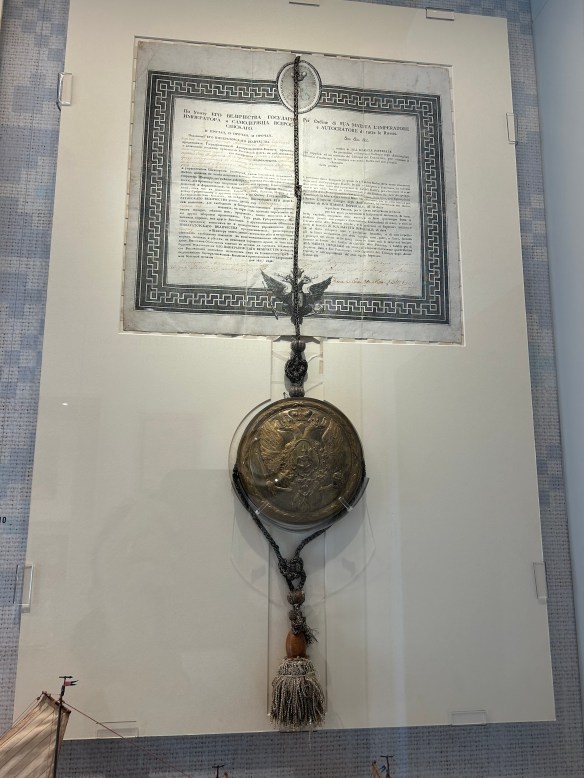
To be honest, I could have happily skipped Mykonos. The island is renowned for its beaches and nightlife, but neither of those things appeal to us. There *is* a significant archeological site nearby, but it requires a ferry ride that can be rough, and I have motion sickness issues. So we wandered through the maze of streets (purposely designed to confuse attacking pirates) and toured the tiny Aegean Maritime Museum, which was full of cool historical artifacts.
Next up: Santorini!
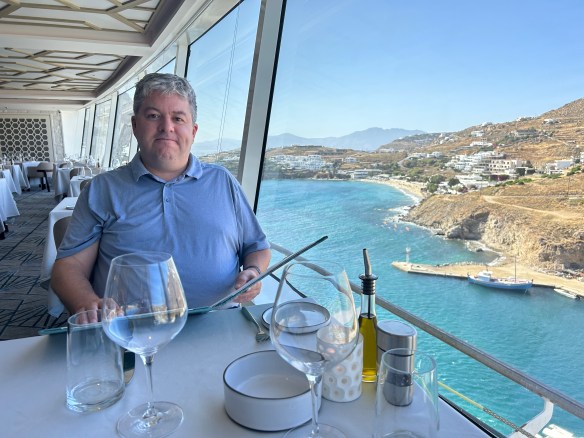
Waterfront areaWindmillsThe Little Venice area, so called because of the balconies that hang over the seaTypical Mykonos sceneryRandom churchAegean Maritime MuseumPirate chest from the 17th centuryShipping document of 1819 bearing the Imperial Seal of Czar Alexander. Such documents were issued by the Russian authorities to the Hellenic ships for uninterrupted traversing of the seas.Dinner with a view!
June 23 – SANTORINI, GREECE
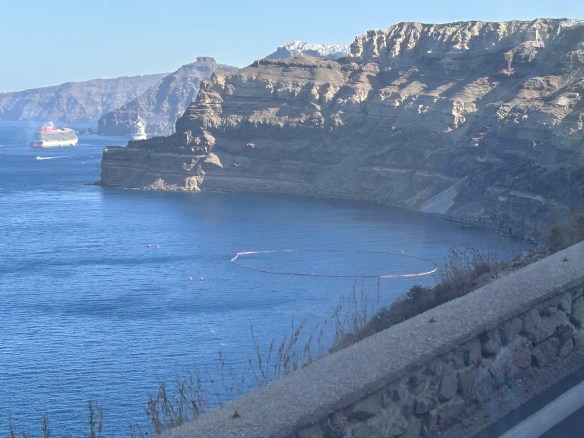
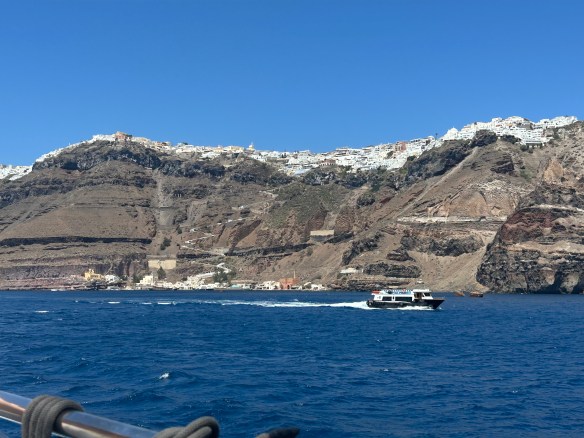
Santorini is actually a group of islands that were formed by intensive volcanic activity; each violent eruption caused the collapse of the volcano’s central part, creating a large crater (caldera). Cruise ships now park in the caldera; it’s so deep that they can’t actually anchor, so they have to use their engines and thrusters to stay in place. (!)
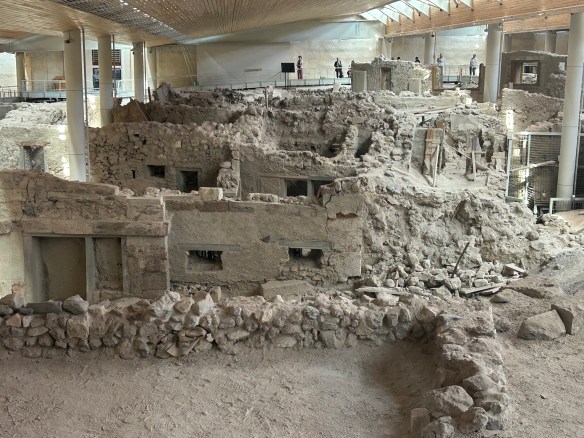
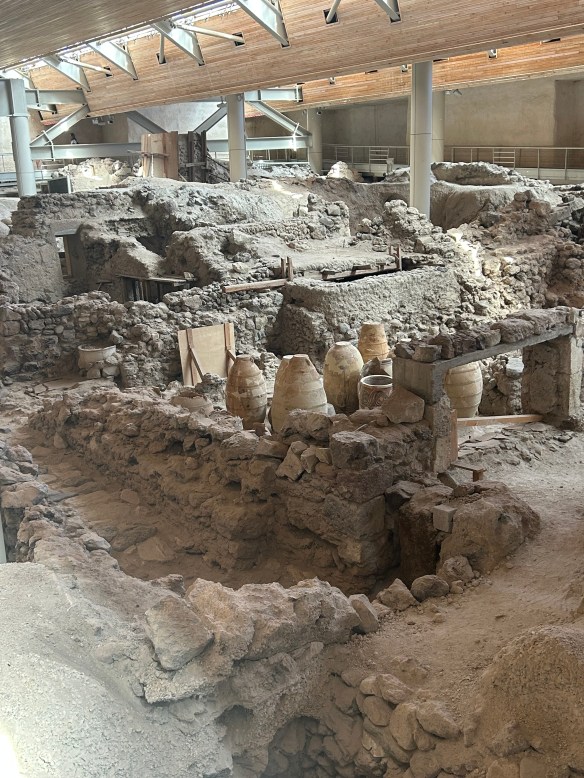
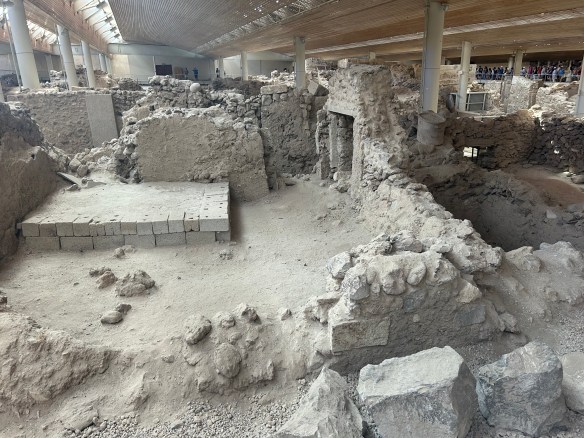
We started at the archeological site of Akrotiri, known as the Pompeii of the Aegean. Akrotiri was a Bronze Age settlement inhabited by the Minoans of Crete. It got destroyed in a catastrophic volcanic eruption around 1600 BC and was buried in volcanic ash, which preserved many objects and artworks. Unlike at Pompeii, no human remains were found, which suggests people had time to evacuate. The site was unearthed in 1967 and excavations are still going on.
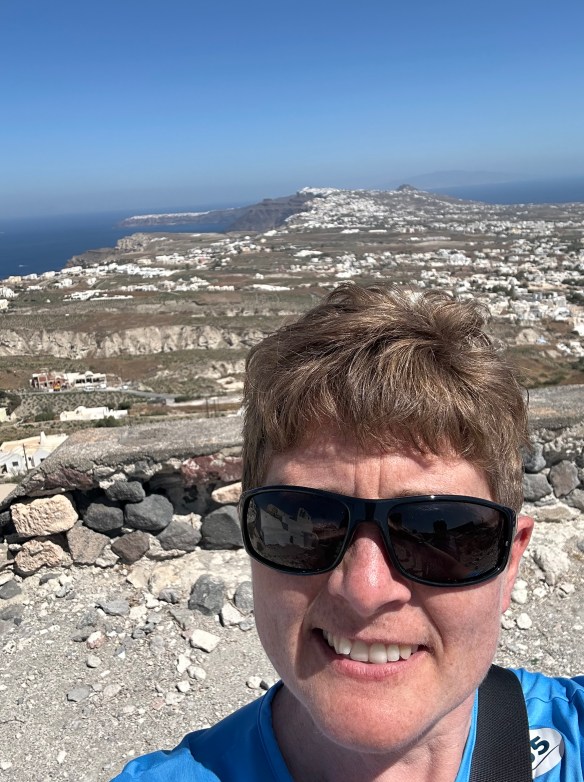
From there we went to Pyrgos, the highest village on Santorini. Its “castle” was built in 1580 and offers panoramic views of the island.
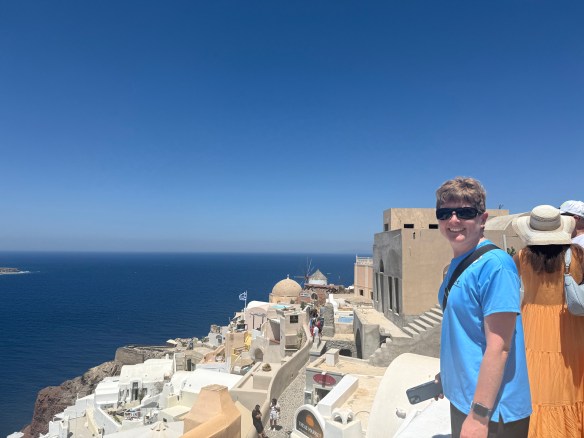
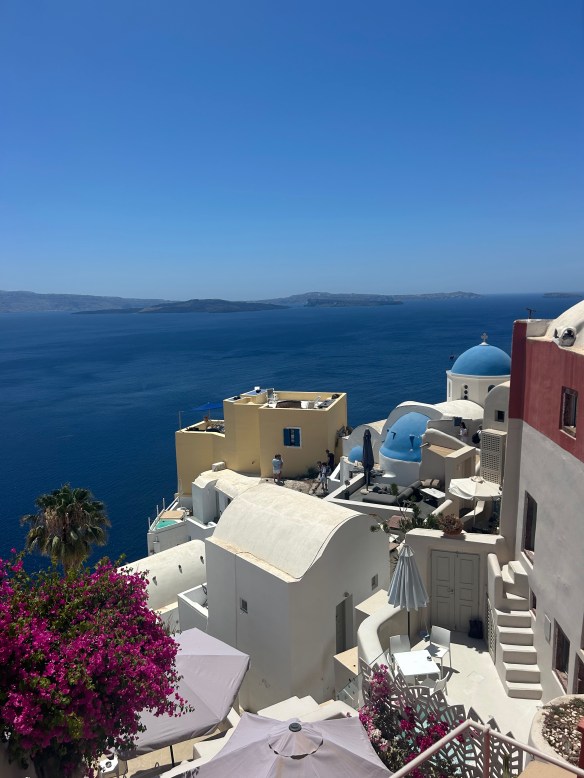
Oia (pronounced EE-ah) is where you’ll find the blue domes that adorn every postcard of Greece. *Everyone* wants a photo there, so it’s a tourist madhouse. We snapped a few pics and then ducked into a gelateria for a snack while we waited for the rest of the group.
Tomorrow: Rhodes!
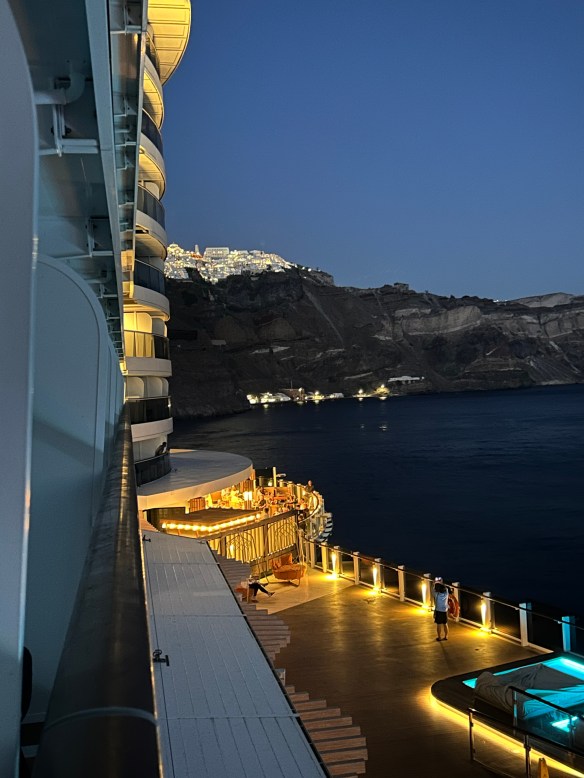
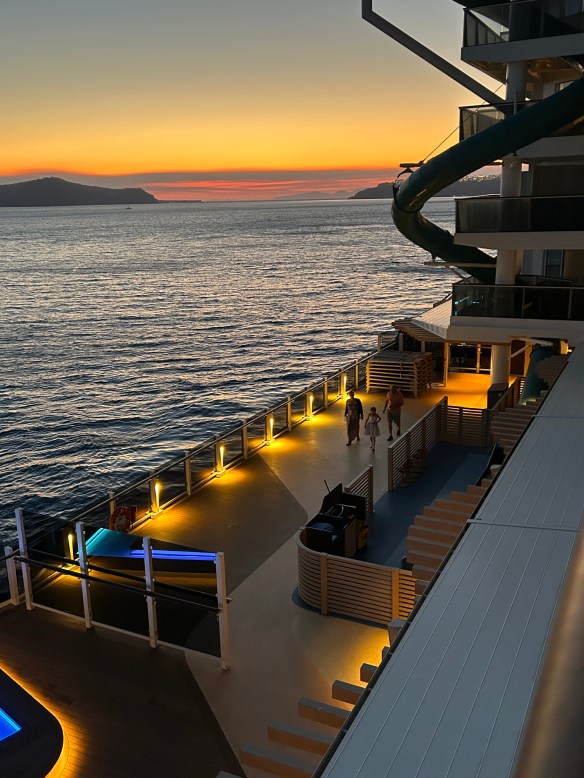
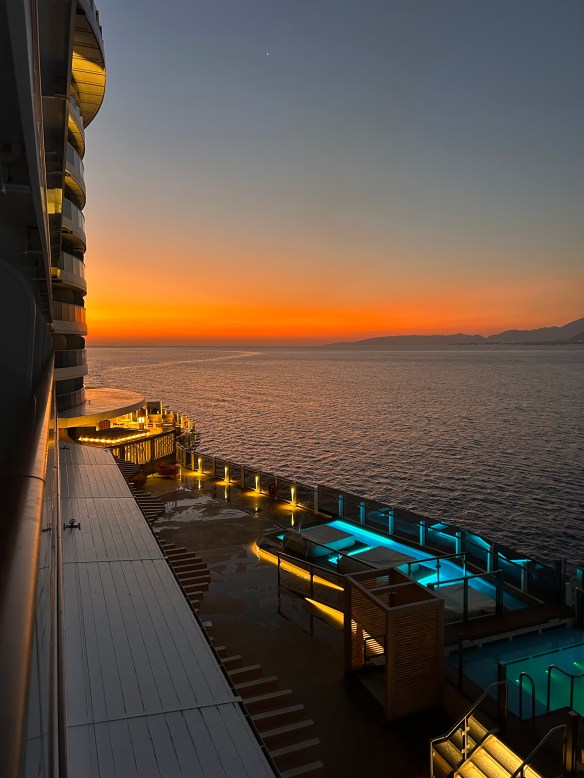
View of the caldera from the bus as we wound our way up the cliff. The circle you see on the water marks where the Sea Diamond cruise ship sank in 2007–the circle is there to contain the oil that continues to leak from the sunken ship.Ruins at AkrotiriAkrotiriAkrotiriView from PyrgosLooking out from PyrgosAt OiaView from OiaThe money shot! At OiaA shot of the capital Fira on top of the cliff. Tourists arriving by ship generally have to take a cable car (or a donkey) up and down. We were lucky that our tour had a dedicated tender, so we didn’t have to stand in what is usually a very long line for the cable car.View from our balcony as we left SantoriniView from the other side of our balcony as we left Santorini
June 24 – RHODES, GREECE
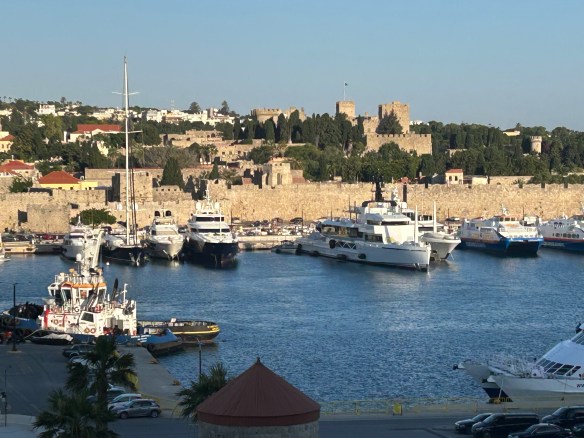
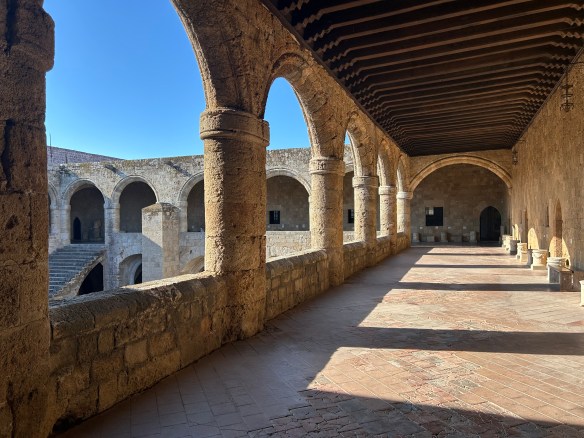
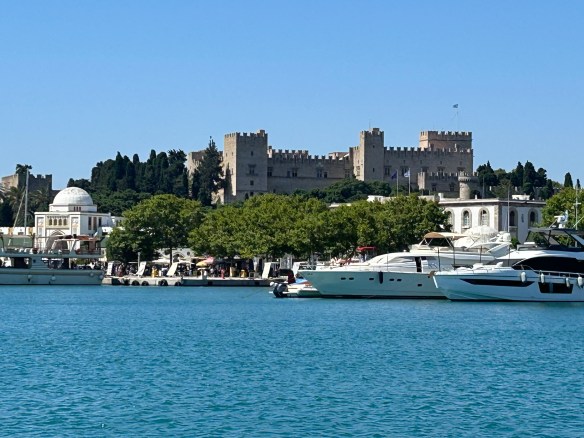
Over the centuries, Rhodes has been controlled by the Romans, Ottomans, Italians, and others. But it was the Knights of St. John who fortified the old city and gave it much of its medieval character. Also known as the Knights Hospitaller, this Catholic military order occupied Rhodes from 1309 to 1523. The old city they created is now a UNESCO World Heritage site—and our ship docked right next to it!
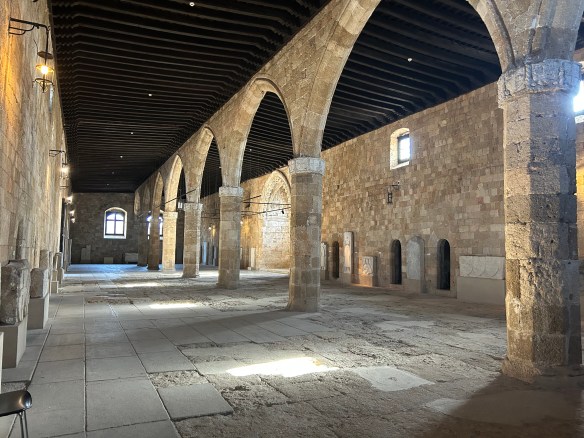
We began at the Archeological Museum, which is housed in the former hospital of the knights. It has displays of pottery, mosaics, funerary monuments, and more. It also has some pretty gardens.
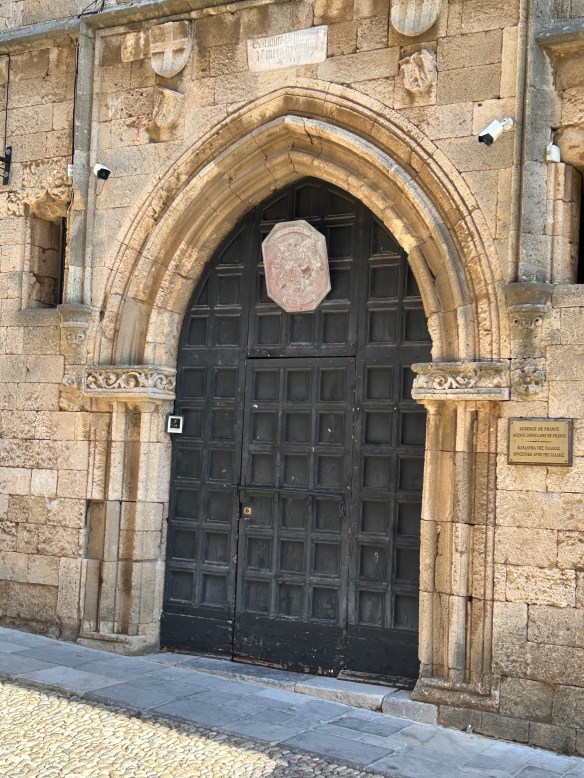
The knights were organized into seven “tongues” based on where they were from: England, Germany, Italy, France, Provence, Auvergne or Aragon. Each tongue had its own “auberge” or “inn” – a communal building that served as residence, meeting place, and dining hall. Walking along the Street of the Knights, you can still see the inscriptions on the walls that indicate which tongue of the knights lived there.
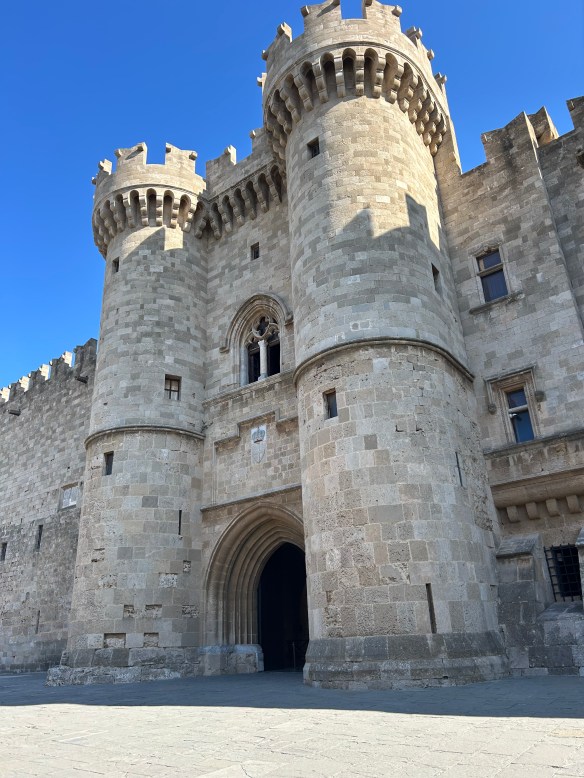
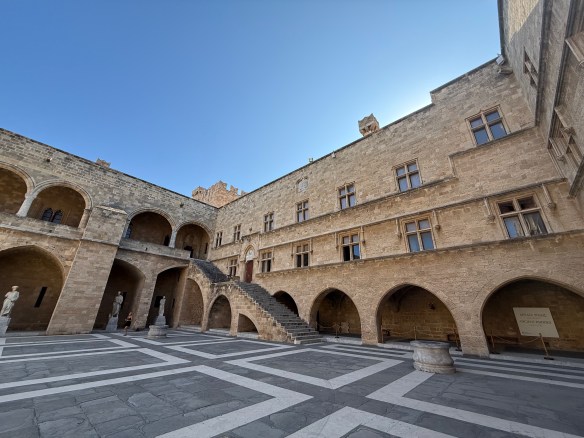
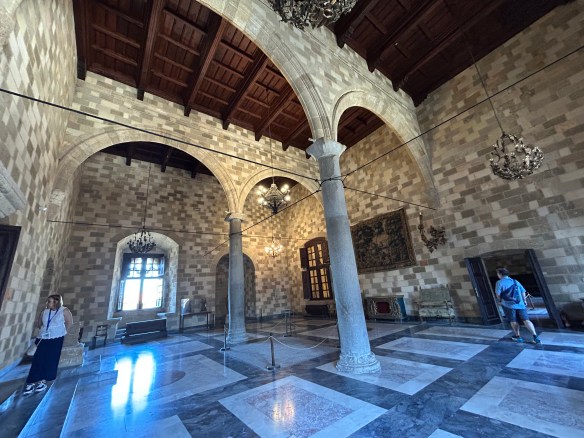
That led us to the Palace of the Grand Master. It’s super impressive on the outside, but sorely lacking on signage inside. There was lots of info on the floor mosaics, but nothing to tell us about what room we were in or how it was used. A bit of a disappointment.
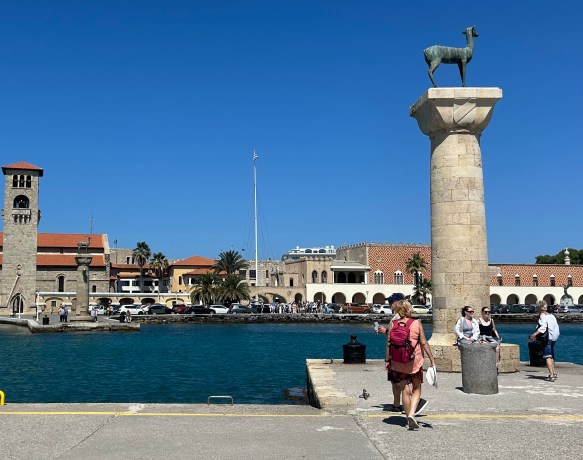
A final highlight was along the waterfront. You’ve probably heard of the Colossus of Rhodes, another one of the Seven Wonders of the Ancient World. It was a 30-metre-high bronze statue dedicated to the sun god Helios that experts believe stood at the entrance to Rhodes harbor. It was destroyed in an earthquake in 226 BC, but two statues now mark where it was believed to have been.
Overall, this definitely ranks among my favorite ports!
Tomorrow is our final stop: Crete!
A view of the walled city from our balcony
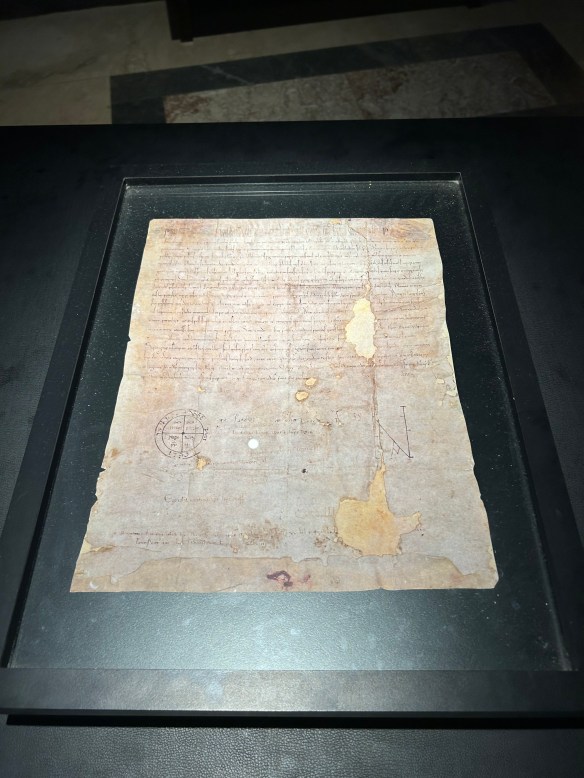
The entrance to the archeological museum, which used to be the hospital of the knightsUpper courtyard of the archeological museumTerracotta sarcophagus from the 4th century BCImpressive room inside the archeological museumTombstone of an Aragonese Knight Hospitaller from 1493At the entrance to the museum gardensOuter courtyard of the archeological museumOn the Street of the KnightsThe inn of the French knights, now the French consulateMore Street of the KnightsPalace of the Grand MasterInner courtyard of the palaceInside the palaceInside the palaceInside the palaceOriginal Papal Bull from 1113 that defined the constitution of the Order of the Hospitallers of St. JohnInside the palaceInside the palaceMosque of Suleiman, named for the Ottoman sultan who conquered Rhodes in 1522The two columns with bronze statues of deer on top (look carefully on the left side of the photo to see the second one) sit on either side of the harbor entrance and are believed to mark the spot where the Colossus of Rhodes once stoodAnother shot of the palaceLeaving Rhodes
June 25 – CRETE, GREECE
Our guide claimed Crete is the only place in the world that is within 200 miles of three continents: Asia (Turkey), Africa (Libya), and Europe (mainland Greece). Not sure what continent he thinks Crete is actually in, but that is a cool way to look at it.
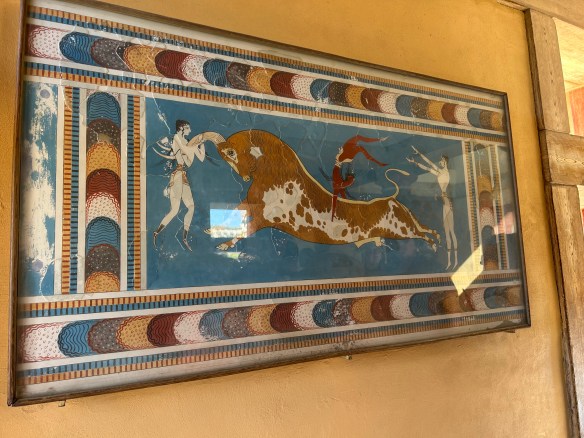
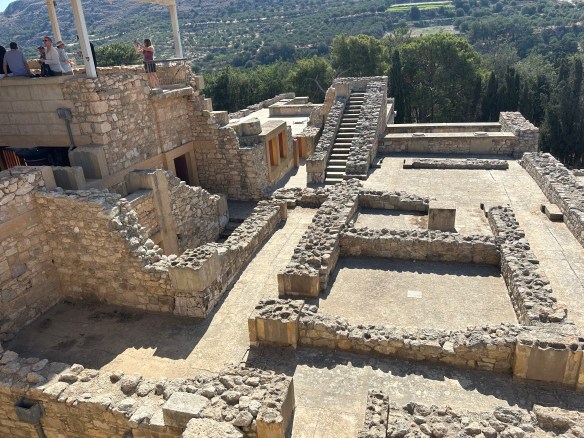
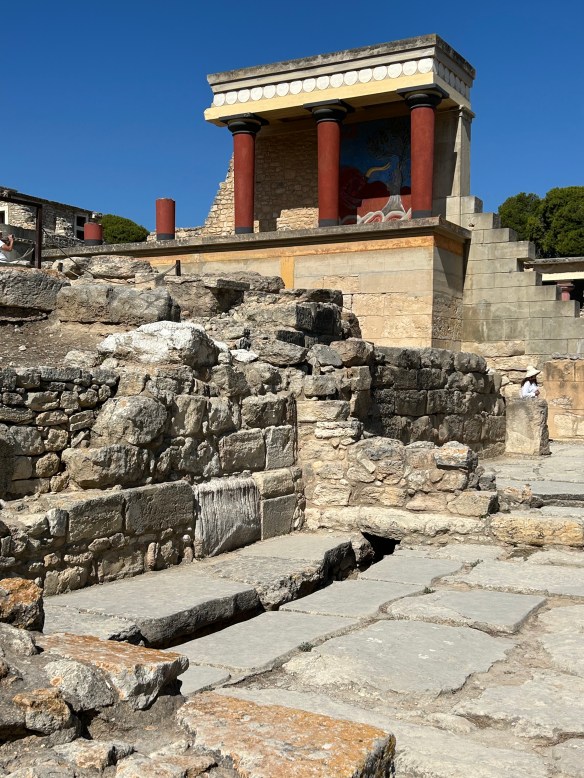
Our destination today was the Palace of Knossos, which dates from 2000 BC and was the centre of Minoan civilization and culture. It’s particularly associated with the myth of the minotaur. Like all Greek mythology, the story is long and complicated, but here it is in a nutshell:
King Minos of Crete prayed to Poseidon for a sign of his divine right to rule. The god sent a magnificent white bull from the sea. Minos was supposed to sacrifice the bull, but he kept it out of greed. As punishment, Poseidon cursed Minos’ wife, Pasiphae, to fall in love with the bull. Their union resulted in the birth of the minotaur—a creature that was half man and half bull. Enraged, Minos ordered a craftsman to build a massive maze-like structure (labyrinth) at Knossos to imprison the beast.
The cataclysmic volcanic eruption at nearby Santorini in 1600 BC (did I forget to mention that it was one of the largest eruptions in human history, with the force of 250 nuclear bombs?) hastened the decline of Minoan civilization, and Knossos was abandoned by 1350 BC.
Tomorrow we disembark in Athens and begin the long journey home. It’s been an outstanding cruise—one of the best.
And that’s a wrap!
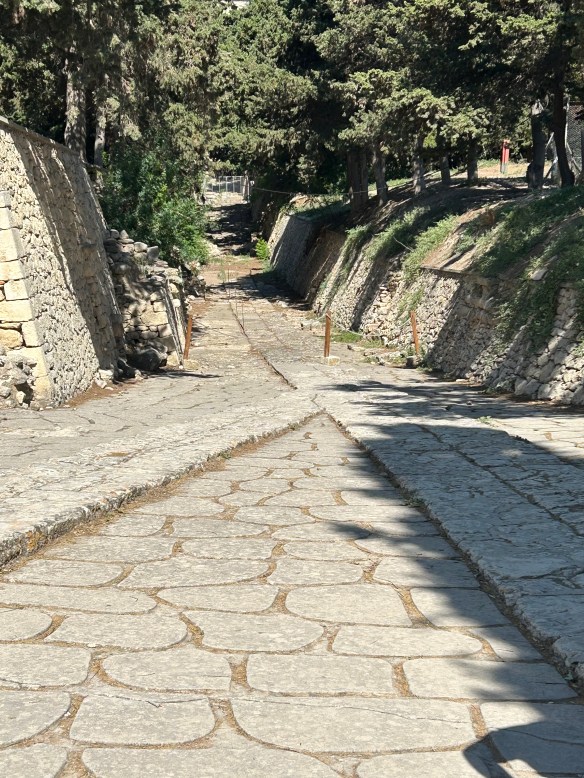
Sunrise from our balcony as we approached CreteLarge pots were used to store things like olive oil and grainDepictions of bulls and bull-leaping featured prominently in Minoan cultureThe so-called throne room was likely used for ceremonial purposesNear the reconstructed north entranceOutline of the queen’s rooms. The Minoans had an advanced system of running water and flush toilets 4,000 years ago.The north entrance is the most photographed part of the palaceMinoan road that connected the port to the palace complex. This was the first paved road in all of Europe, built in 1900 BC.
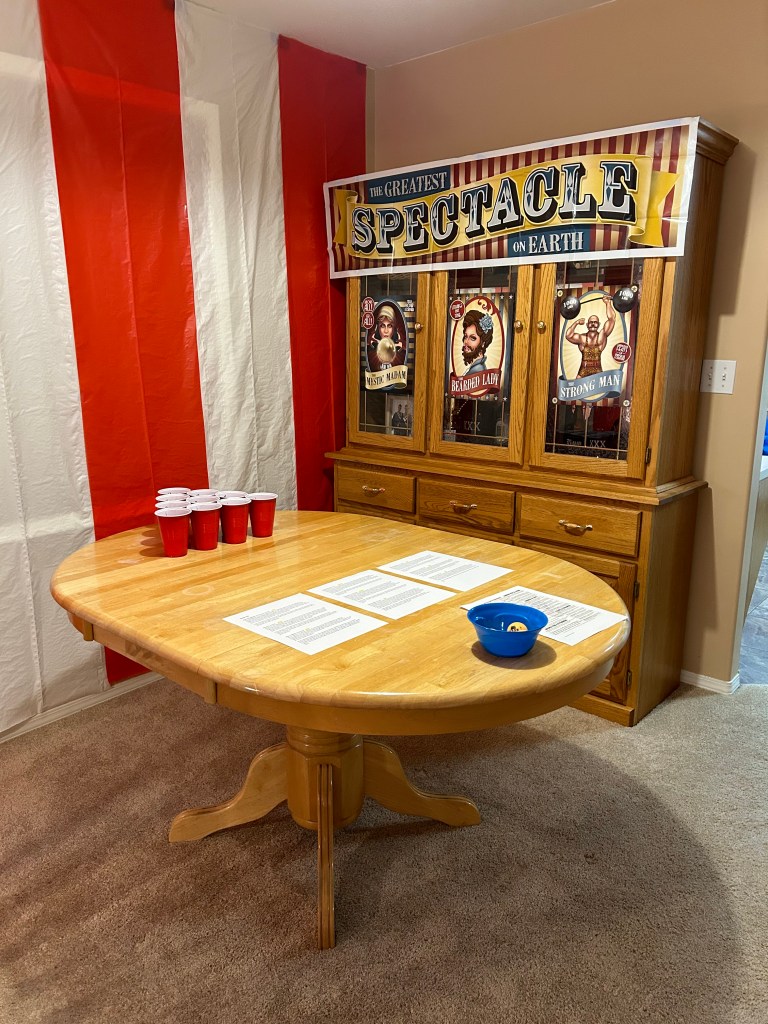
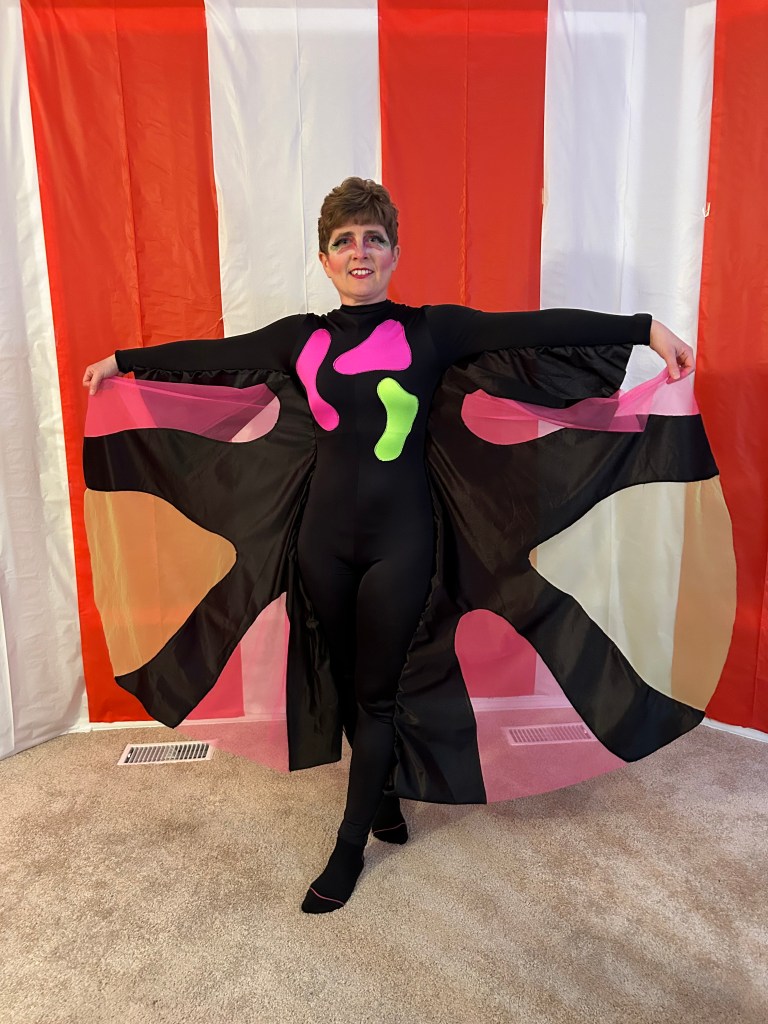
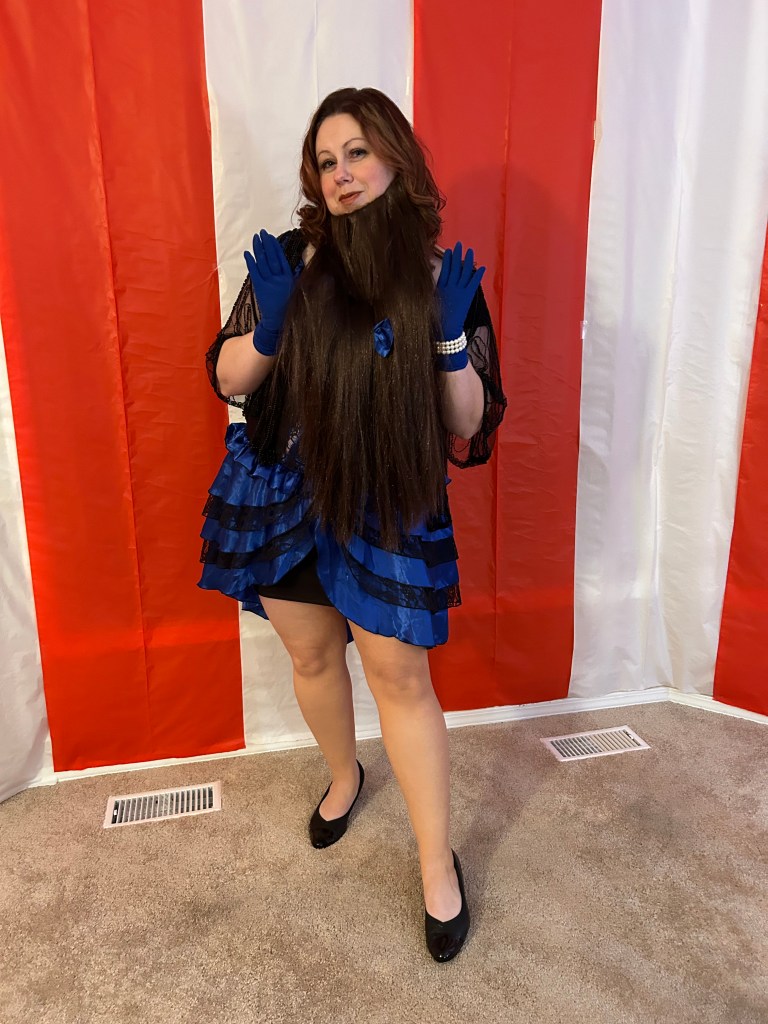
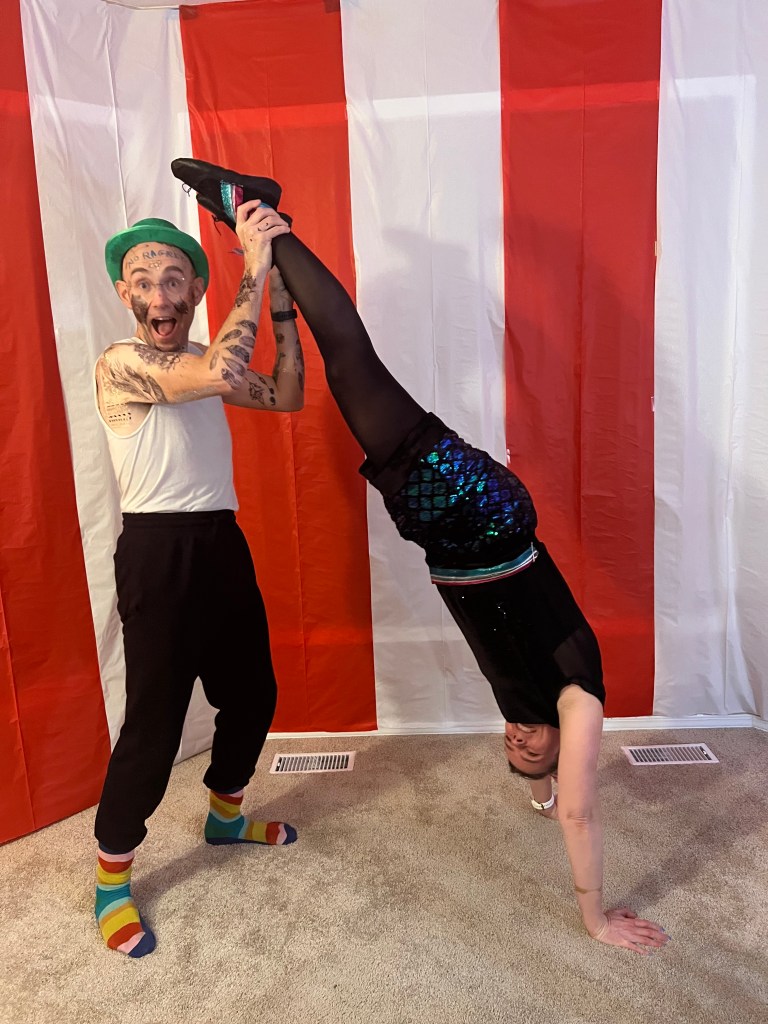
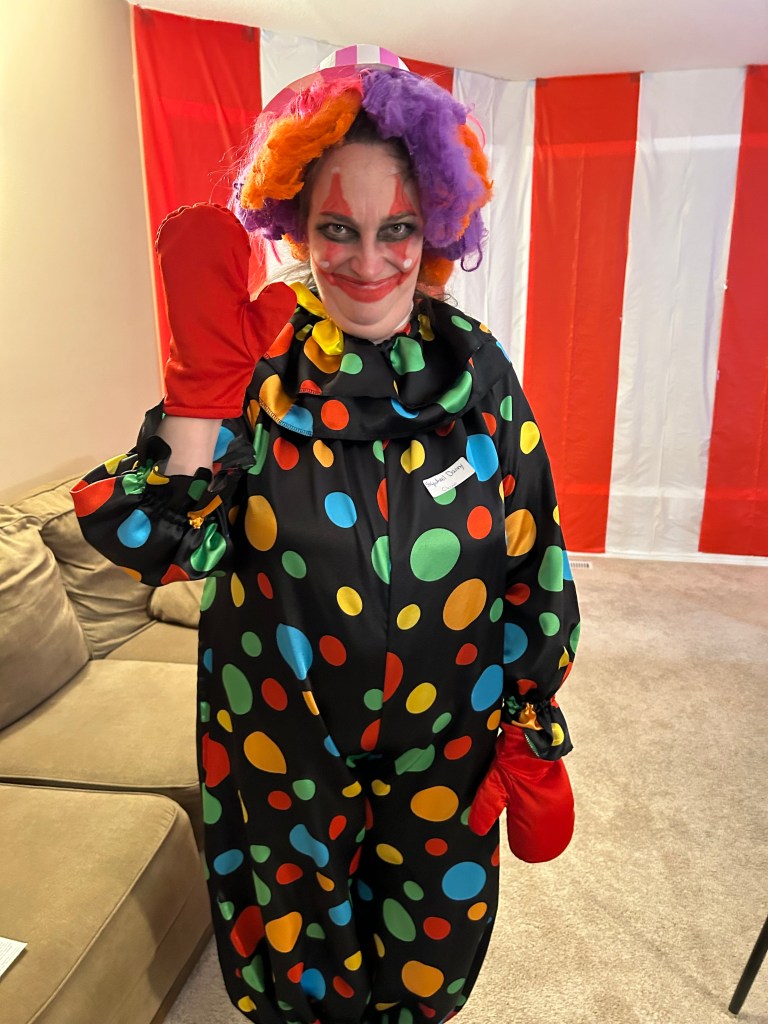
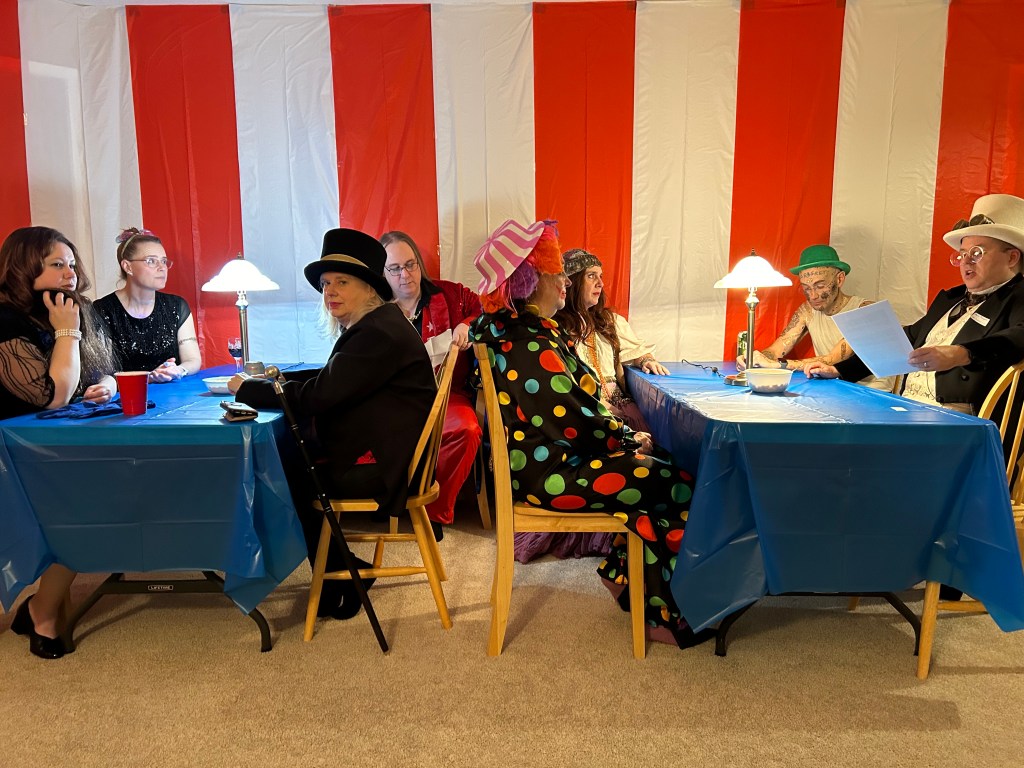
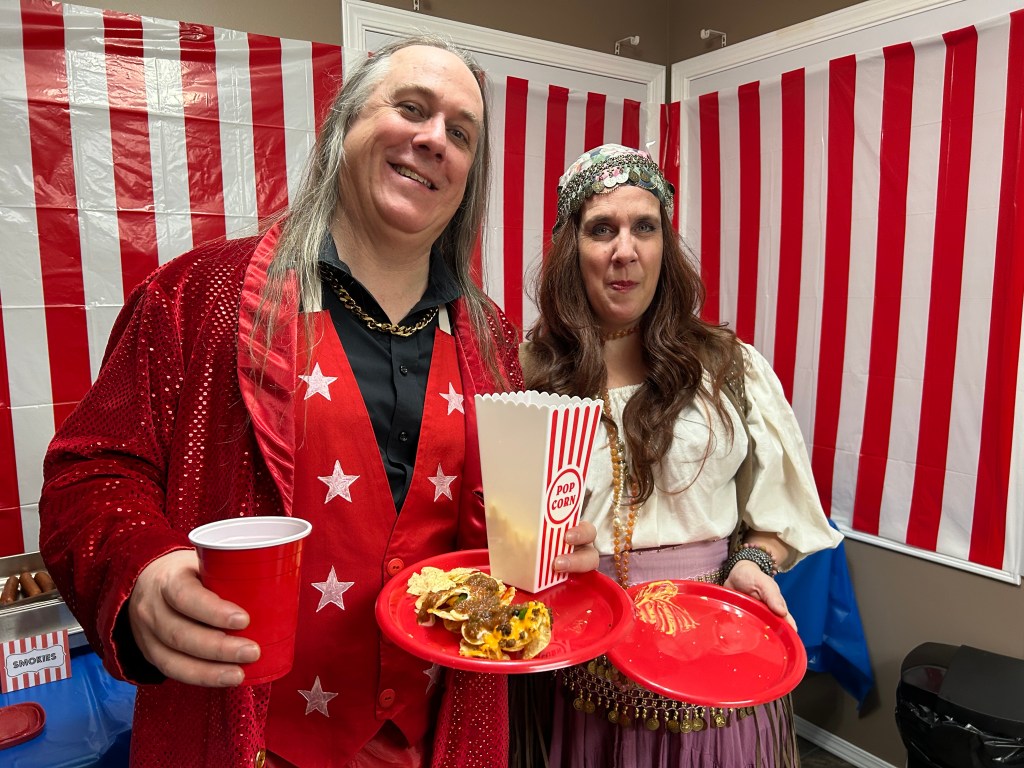
The circus came to town (more specifically, my living room) for our annual murder mystery party last night. Apparently the red and white stripes I hung over the walls and windows were visible even through our closed blinds, which actually worked out well: one guest who always has to doublecheck our address said she wasn’t totally sure she had it right until she saw the circus tent in the window.
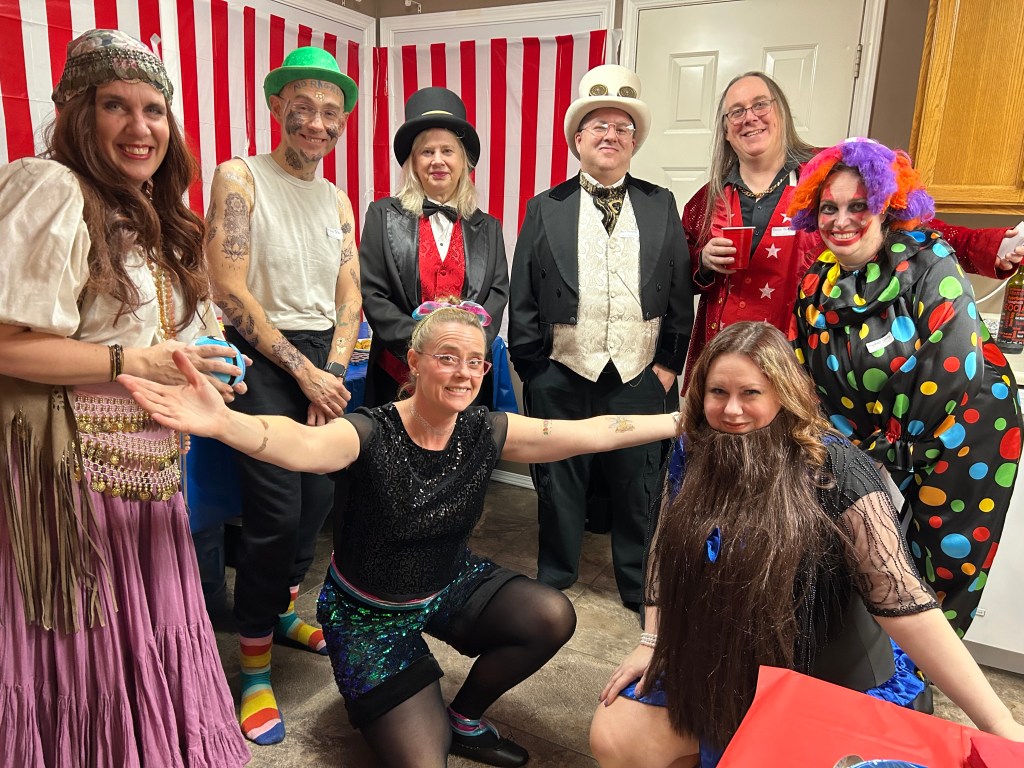
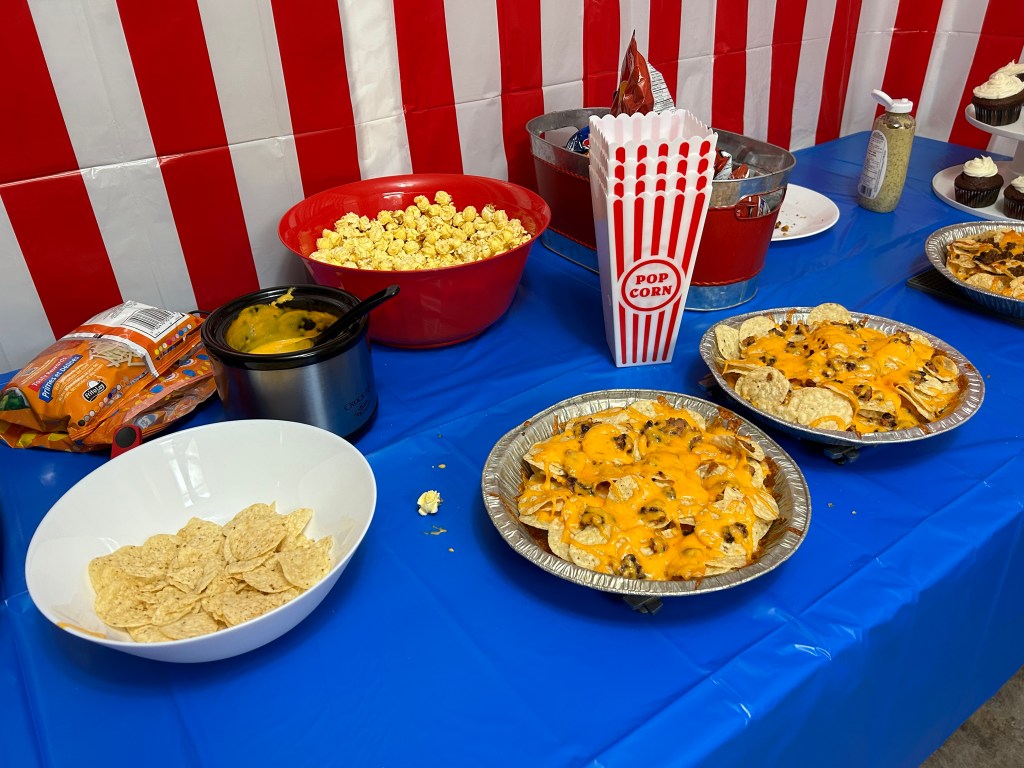
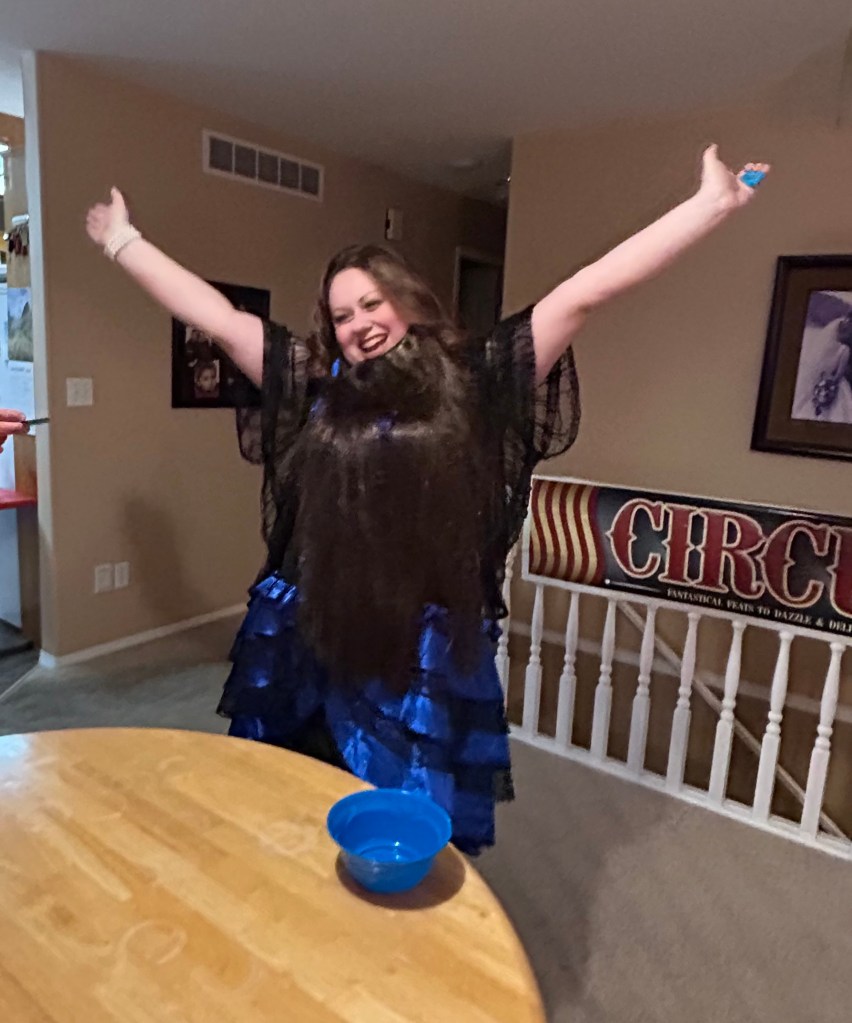
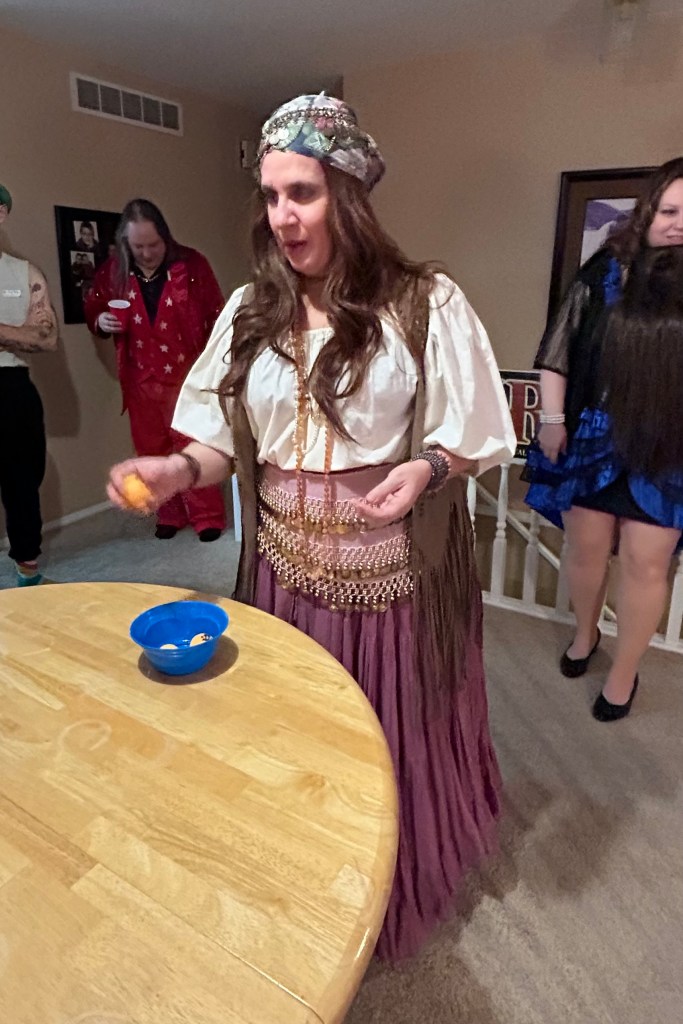
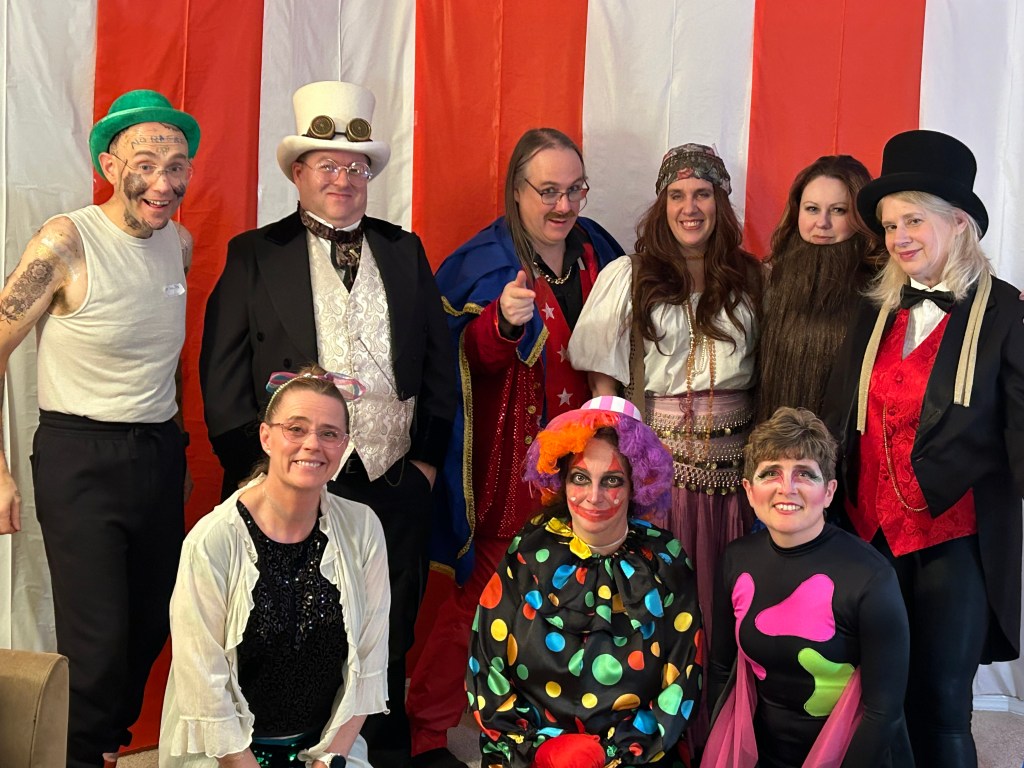
What I loved about this theme was the awesome combination of colourful decor, fun food, and outlandish costumes (though that smiling clown was so so creepy!) We even played some carnival-type games—they weren’t technically part of the mystery, but I thought they really added to the evening.
One of the best!
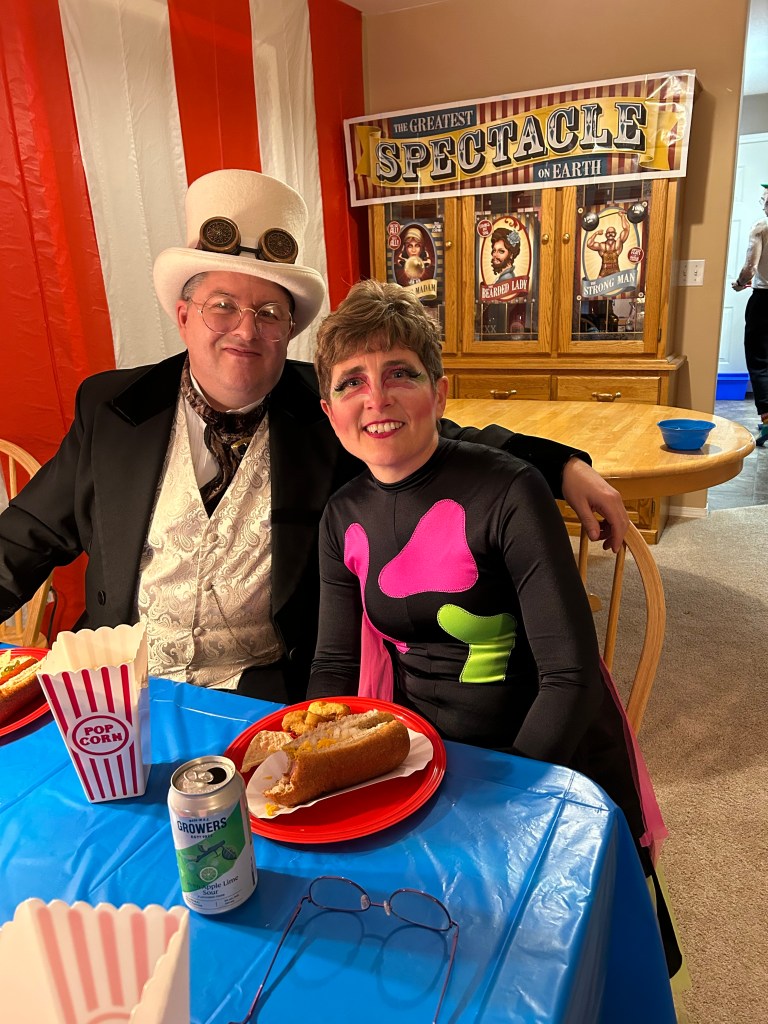
I had to cut and hang each stripe individually, but it was so worth itWe used to move the china cabinet out along with the other furniture, but now I just incorporate it into the decorI was the contortionist and had to be talked into wearing a spandex bodysuit, but it actually wasn’t too badThe wax museum curator…I swear Chris was born to wear this outfitThe ringmasterThe bearded lady…it blended with her real hair amazingly wellThe painted person and the acrobatThe daredevil and the fortune tellerSo creepy!I love, love, love this shotCheating at ping pong toss
This time I did my real-time blogging on Facebook. Here’s the collection of posts:
August 20 — TRIESTE, ITALY
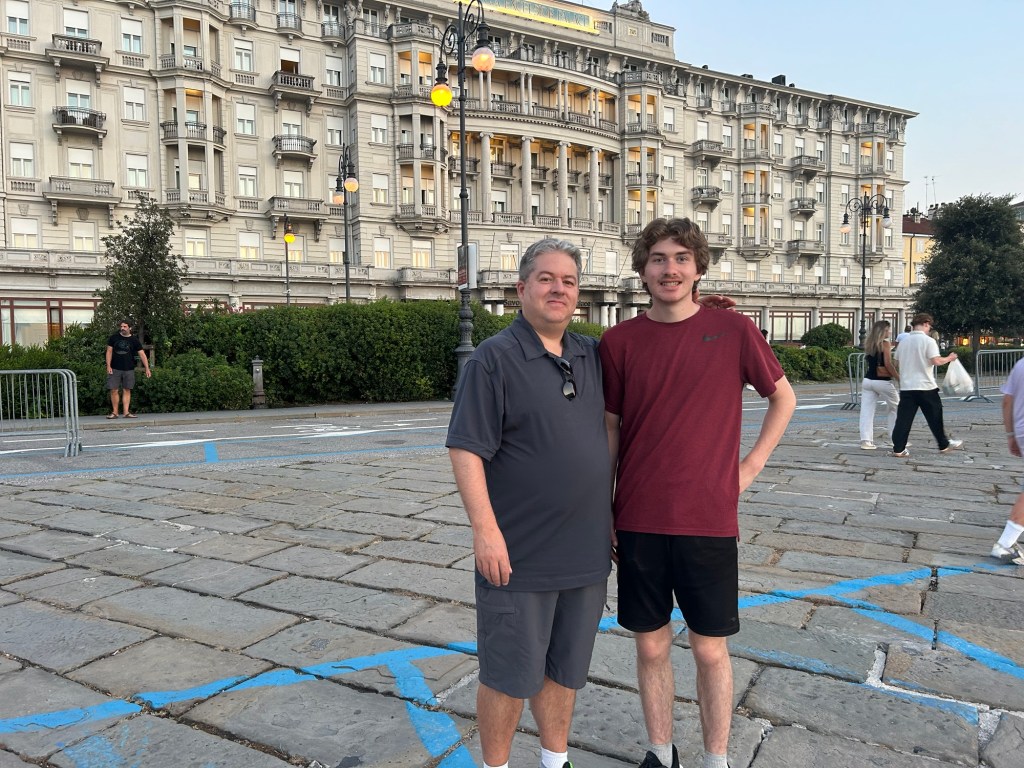
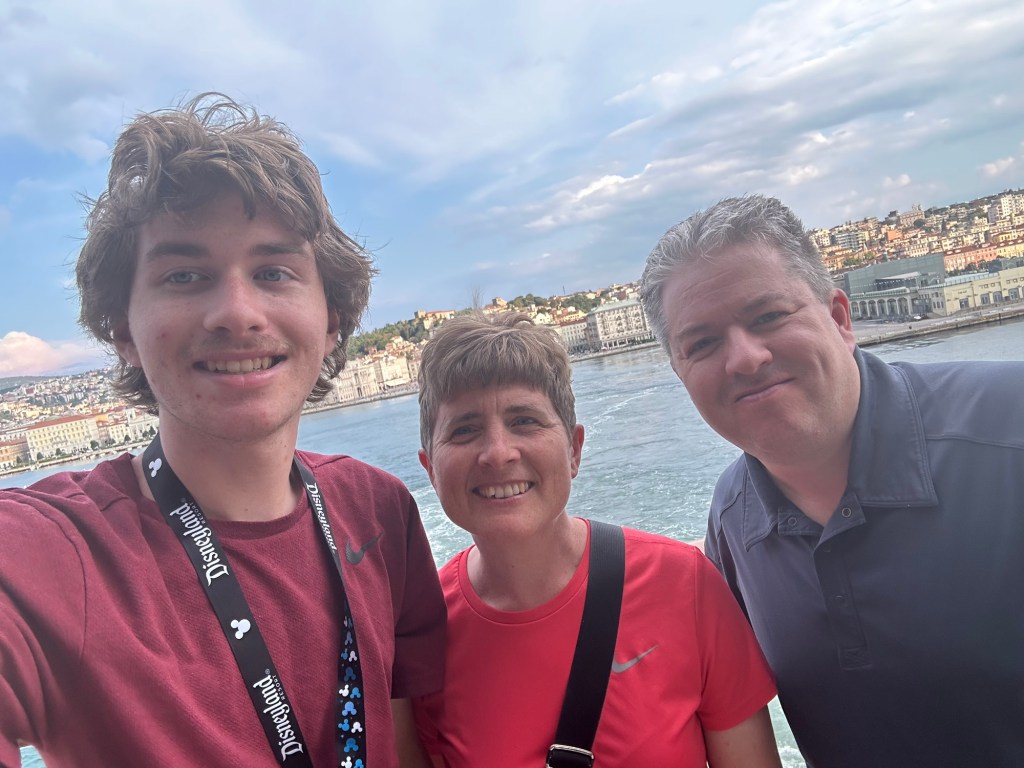
Buon giorno! With the boys getting older and developing lives that don’t include us, I decided to plan one last major family trip: a Mediterranean cruise. I’ve been planning and looking forward to it for well over a year, so I was none too happy when Westjet started randomly cancelling flights in the days leading up to our departure…but the stars aligned and we made it to Trieste with only minor delays.
The most nerve-wracking part was actually the taxi ride from the airport to our pre-cruise hotel. The cabbie blithely drove 145 kph on a winding highway, ignored all road markings, and weaved around any car not doing double the speed limit. While I was gripping the seat and quietly chanting “ohmyf-inggod”, Brayden leaned over and whispered, “I like this guy.” (!)
The story gets better: I mistakenly thought we’d left my bag in the taxi, so I chased it for two blocks yelling and screaming, finally catching up to the guy at a red light…only to discover Brayden had had it the whole time. My actions were so insane that my family didn’t even feel they could mock me; they clearly thought I was coming unhinged. Not my finest moment.
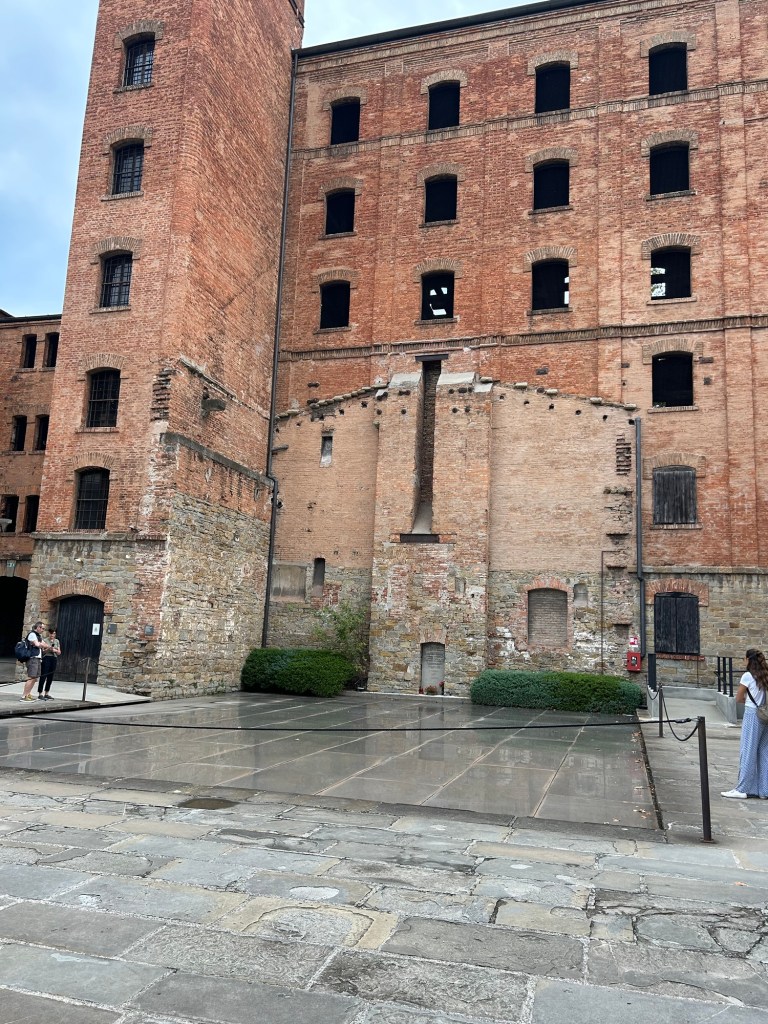
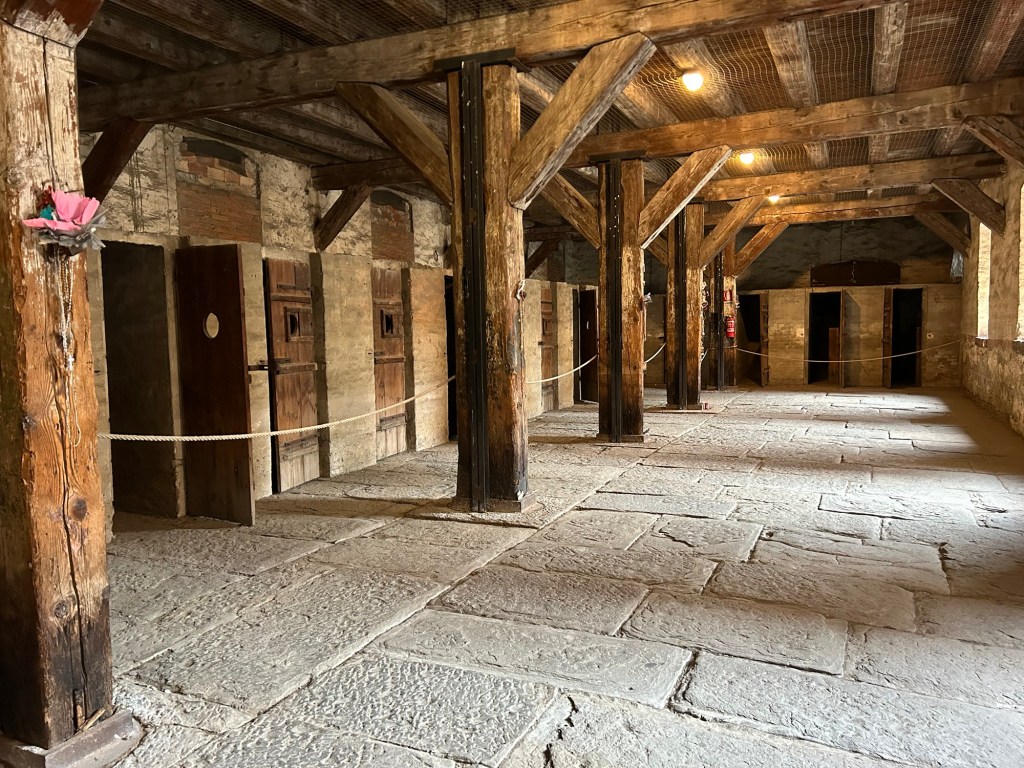
On a more serious note…today we took a sobering tour of a former rice mill that was used as a Nazi concentration camp during World War II. The prisoner cells remain much as they were, while the crematorium was destroyed by fleeing Nazis to cover up their crimes. The museum also houses photos, documents, and objects given by camp survivors. It was really well done, and a very moving experience.
Tomorrow we sail!
In the main square of TriesteRemains of the crematorium at San SabbaThe Hall of Crosses housed prisoners prior to deportation. It now has some cases in the wall displaying confiscated prisoner property that was never reclaimed.Each 4×6 cell housed up to 6 prisonersOur hotel room had a mini kitchen, so we bought a few groceries and cooked our own breakfasts
August 21 — SETTING SAIL
And…we’re off!
Trieste from our cabinThe cabin was small but comfortable
August 22 — SPLIT, CROATIA
The plan today was rafting on the Cetina River. Chris had a sore neck, so he skipped rafting in favour of a (crazy expensive) massage on the ship. The kids and I went ahead, though, and I can unequivocally say Chris made the right choice—no one with a sore neck would’ve survived the rafting experience.
It was three to a raft, with the strongest person (Brayden) assigned as captain. So he was in charge of steering while Justin and I paddled for momentum. It didn’t always go well—we ploughed through branches, got stuck on rocks, and argued constantly about what each of us was doing wrong. Some of the rapids were fun, and B says he genuinely enjoyed it, but we were mighty tired and sore by the end.
On to Dubrovnik!
Ready for rafting—at this point I could still lift my arms
August 23 — DUBROVNIK, CROATIA
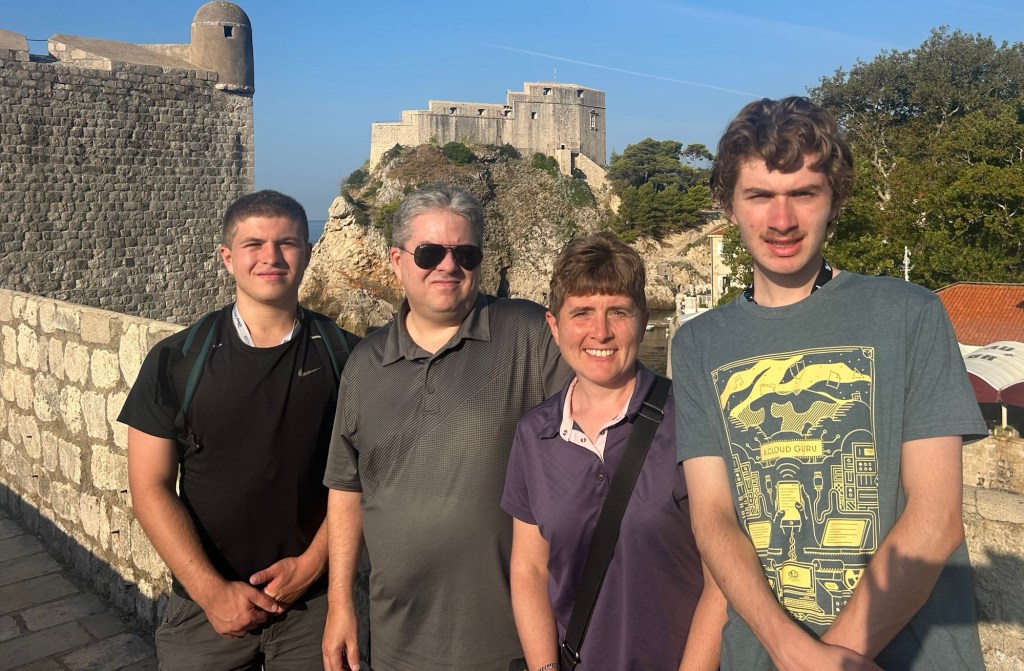
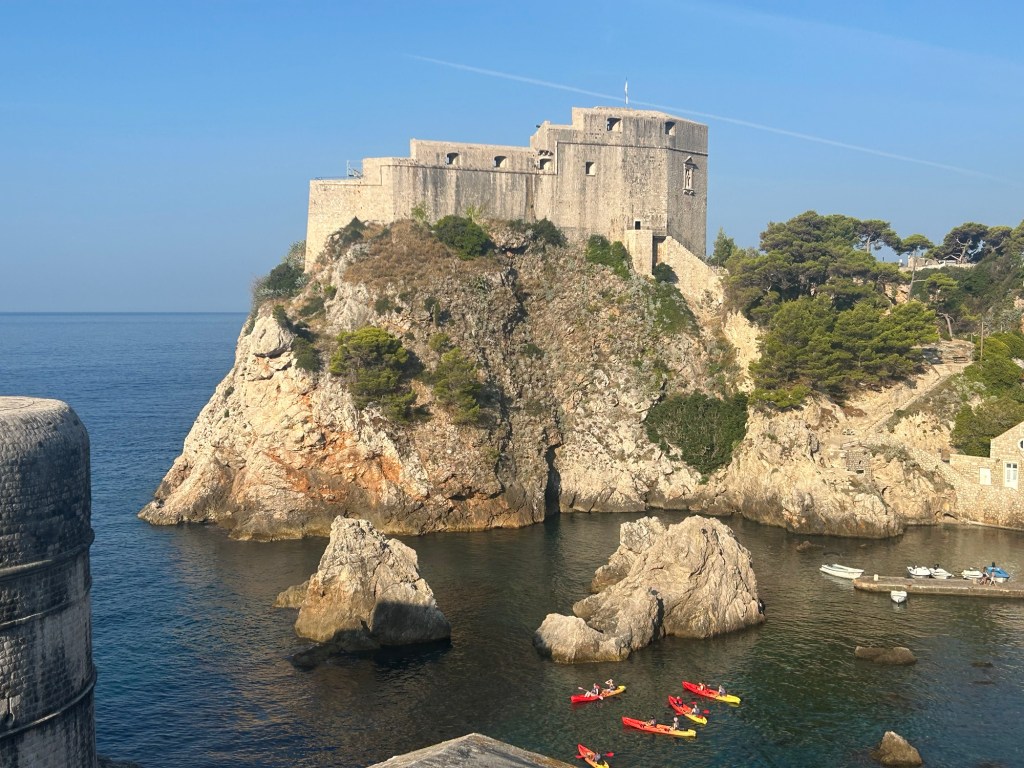
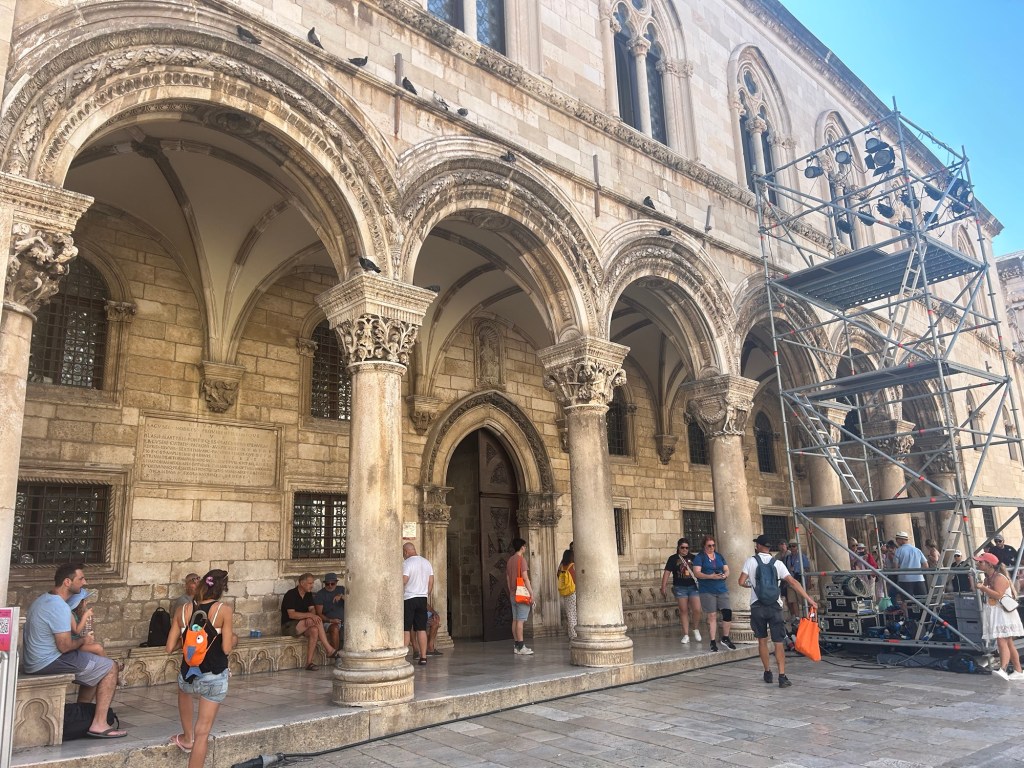
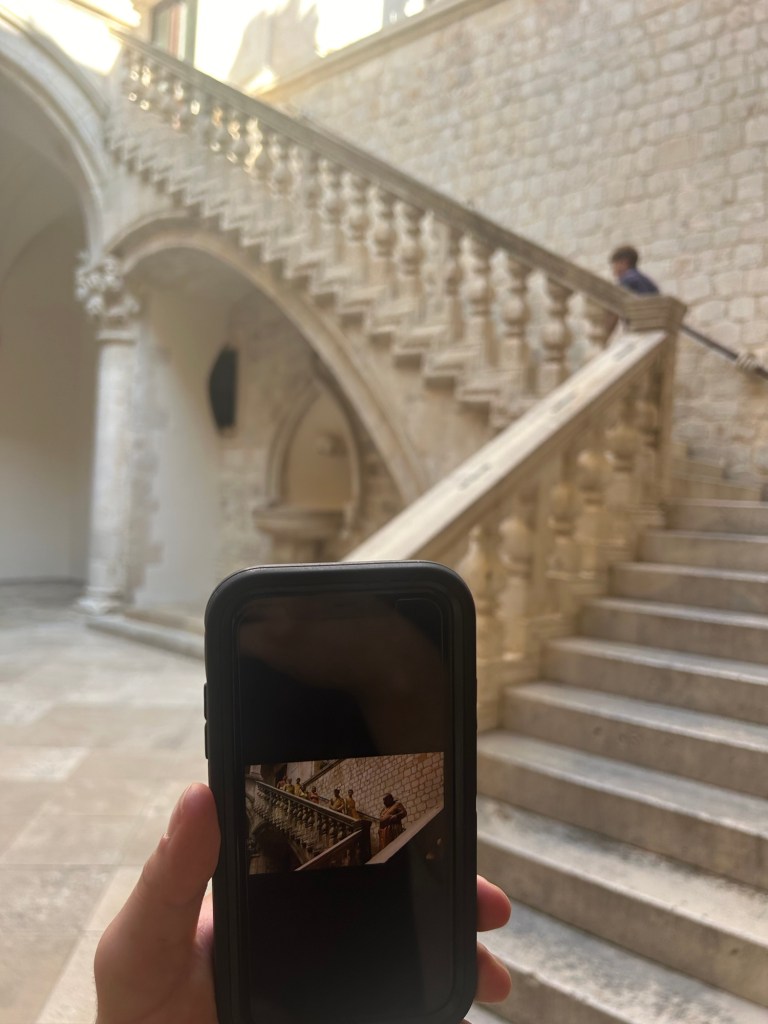
Game of Thrones fans, eat your heart out: here be Dubrovnik, otherwise known as King’s Landing and capital of the seven kingdoms. I only vaguely remember the show, but certain locations were instantly recognizable, like Fort Lovrijenac (the Red Keep) and the inside of the Rector’s Palace (the Spice King’s Mansion).
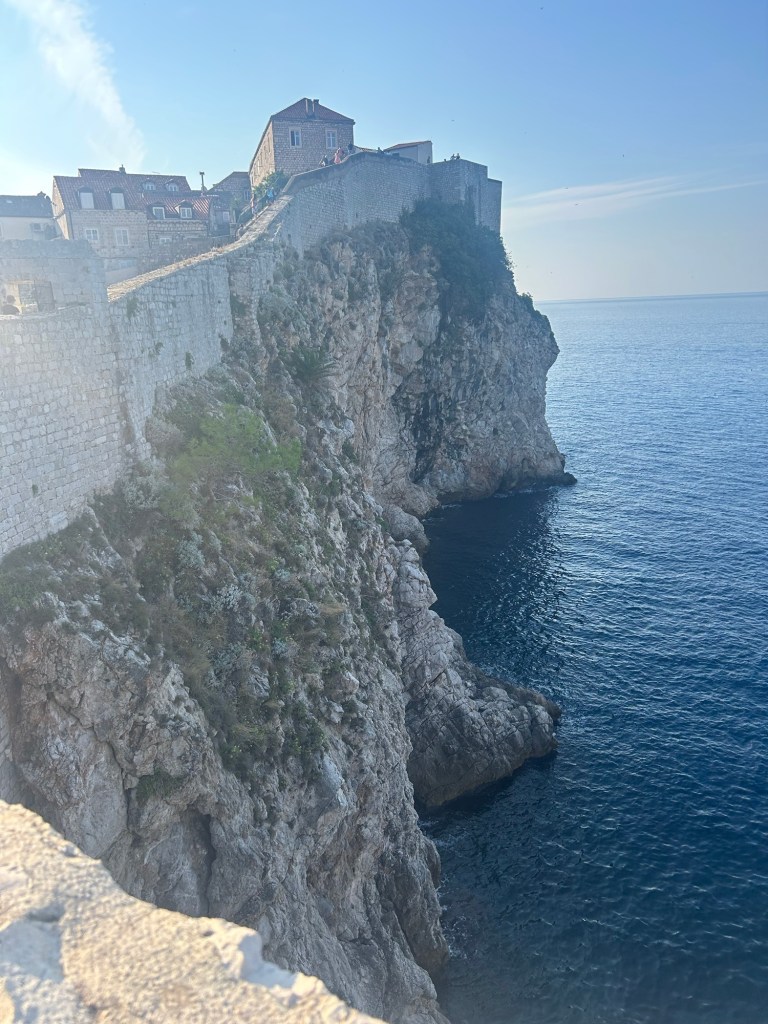
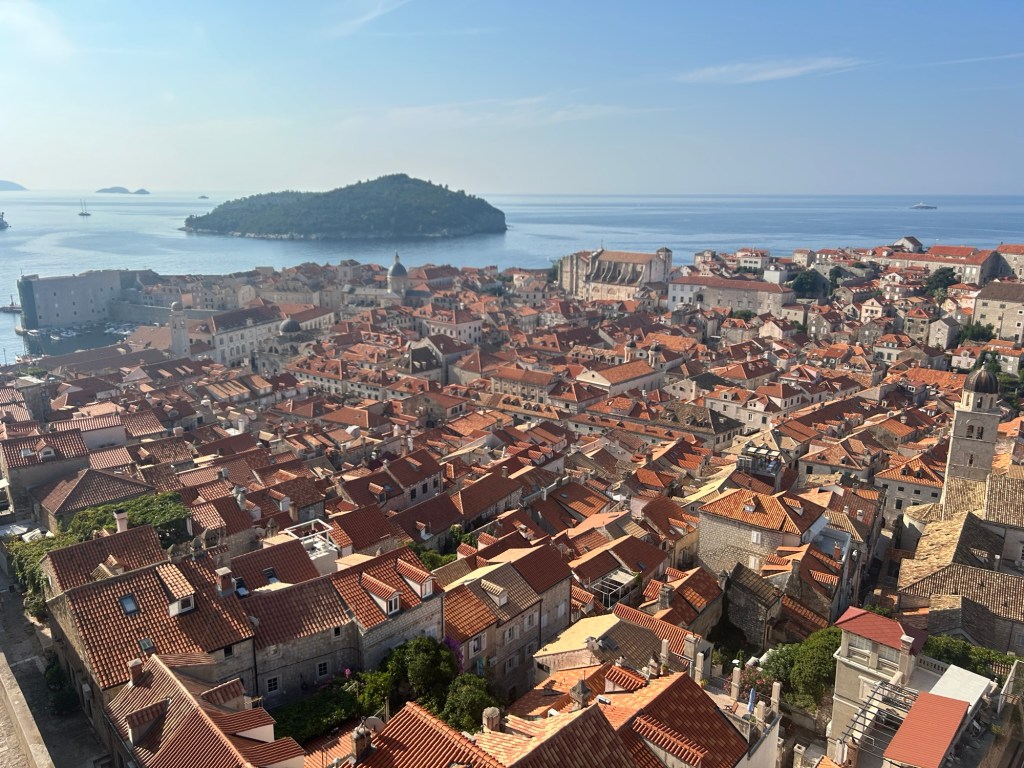
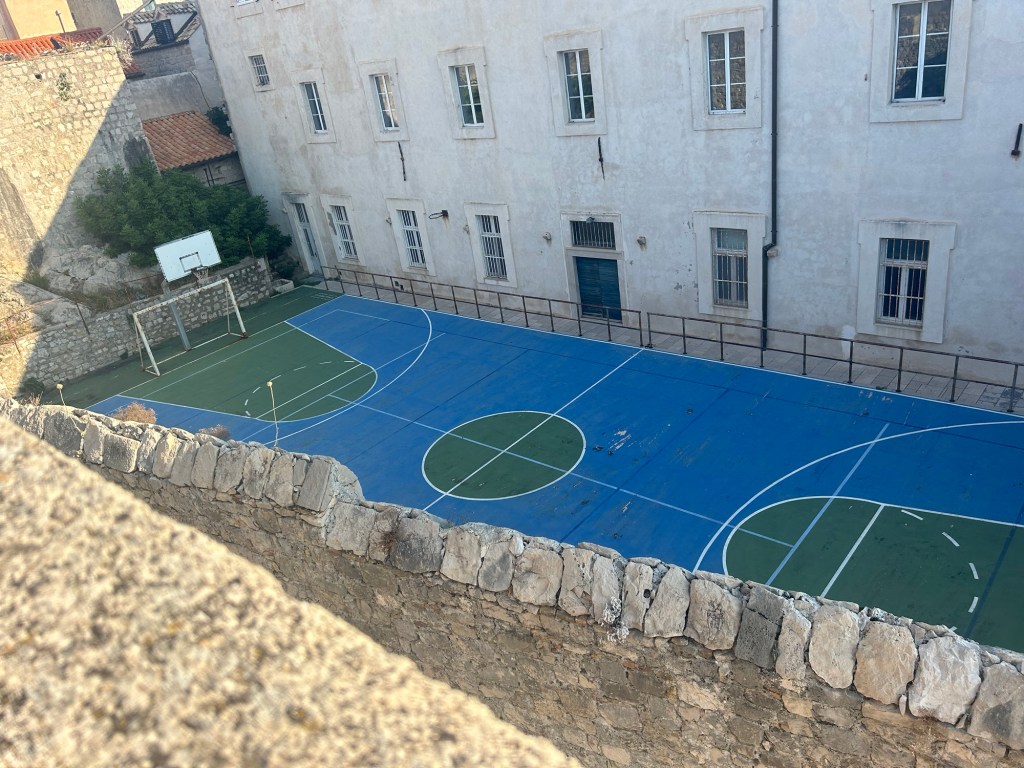
The medieval city walls that encircle the old town are 20 feet thick in some places and as high as 80 feet tall. We walked the full circuit, or at least I did (the others bailed about 3/4 of the way through due to heat). You get amazing views of the homes, shops, churches, etc in the city centre—we even saw a couple of modern sports courts that looked really out of place among the ancient buildings. It was awesome, but damn it was hot, and *so many stairs*. We were glad we did the wall walk as soon as it opened—by the time we finished it was noticeably hotter and the crowds were noticeably larger.
Chris and Justin then sat down by a fountain while Brayden and I wandered around the old town. We ended up inside the Rector’s Palace, former seat of the rulers of Dubrovnik and current home of the cultural history museum. Brayden was completely fascinated by the place, and we spent an hour exploring the exhibits. One room even had air conditioning (!) so we took our time there.
Later on Brayden and I also checked out a museum near the port that detailed the history of communism in Yugoslavia. It had immersive and interactive exhibits, but no air conditioning—the guy at the desk handed us cardboard fans and wished us luck. We could only stand it for about 20 minutes before we gave up and headed back to the ship.
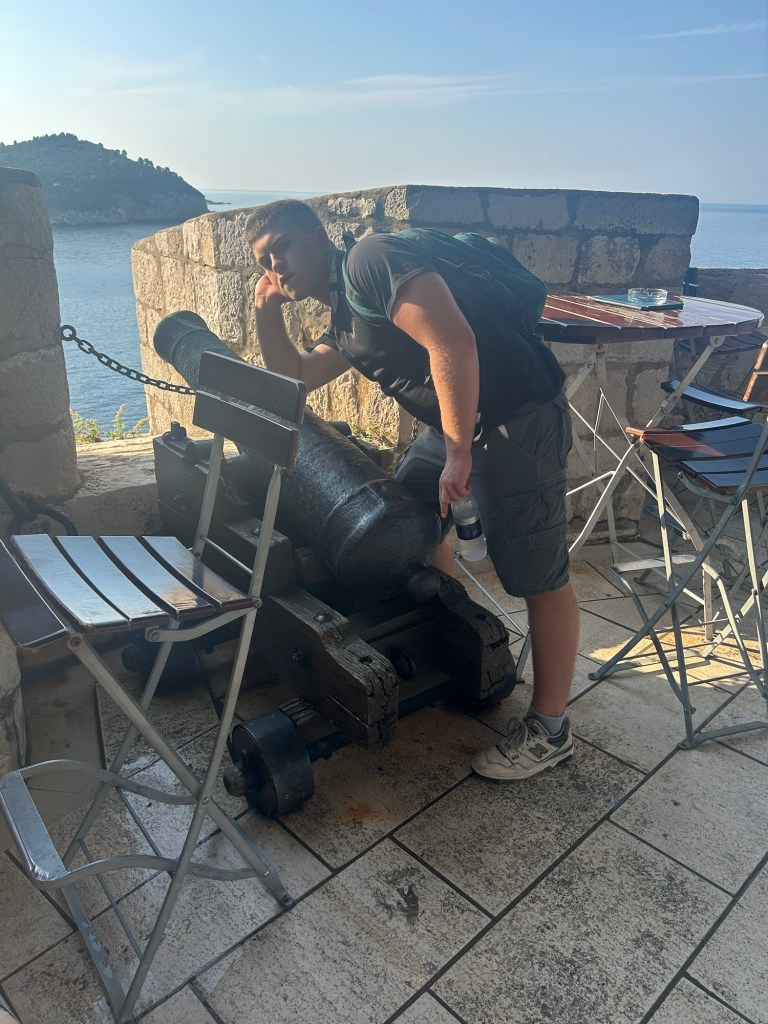
On the walls, with Fort Lovrijenac in the backgroundFort LovrijenacBrayden never met a cannon he didn’t want to pose withView of the wallsDubrovnik from aboveThe sports court seemed incongruousA souvenir that seemed pretty apt for Chris: “It’s too peopley outside”The Rector’s PalaceBrayden holding an image of a Game of Thrones scene that was filmed in the Rector’s Palace. That’s me on the stairs.
August 24 — CORFU, GREECE
What stood out most about our day in Corfu, Greece was the unholy temperature and oppressive humidity. As I write, it’s currently 34 degrees with a humidex of 42. And while the Greeks have given the world many things (democracy, philosophy, etc), they do not seem to have discovered air conditioning. No matter where we went—shops, restaurants, museums—there was not the slightest whiff of cool air. We walked over 8K while marinating in our own sweat. Whew.
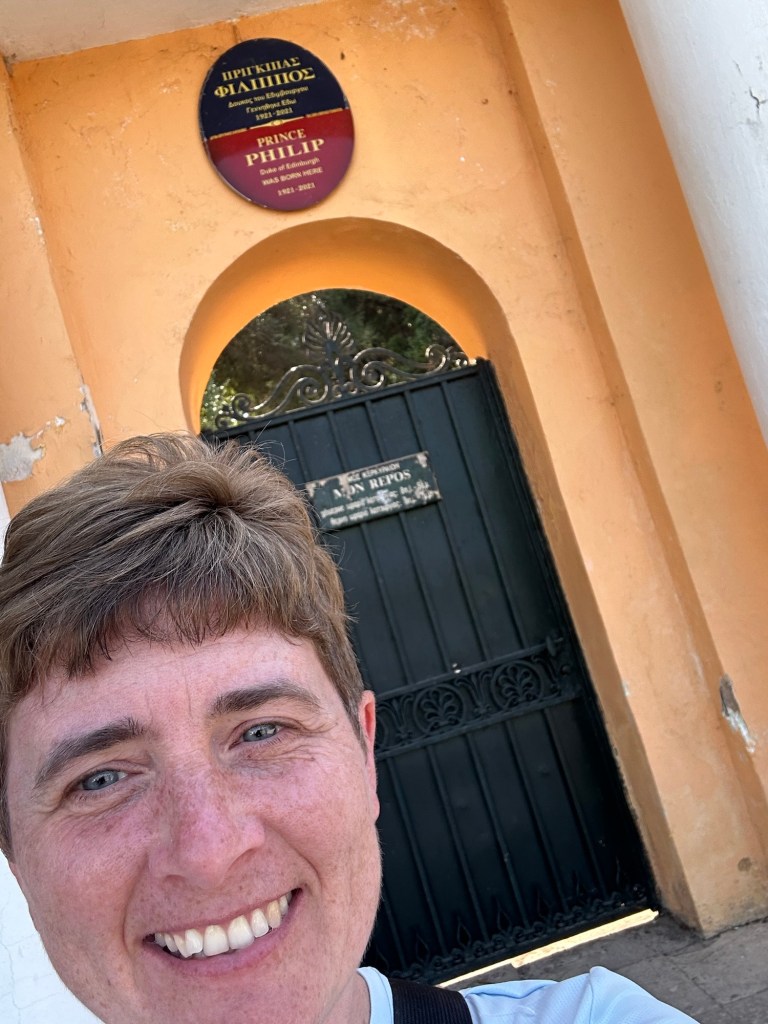
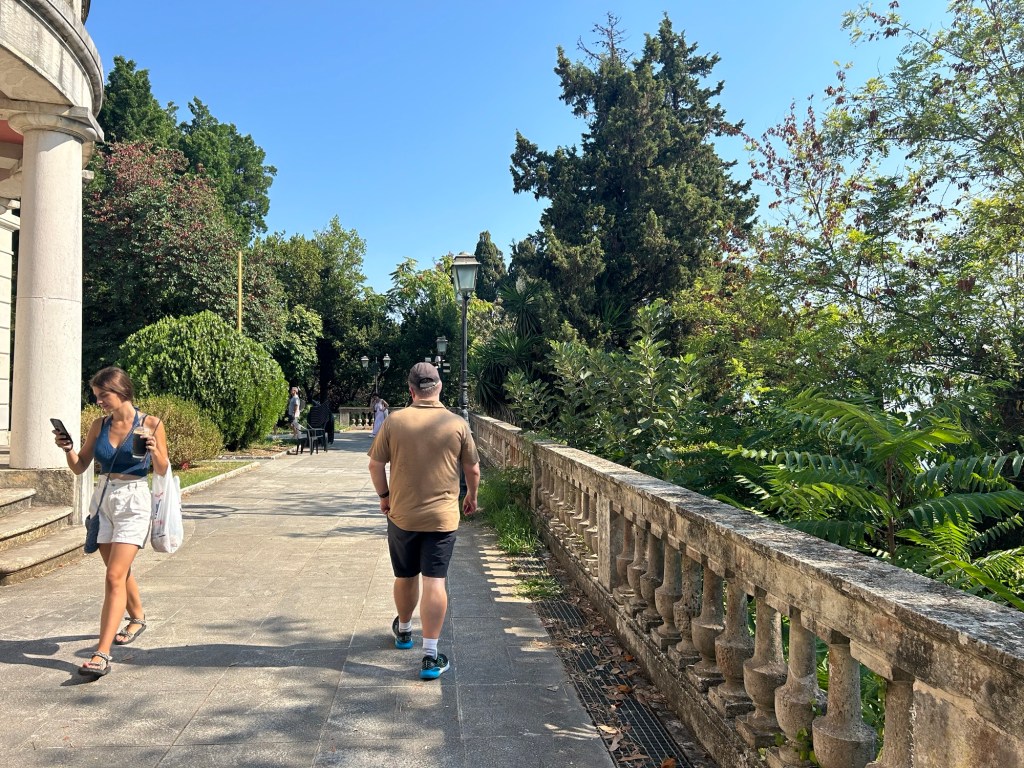
We started at Mon Repos, the now-slightly-derelict villa where Prince Philip was born in 1921. We didn’t go inside, but we did enjoy the (shaded!) walk through the surrounding park.
We then walked 30 minutes back to the old town. At this point we were seriously dehydrated, so we stopped at a roadside kiosk, where 3L of water cost only 2 euro (roughly $3 Canadian). I had to ask them to repeat the price cause I couldn’t believe it was so cheap. Wow.
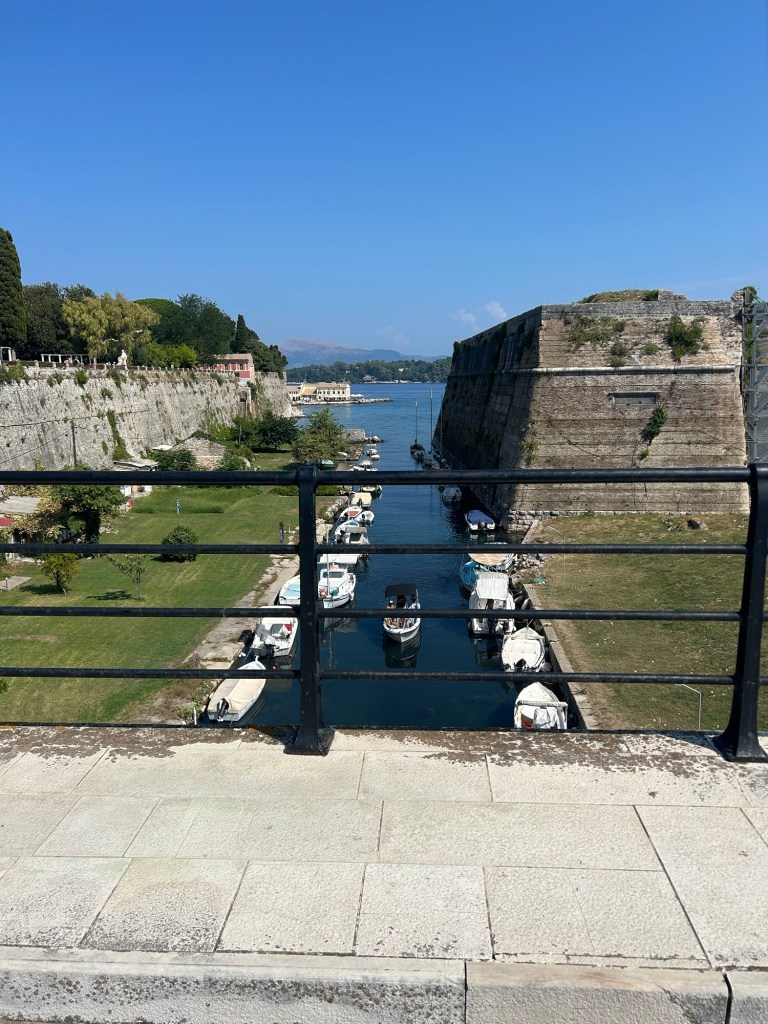
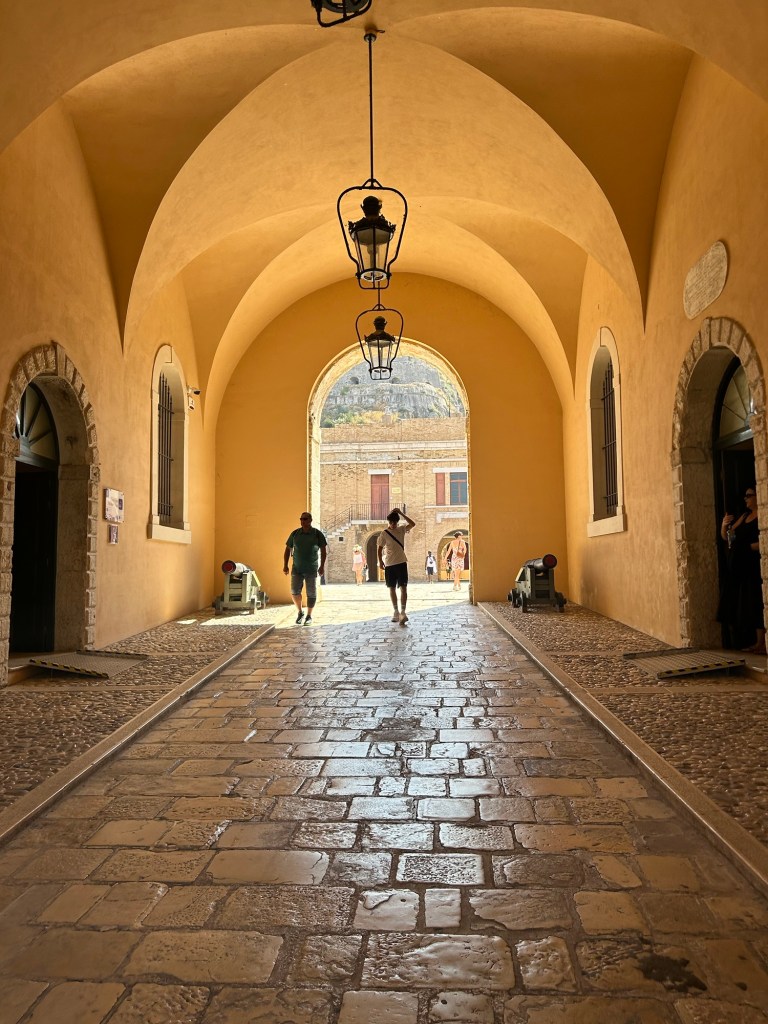
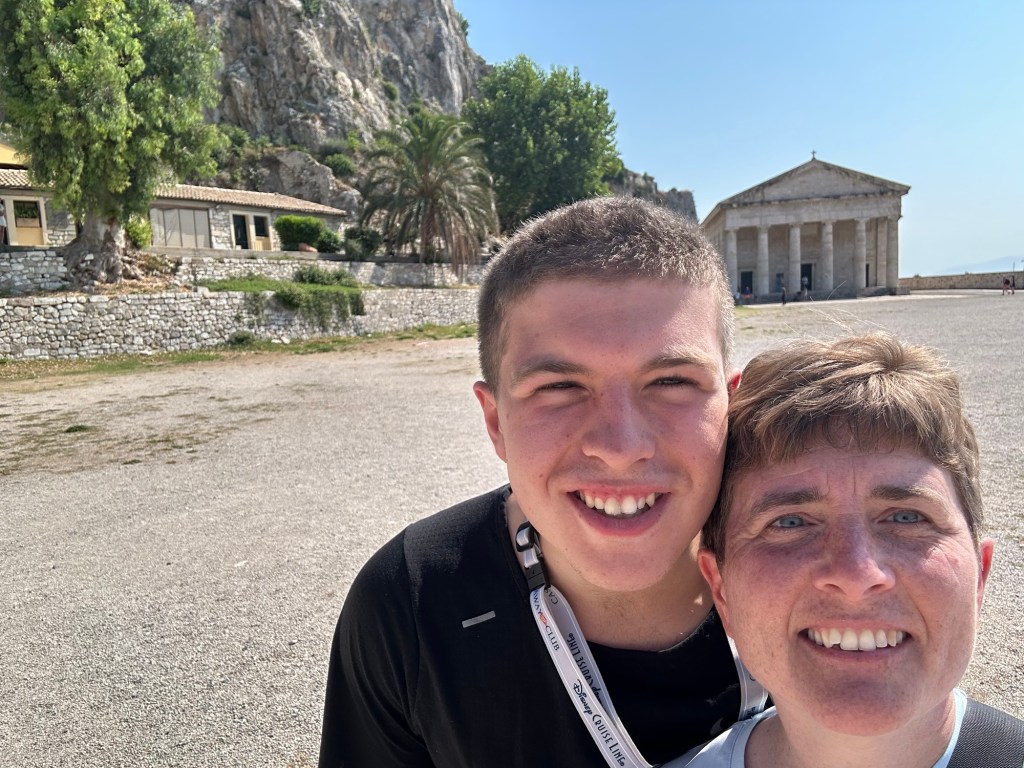
Next, Brayden and I explored the Old Fortress, originally built by the Venetians and added to by the French and British who followed. The fortifications were really interesting and we got some amazing views!
After a tasty souvlaki lunch at a cute little taverna, we wandered around the old town, did some souvenir shopping, and dragged our sweaty asses back to the ship.
Day at sea tomorrow!
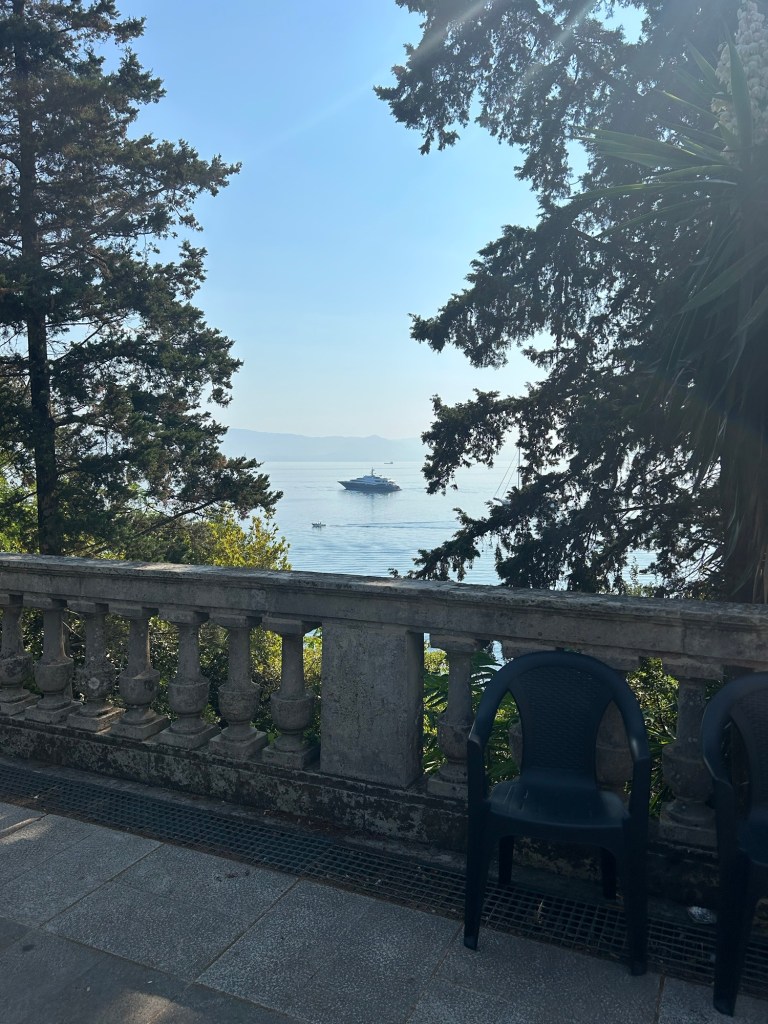
At the gates of Mon ReposThe cat at the park entrance knew how to deal with the heat: just pass outApproaching Mon ReposThe palace/villa where Prince Philip was bornNice view from the park surrounding Mon ReposAt Mon ReposThe moat we crossed to get into the Old Fortress of CorfuEntering the fortressStanding inside the fortress, with the British-built Church of St. George behind usWe found a cute taverna for lunch
August 25 — AT SEA
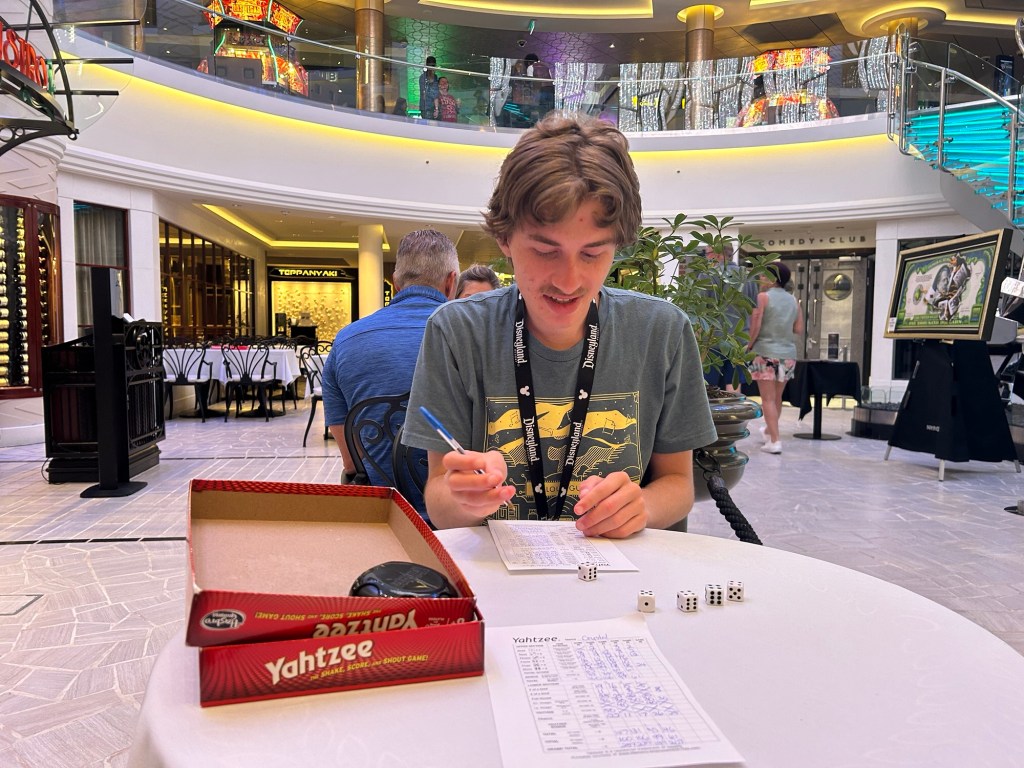
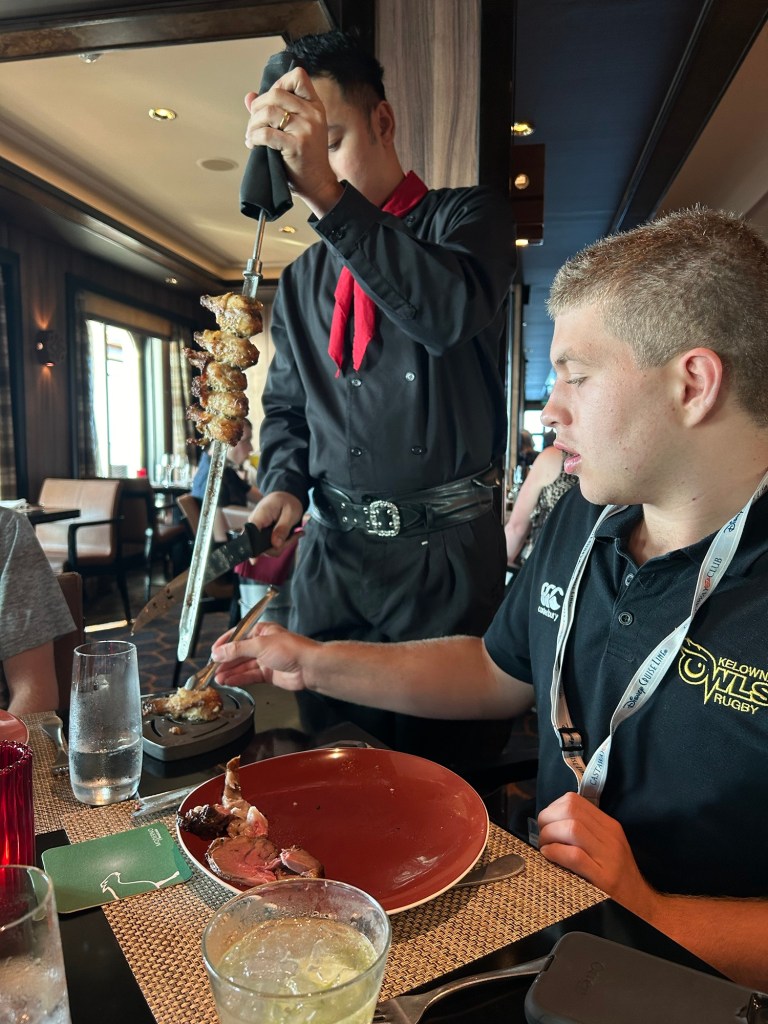
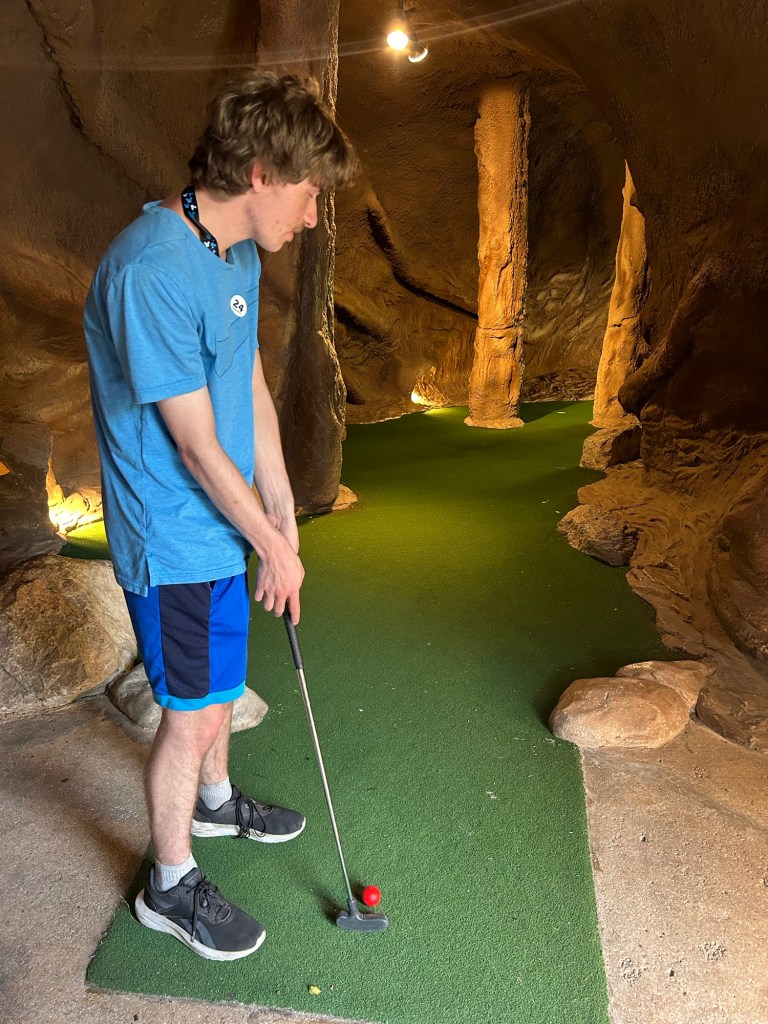
Sea days have never been my favourite, but I have no complaints about this one. The great thing about a cruise is that everyone can do their own thing. I played some Yahtzee and mini golf with Justin, cooled off in the ship’s awesome grotto waterfall feature. and then enjoyed a special family meal at the Brazilian steakhouse.
Next up: Malta!
The ship set out some games on the patio of the French restaurant…J and I played YahtzeeMini golf on the sports deck!The waterfall grotto in the adults-only area of the ship was a fantastic way to cool downThe Brazilian steakhouse was a unique experience
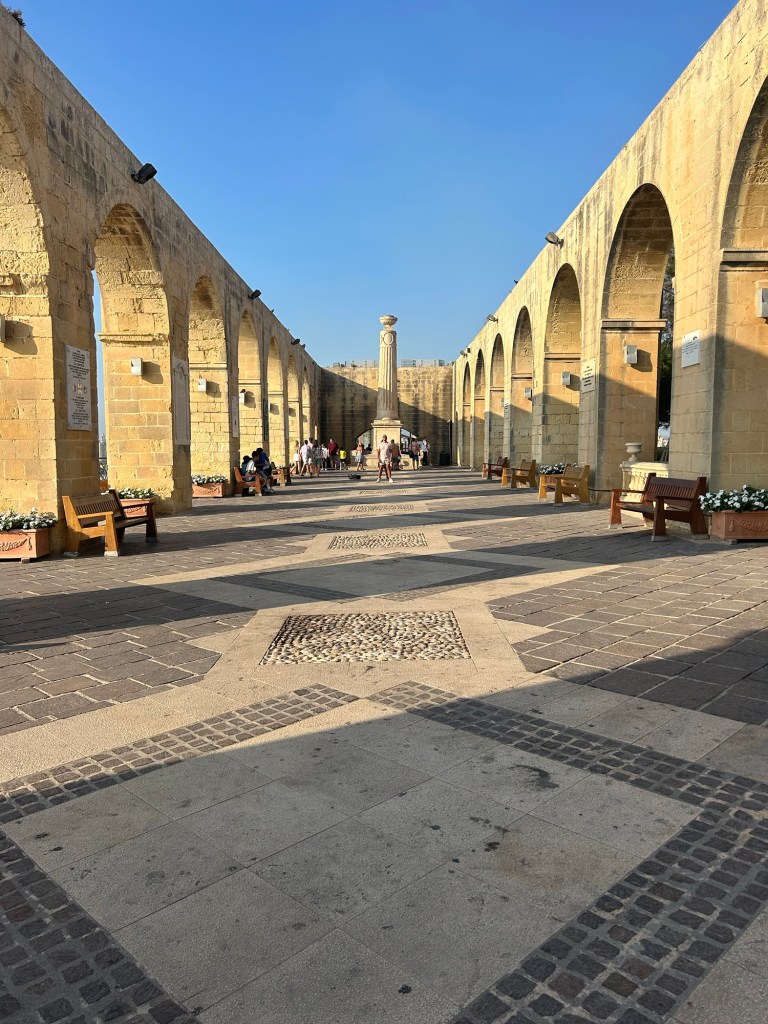
August 26 — VALLETTA, MALTA
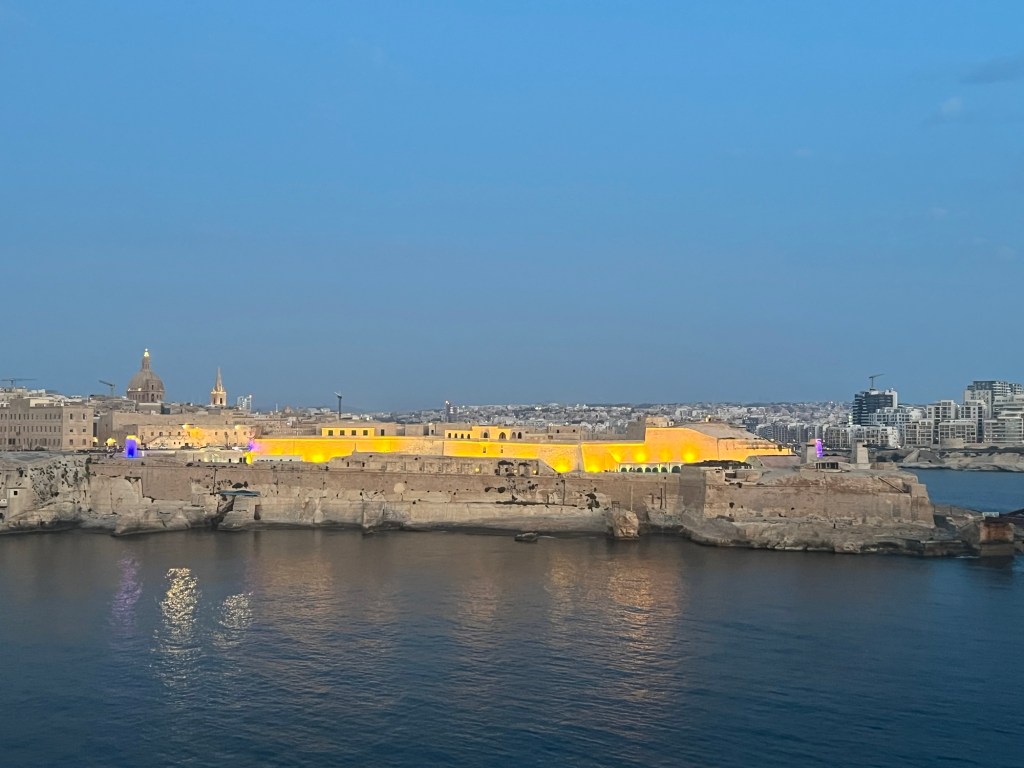
The early morning sail-in to Valletta, Malta, was easily the most impressive one we’ve seen. It really felt like we were stepping into the Middle Ages. (I got a video, but it’s long and slow and I won’t subject anyone to that.)
We docked early but had to be back on the ship by noon, so we were determined to make the most of our limited time. We walked around town long before anything was open, and it was neat to see so many monuments and historical sites with few people around.
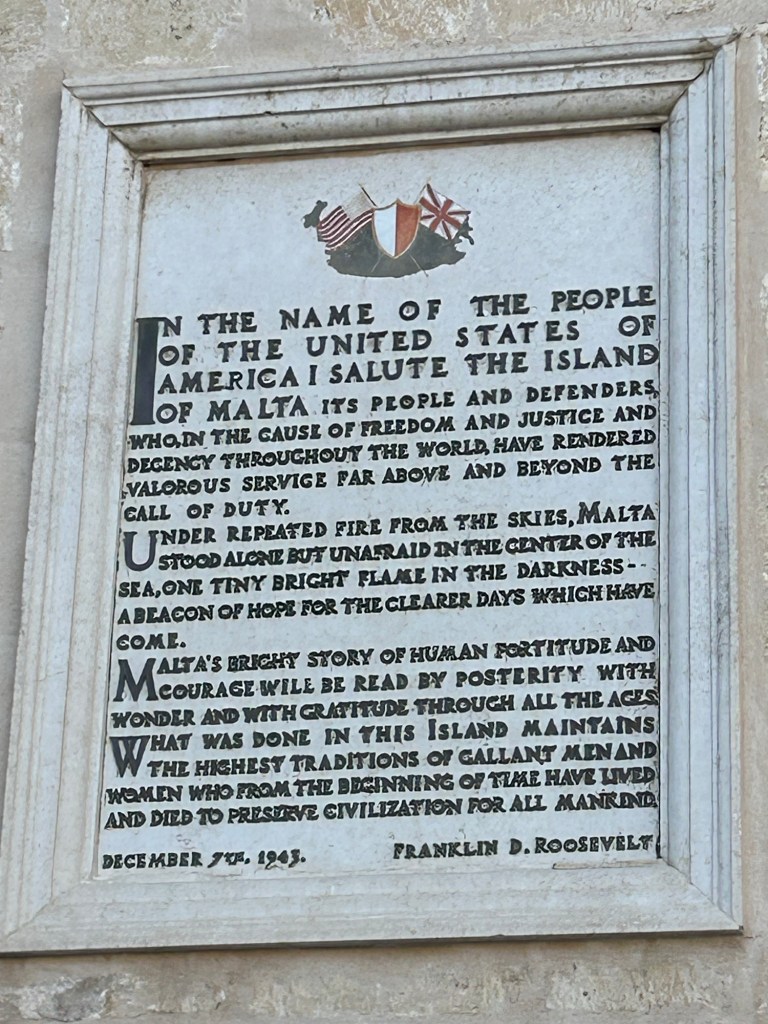
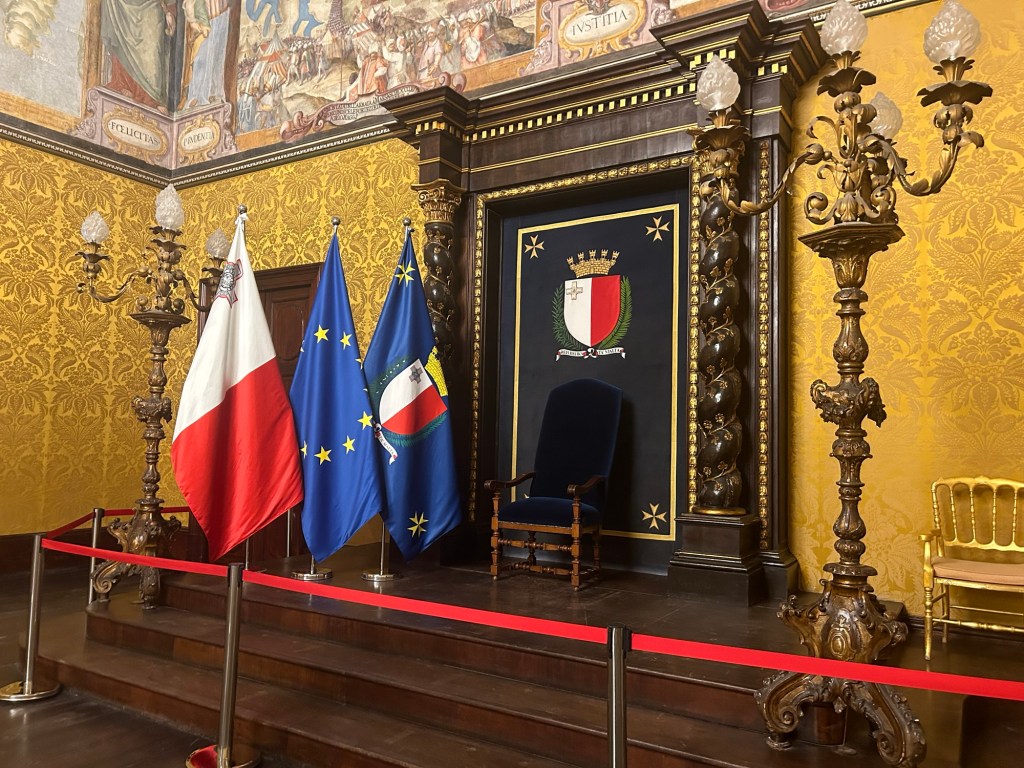
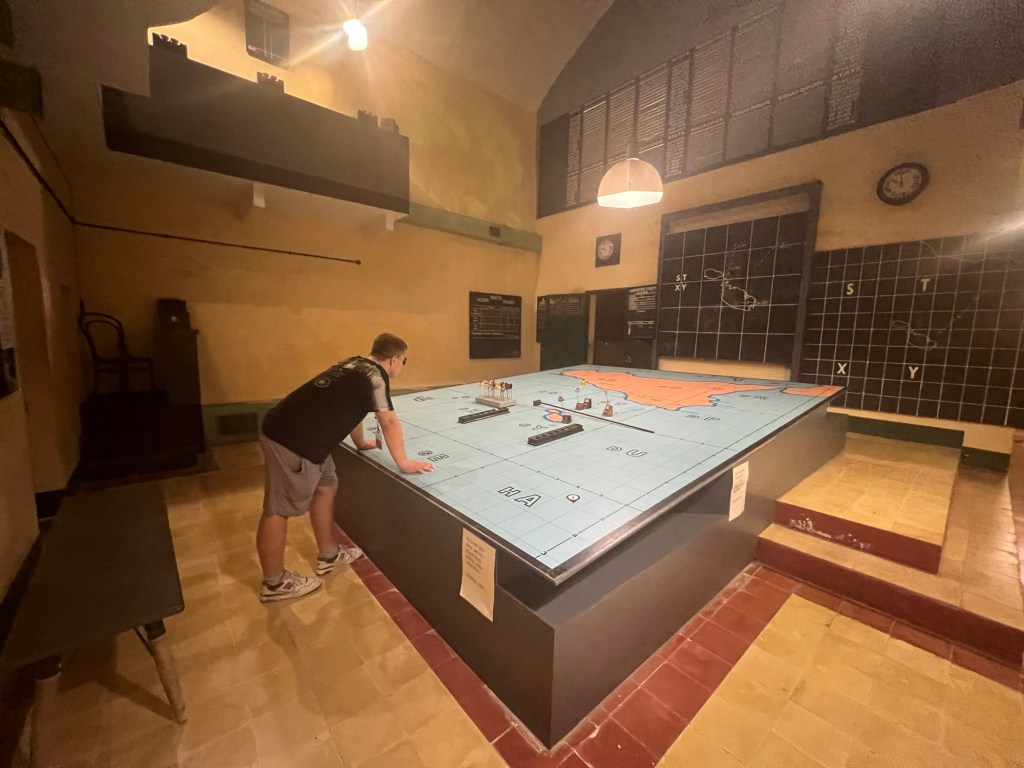
Due to the time crunch, we split into two groups: Chris and Brayden went off to the war rooms while Justin and I toured the Grand Master’s Palace. Built in the late 16th century by the Order of the Knights of St. John, the palace now houses the office of the president of Malta. We saw the state rooms and the armoury. The palace had been closed for renovations for five years and only reopened this past January, so I felt fortunate we were able to see it.
By the time we finished, the streets were mobbed with people (damn those cruise day trippers, hey?) so we made our way back to the ship. After lunch three of us joined in a game of trivia in the ship’s atrium—I came in second out of 30 people!
Italian ports for the next three days…
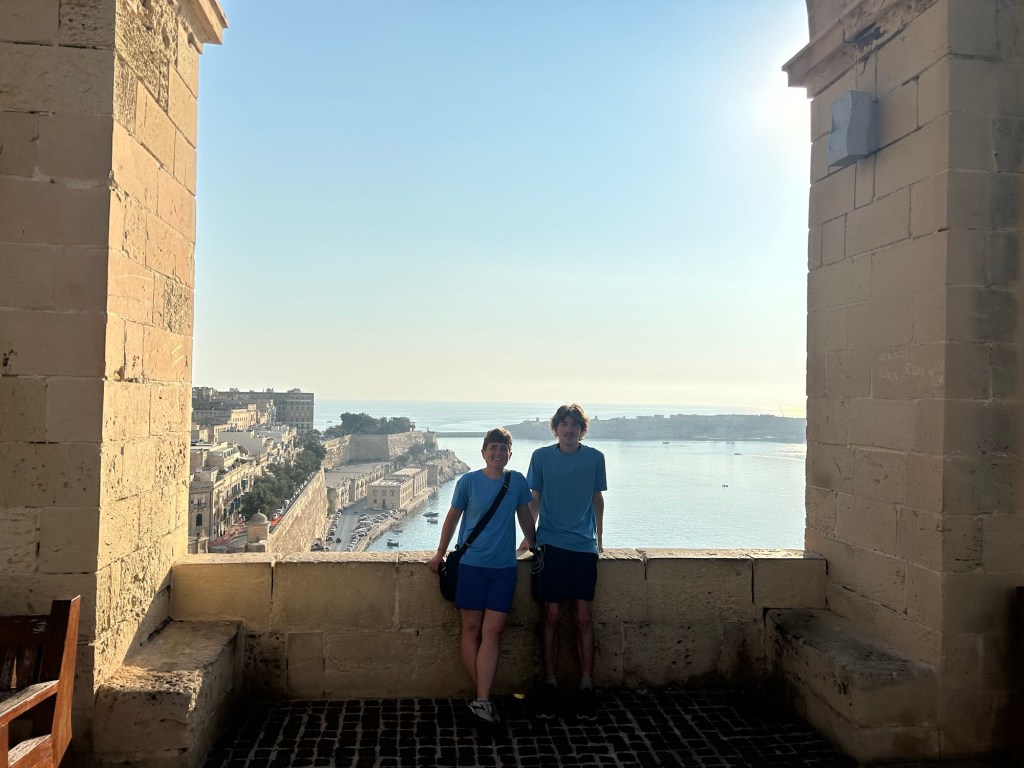
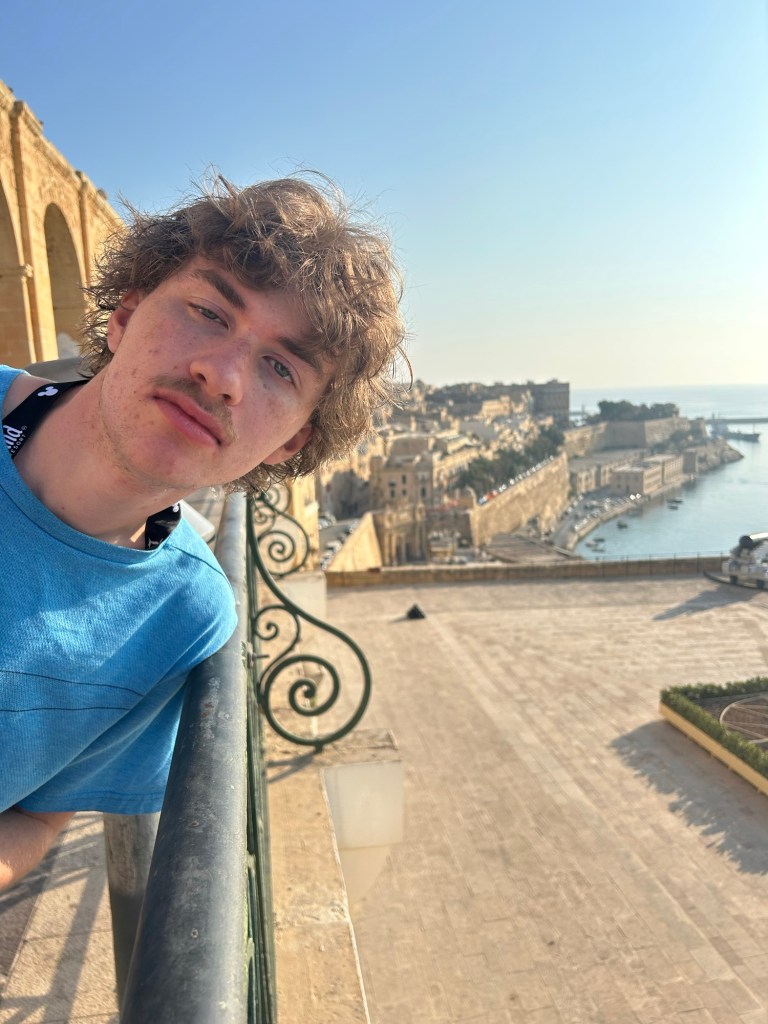
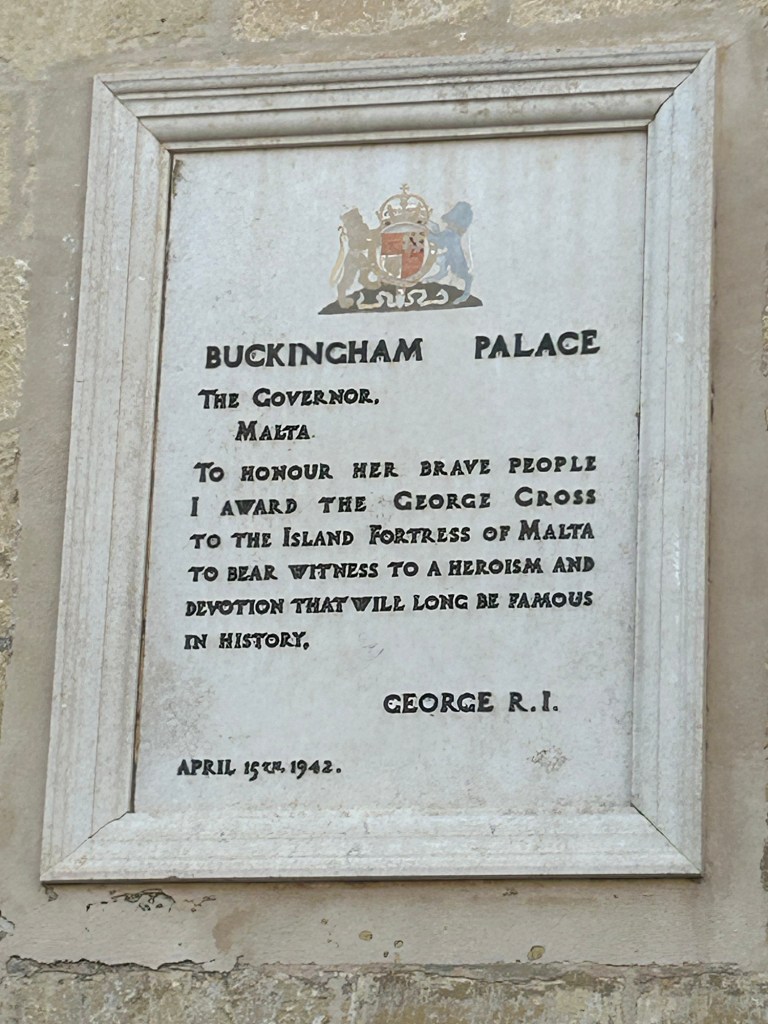
Sailing into the Grand HarbourUpper Barraka GardensLooking out into the harbour from Upper Barraka GardensView of Fort St. AngeloPlaque outside Grand Master’s PalaceAnother plaque outside palaceOutside the palaceThe ambassadors’ roomThe throne roomPalace corridorVery detailed armourBrayden in the war rooms
August 27 — NAPLES, ITALY
Our day in Naples got off to a bit of a rocky start: Brayden’s had a cold for the past few days and really didn’t feel great this morning, so we did a quick pharmacy run and left him to chill on the ship.
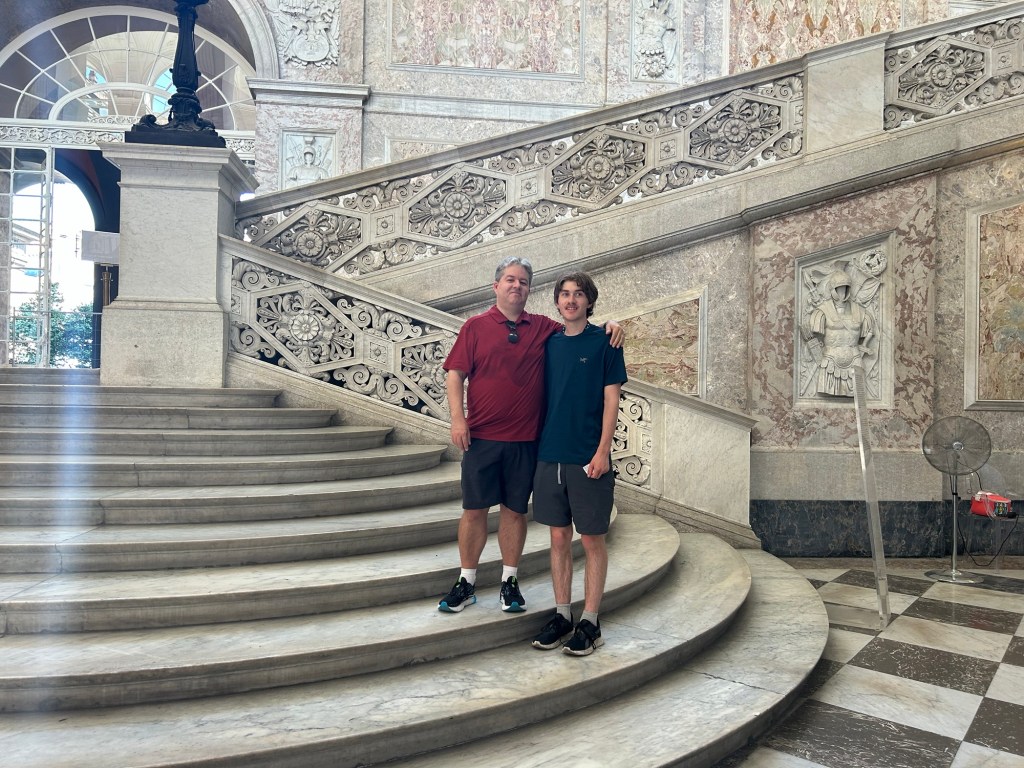
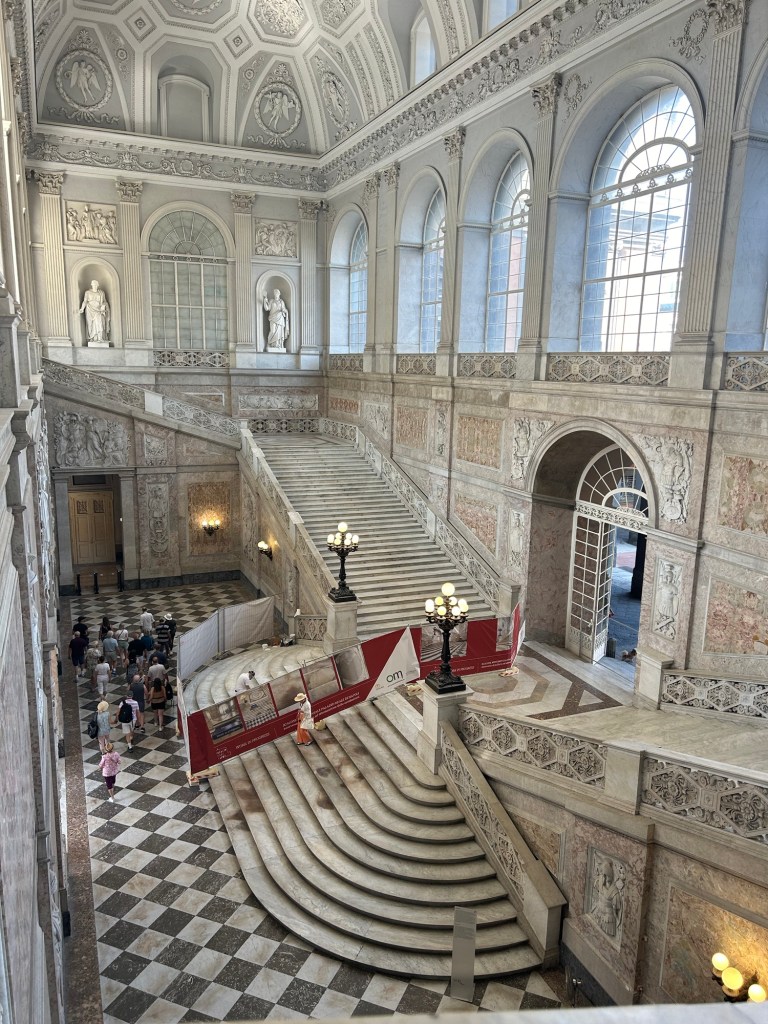
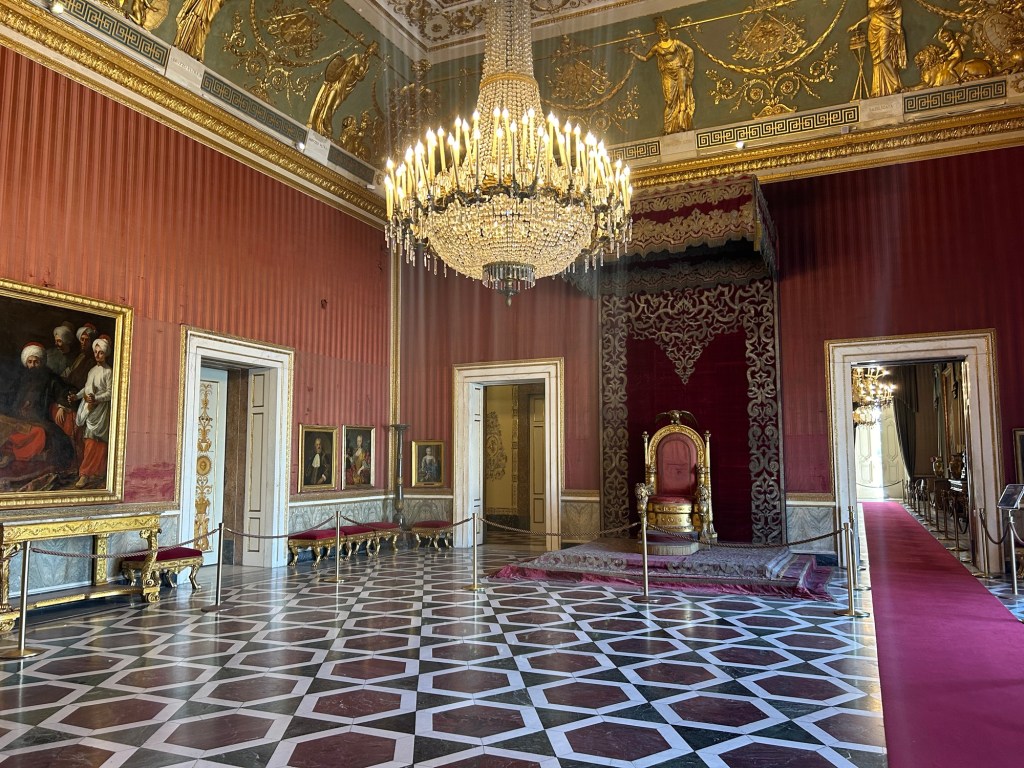
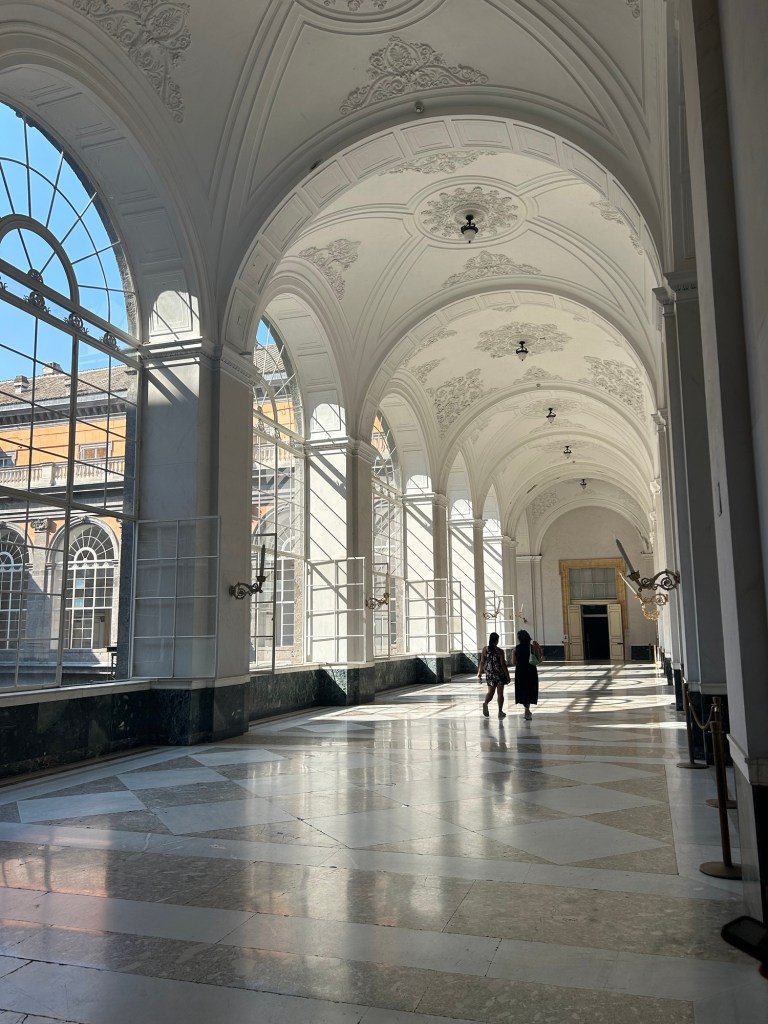
The rest of us toured the royal palace, once used by the Spanish viceroys as well as the Bourbon and Savoy kings. It was far more opulent than I was expecting—well worth the price of admission!
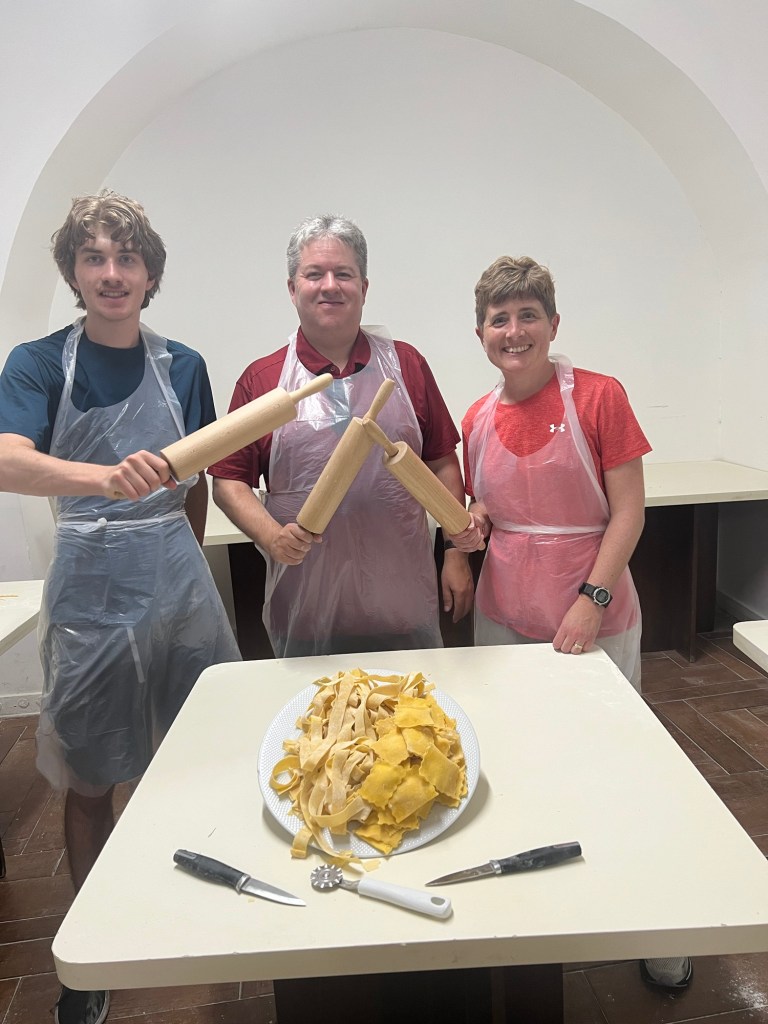
Our main adventure today was a pasta cooking class at a local restaurant. Along with a British couple and a young Mexican woman, we donned plastic aprons and prepared fettuccine and ravioli from scratch. The chef was both entertaining and understanding—we had *no idea* what we were doing, but the meal still turned out great. An awesome experience!
B recovered enough to go souvenir shopping this afternoon (he’s collecting flags) so hopefully he’ll be good to go for the rest of the cruise.
The royal palaceMaking pasta from scratch!
August 28 — CIVITAVECCHIA, ITALY
Most people use the port of Civitavecchia as a launching point for Rome, 75 minutes away. But we’ve already seen the Eternal City, so instead I booked us a private tour to a lakeside castle and an ancient necropolis.
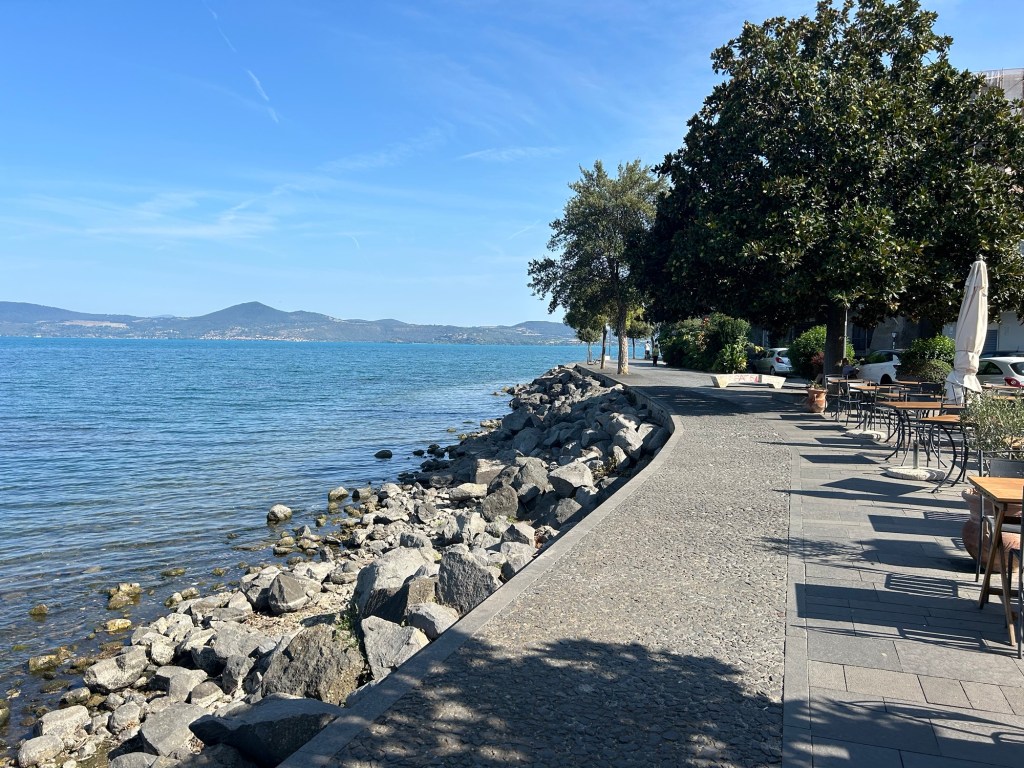
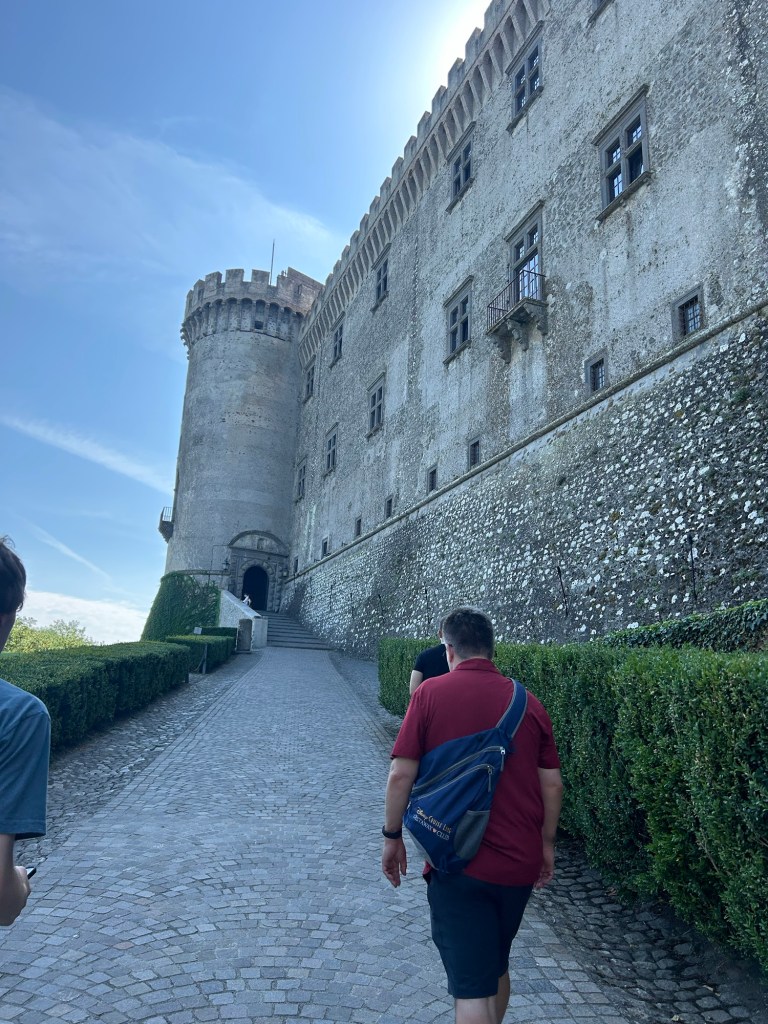
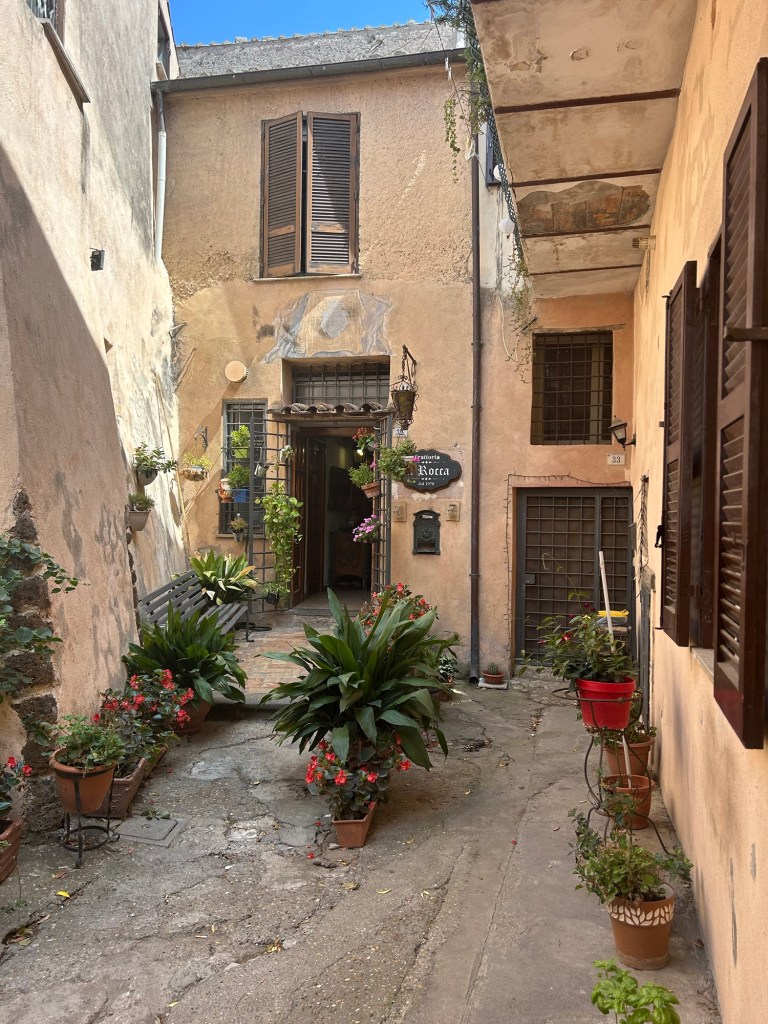
The driver picked us up right next to our ship (in an air conditioned van no less!) and took us to Anguillara, a lovely little town on Lake Bracciano. We had a few minutes to walk around and take pictures before heading to what I considered the main attraction: Odescalchi Castle.
The castle was built in the 15th century and is one of the largest in Italy; it’s also famous as the setting for the wedding of Tom Cruise and Katie Holmes in 2006. We walked through a bunch of impressive interior rooms, but it was the outside of the castle and the views over the lake that really stole the show. Absolutely gorgeous.
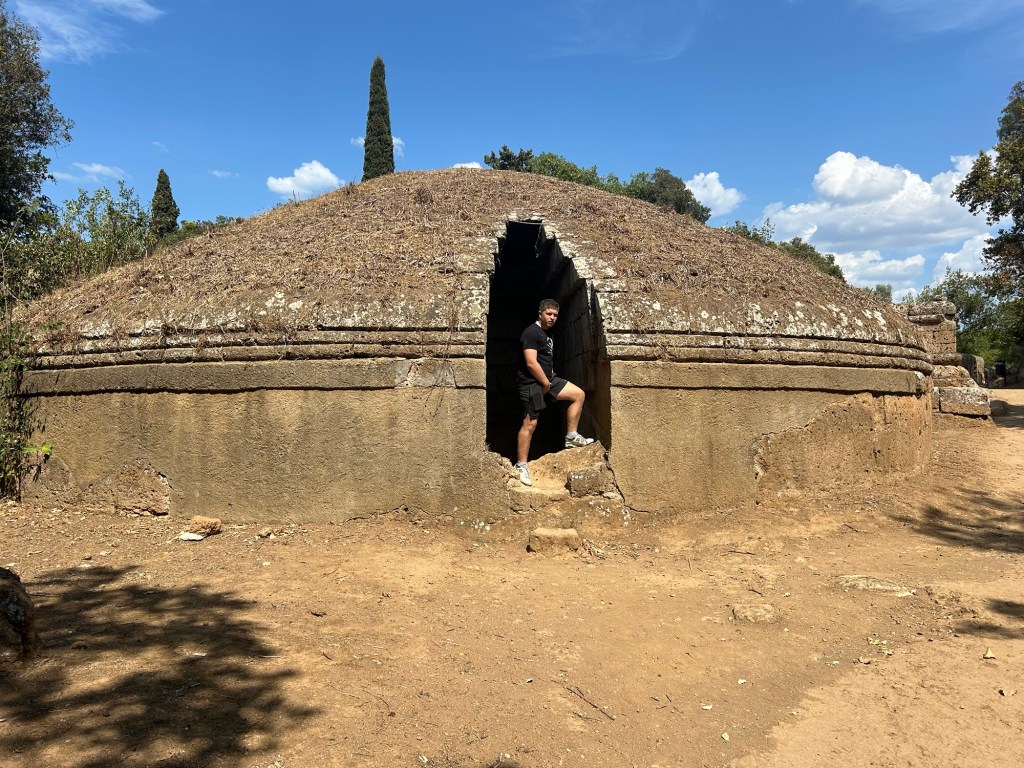
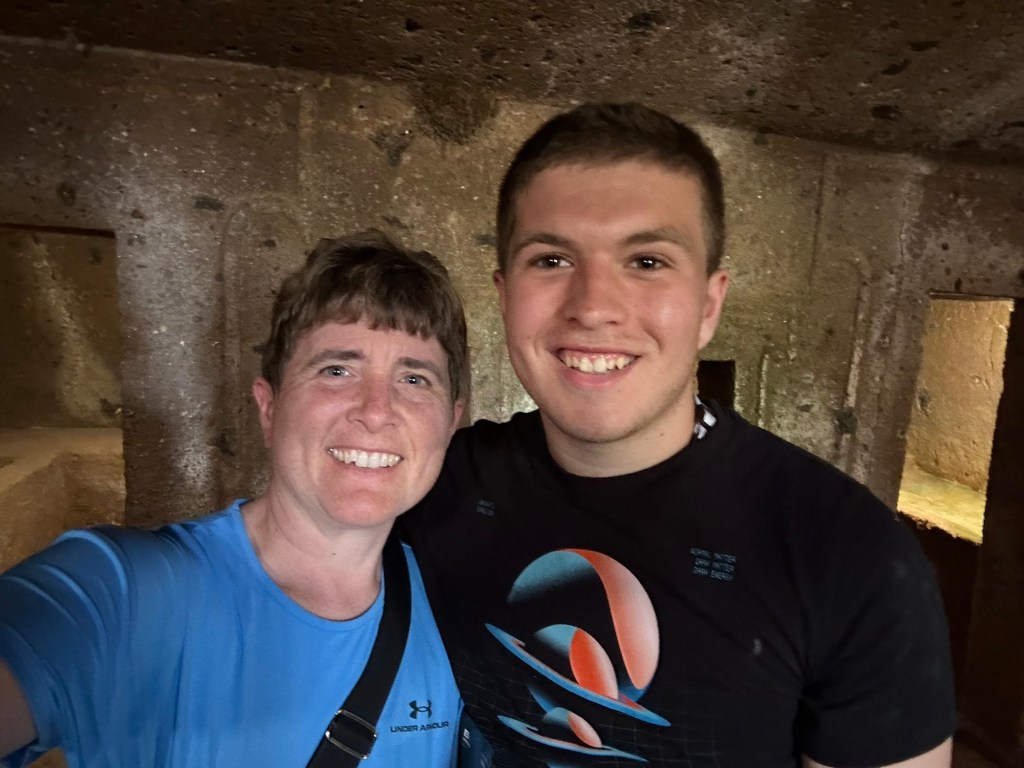
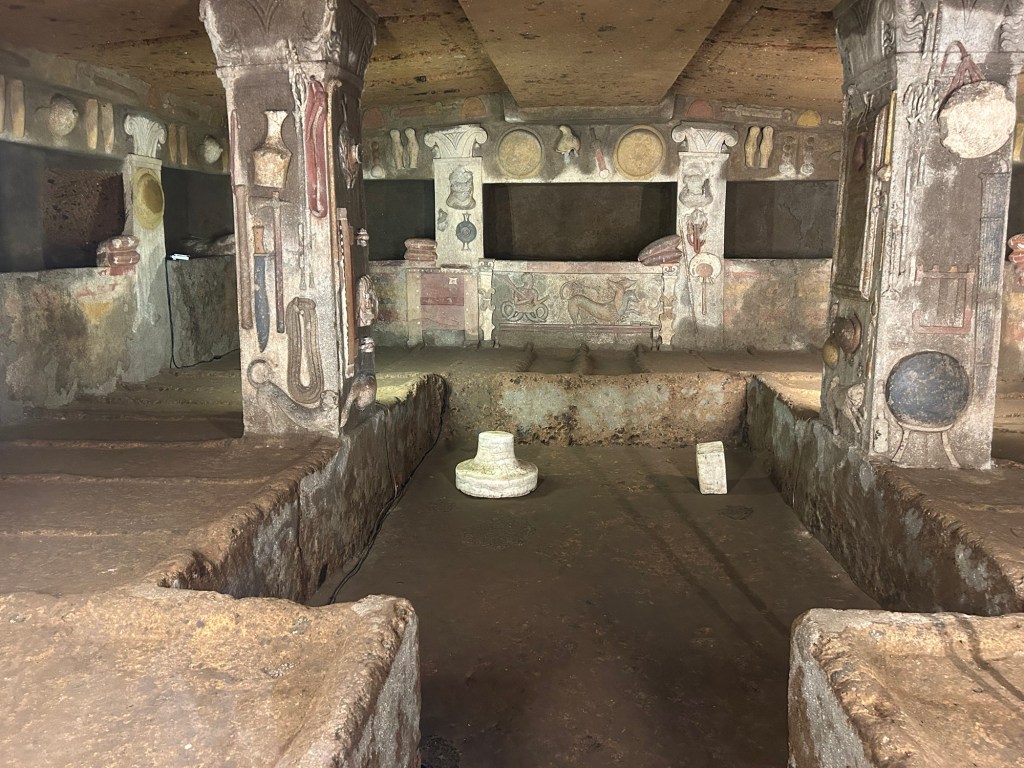
After lunch we explored the Cerveteri necropolis, an Etruscan city of the dead. It contains hundreds of tombs dating back to the 9th century BC; some are shaped like huts or small houses while others are dug into the rock underground. As history nerds, Brayden and I both found it extremely interesting (albeit hot; at one point we were literally just chilling inside a tomb to get out of the heat.)
Tomorrow: Tuscany!
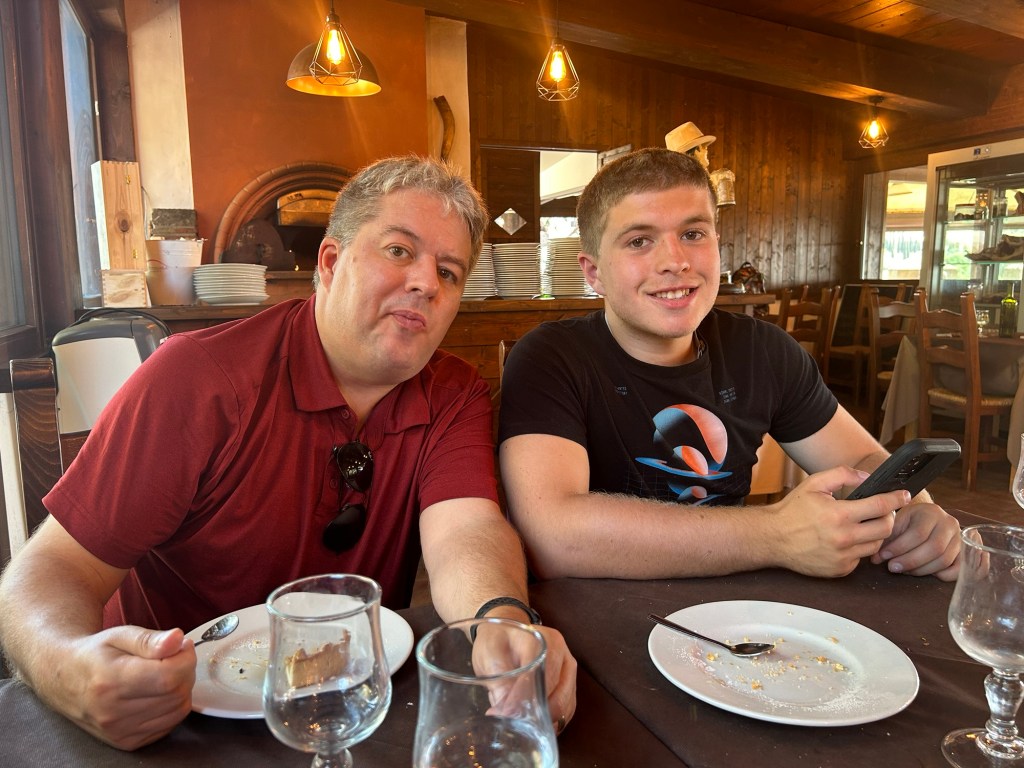
AnguilllaraWalkway along Lake BraccianoAt Odescalchi CastleOur driver took us to this restaurant for lunchComing into the necropolis
August 29 — LIVORNO, ITALY
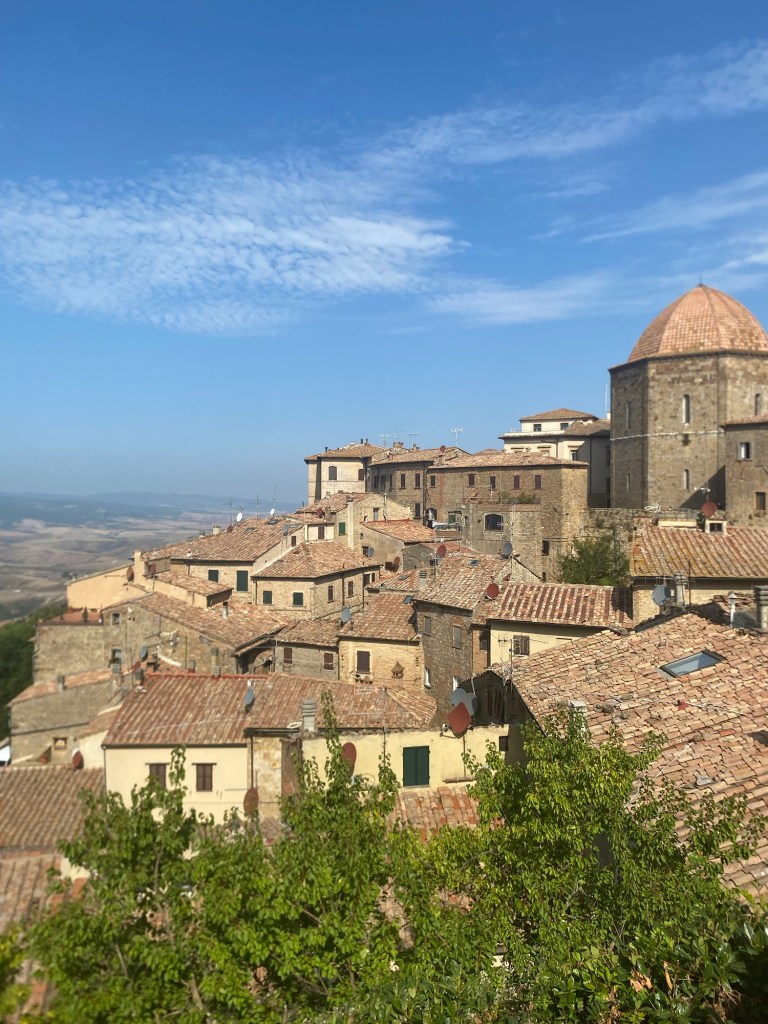
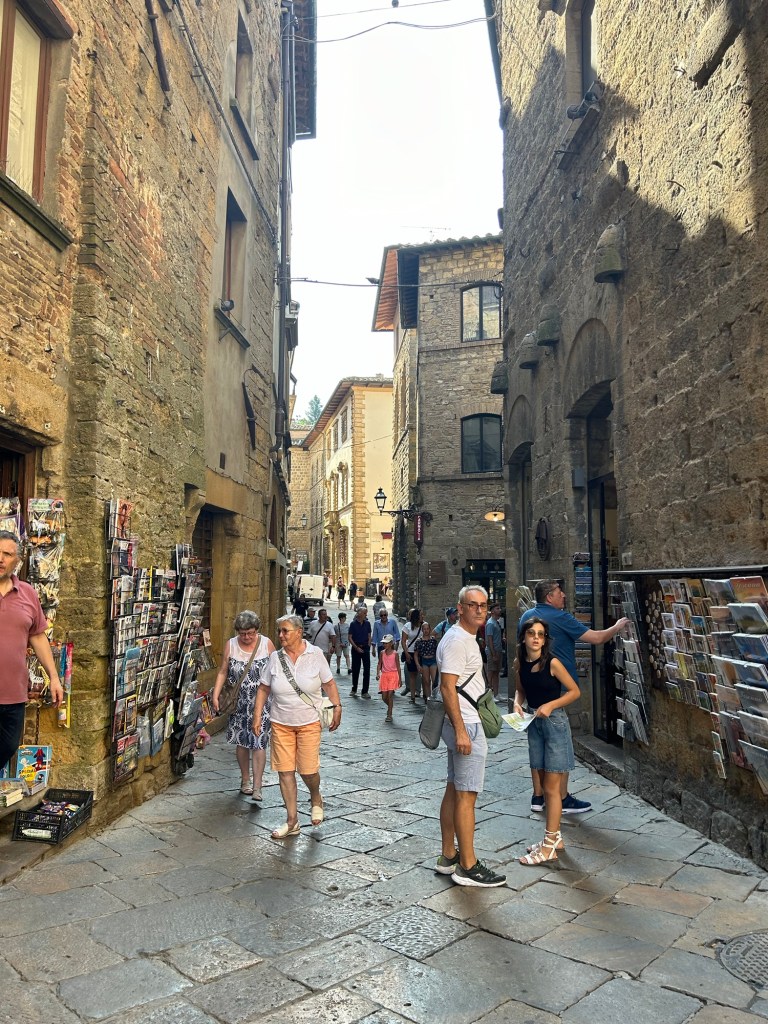
The port of Livorno is the gateway to Tuscany, and most cruisers who dock here head for Florence or Pisa. But I wanted to zig while others zagged, so after doing some research I booked a private tour to a place I’d never previously heard of: Volterra.
This hilltop town was one of the main city-states of ancient Etruria and is still surrounded by both Etruscan and Roman ruins. It’s also somewhat off the beaten path, so crowds really aren’t an issue. Score!
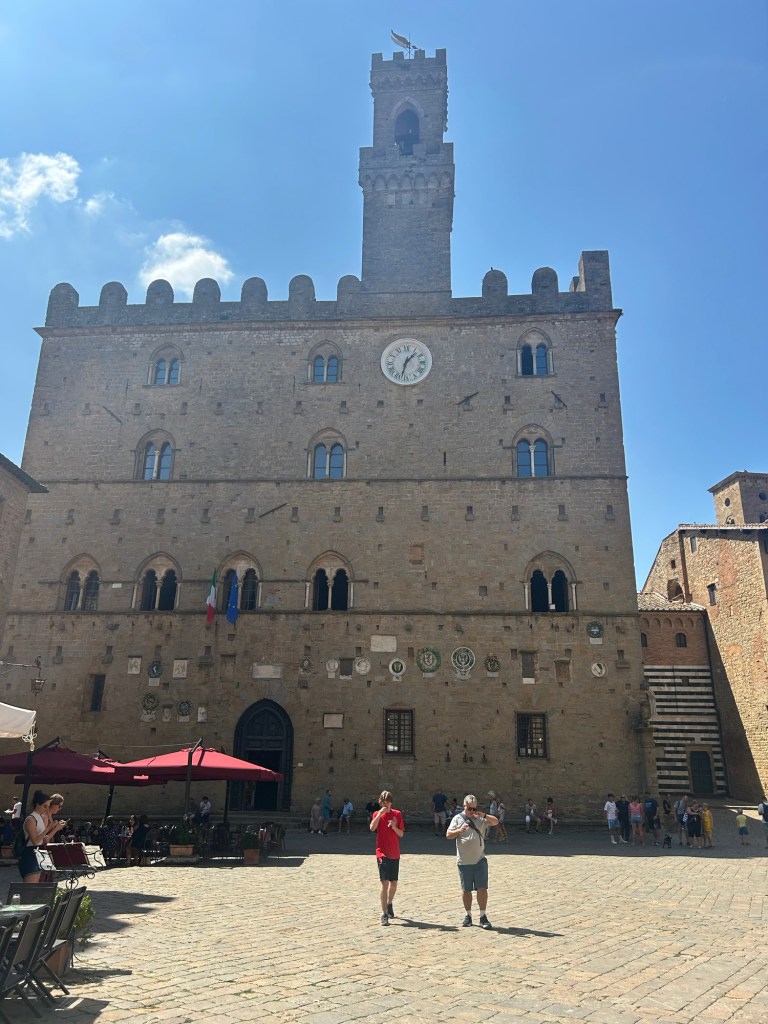
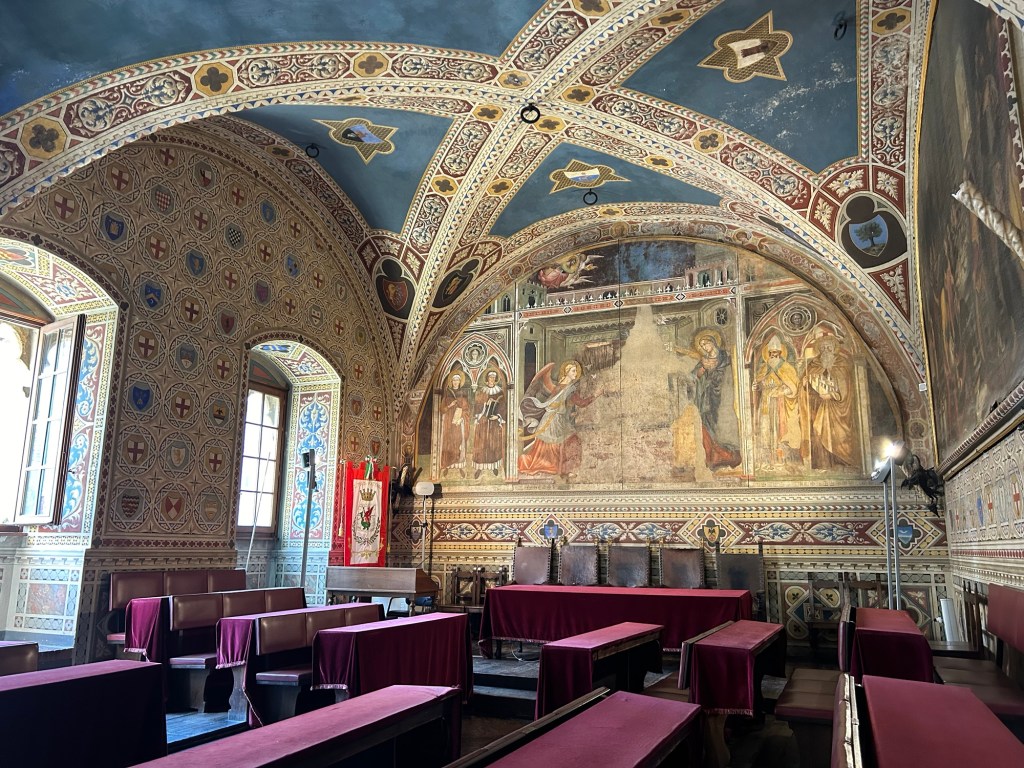
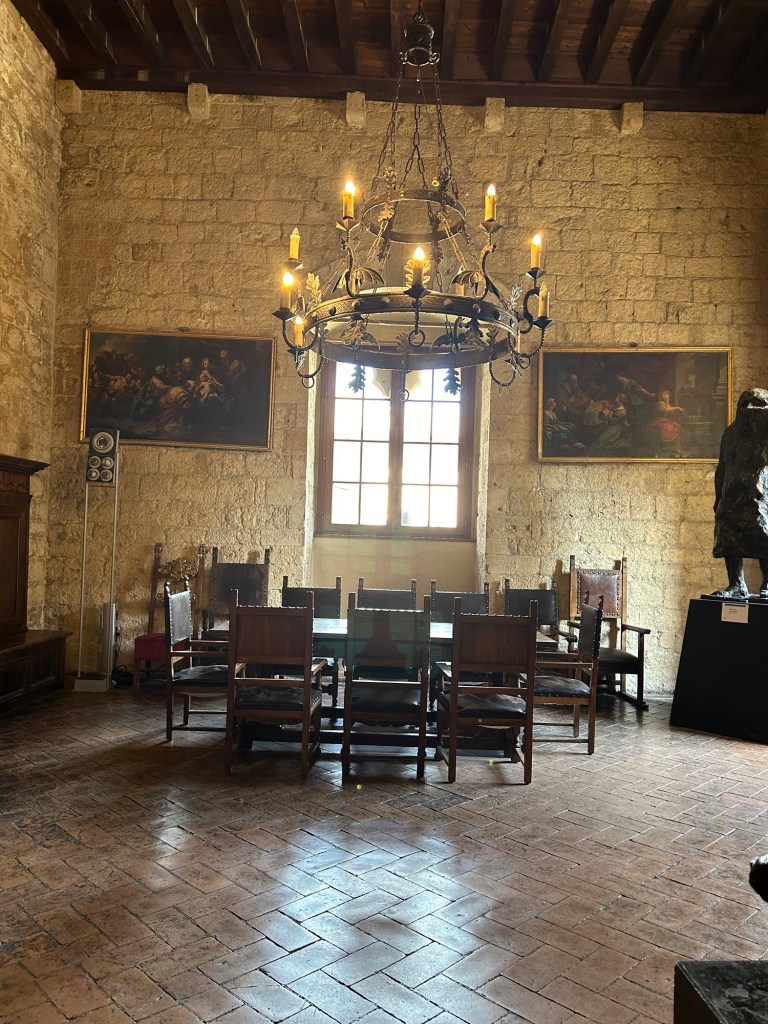
Brayden and I started by exploring the 13th-century town hall. It’s the oldest in Tuscany and is still used for city council meetings. Loved the views from the top of the tower!
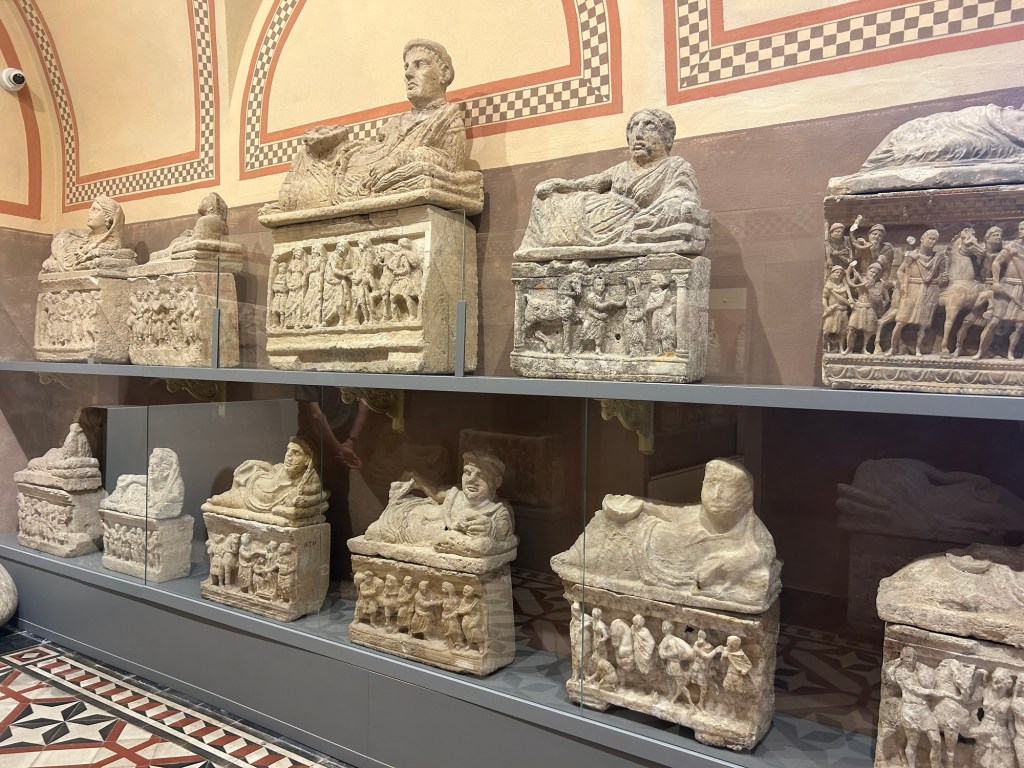
We also checked out the Etruscan museum that holds hundreds of elaborately carved funerary urns made between the 4th and 1st century BC. It’s incredible to think of the effort ancient people put into having a place for their ashes.
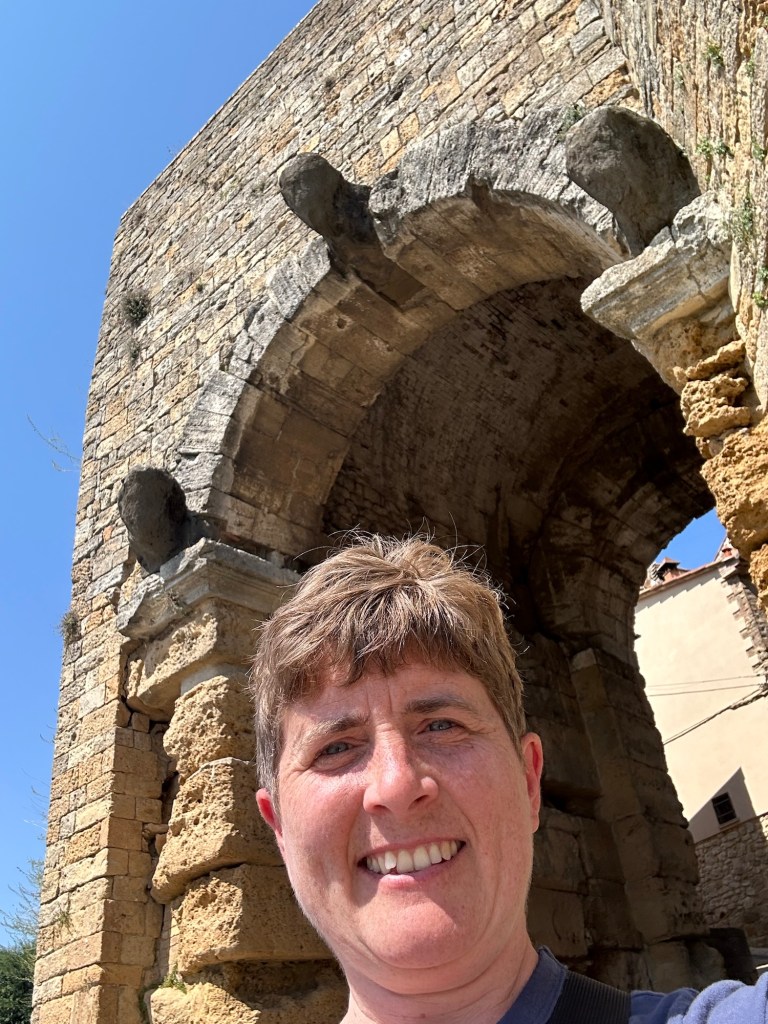
Other highlights of the day included the ruins of a Roman theatre and the Etruscan arch from the 4th century BC—you can see how the three stone heads on the arch have eroded away after being outside for more than 2,000 years.
Only two trip reports left, I promise!
The Tuscan hilltop town of VolterraThe place was a maze of quaint streetsThe town hall—I didn’t notice until later that this pic shows Justin and Chris eating gelato, which is how they spent much of their dayThe Council HallView from the top of the town hall towerEtruscan funerary urnsSarcophagus of the SpousesLunch stopRuins of Roman theatreEtruscan arch from 4th century BC—the stone heads are almost unrecognizable after being exposed to the elements for over two millennia
August 30 — CANNES, FRANCE
After days of private tours and independent exploration, it was kind of annoying to join a ship excursion with 40 other people. But Cannes is a tender port (meaning the ship anchors offshore and ferries people in on lifeboats) and tendering is way easier when you’re part of a ship tour; also, I had no interest in Cannes and wanted to go to Monaco, which is a bit of a drive. So we sucked it up and did the group bus thing.
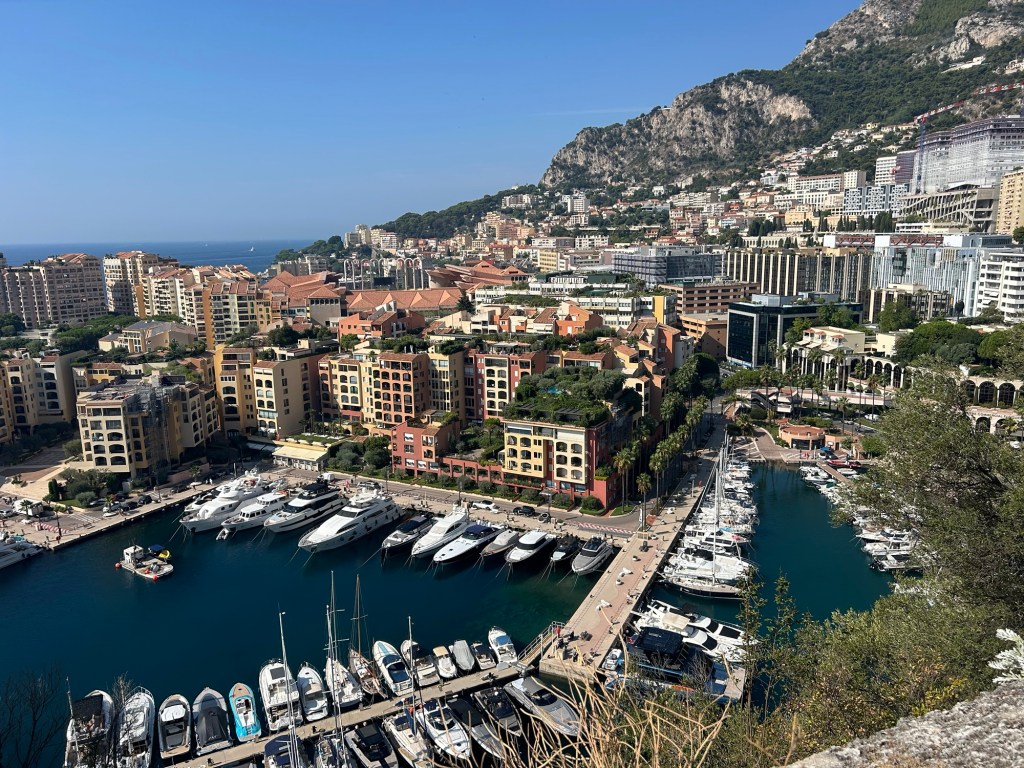
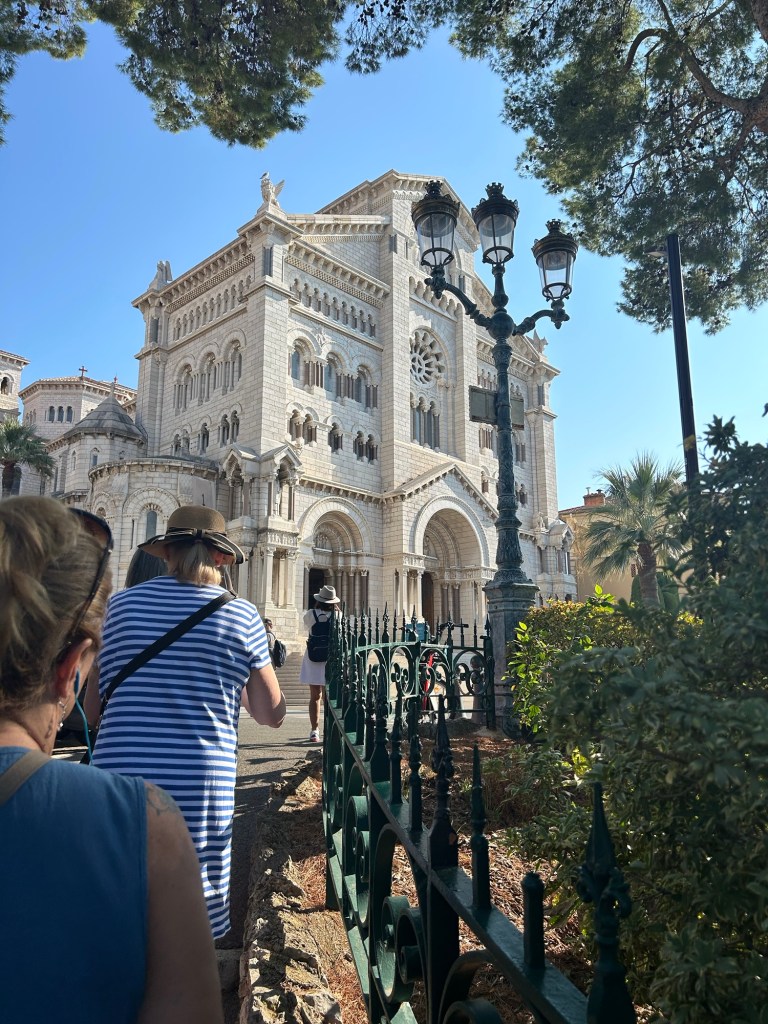
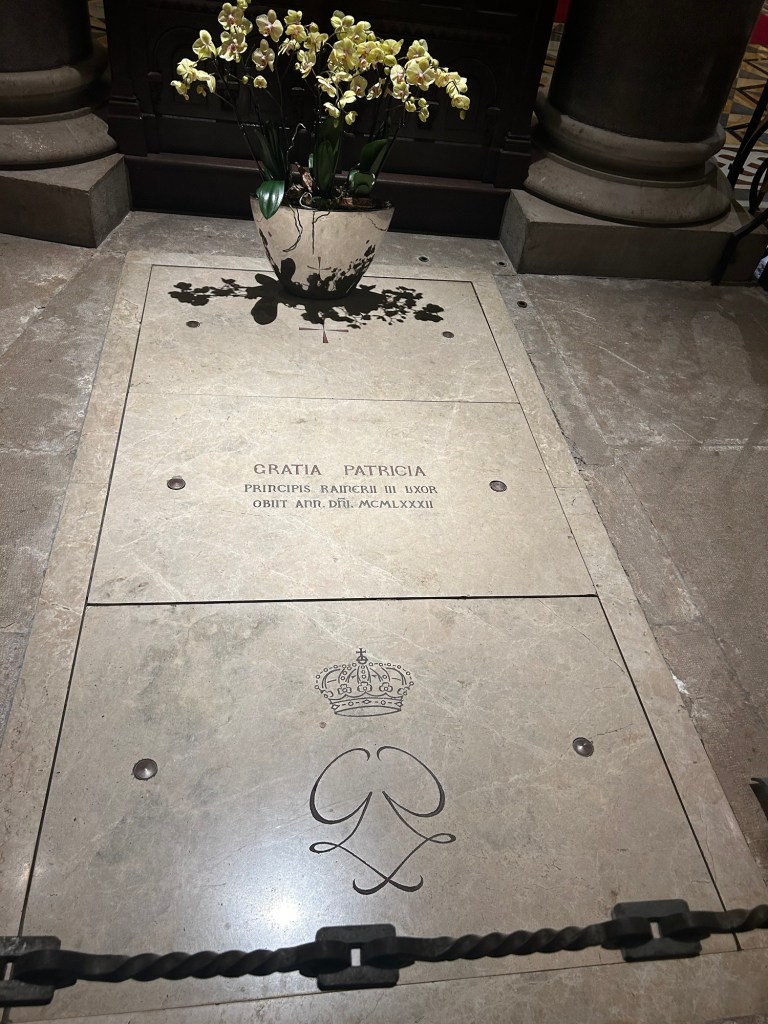
Our first stop was in old Monaco. We walked through a beautiful garden with a statue of Princess Grace, toured the cathedral containing the royal tombs, and saw the outside of the Prince’s Palace. We didn’t have time to go into the palace cause we took 20 minutes to shop for souvenirs and wolf down a sandwich (@#$ restrictions of a group tour!)
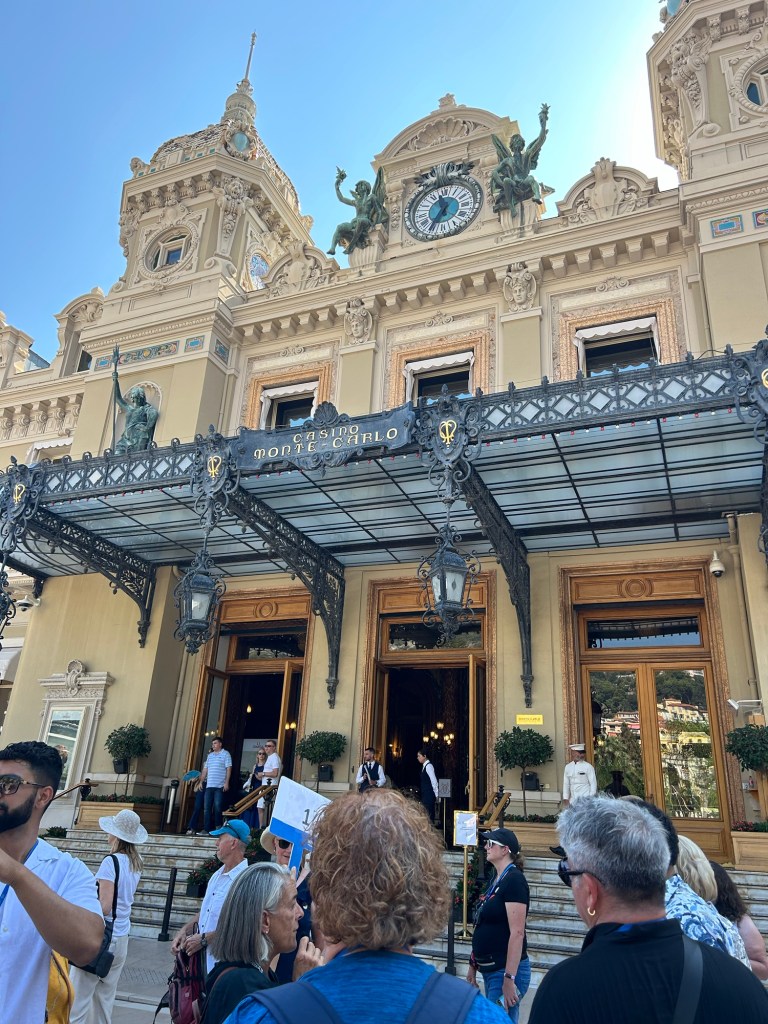
The bus then dropped us near the Grand Casino. Even peasants like us are welcome to take pictures of the foyer, so we did that, and then we found the famous hairpin turn of the F1 circuit. That meant nothing to me on my first trip here in 1998, but I’m a Drive to Survive fan now, so it was pretty cool.
One more day!
Statue of Grace of MonacoThe cathedralInside the cathedralTomb of Princess GraceOutside the Prince’s PalaceGrand Casino of Monte CarloInside the casinoInside the casinoThe hairpin turn on the F1 circuit
August 31 — PALMA DE MALLORCA, SPAIN
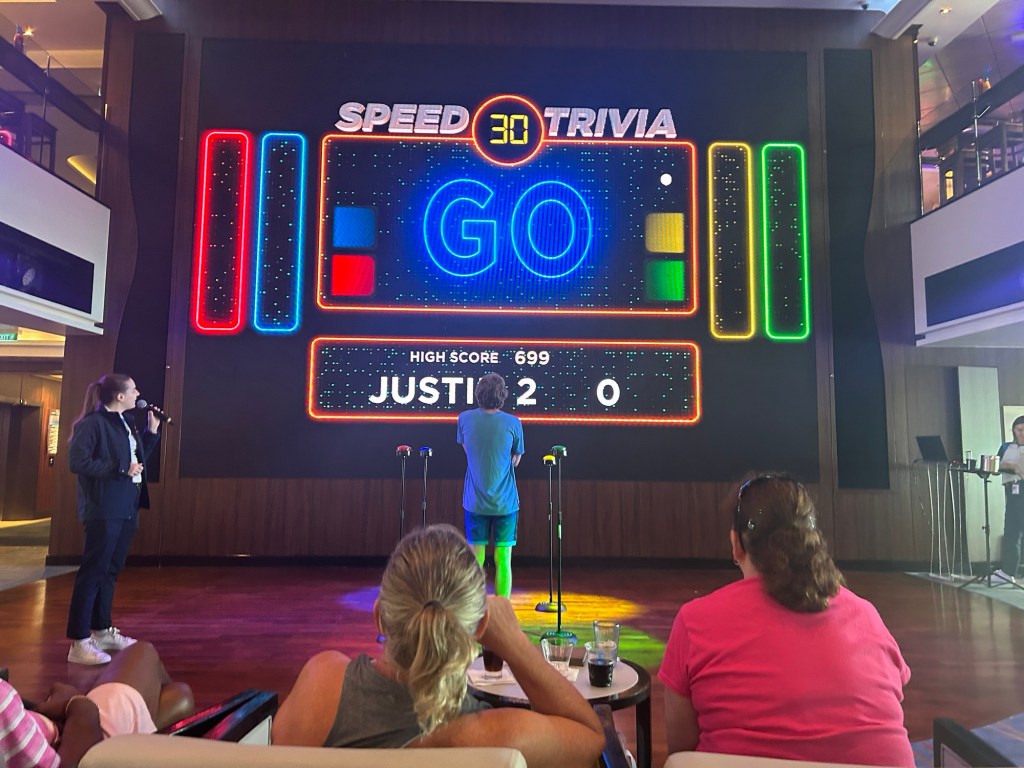
What a great way to end a cruise. We didn’t arrive in Palma until noon, so for once we didn’t have to be out the door first thing in the morning. Justin and I played some games and even joined in a speed trivia session in the atrium—he came in third and won a deck of cards, so that was pretty cool.
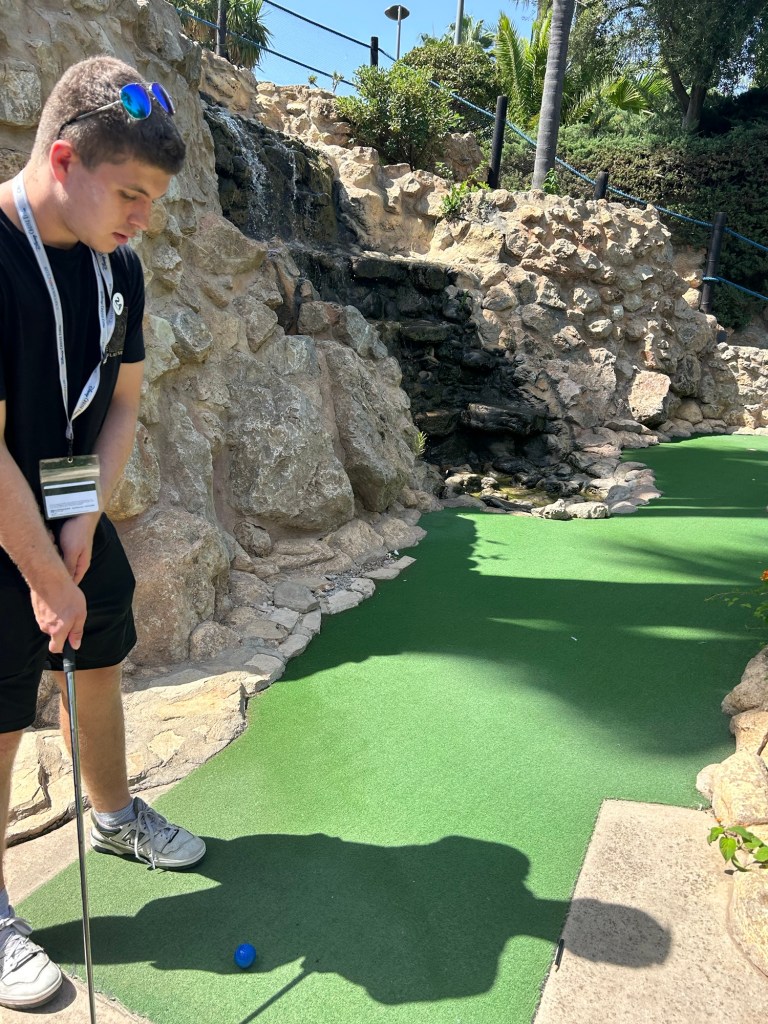
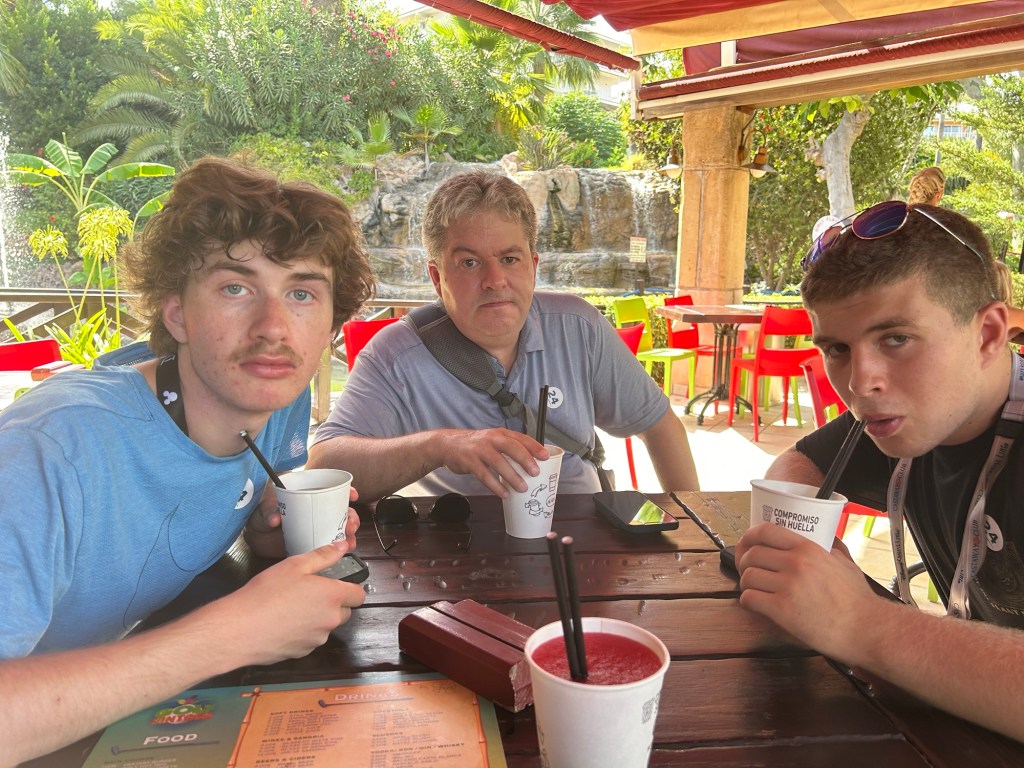
This afternoon we took a ship tour that was basically just a ride to Palmanova beach. None of us are really beach people, but I’d heard about an awesome mini golf place near there, and that’s something we all enjoy. We played 36 holes in a lush setting and then relaxed with some slushies. Brayden even bought a little pack of seed to feed the fish in the course’s water feature.
Tomorrow we fly home from Barcelona. Sad to see the end of our latest family adventure!
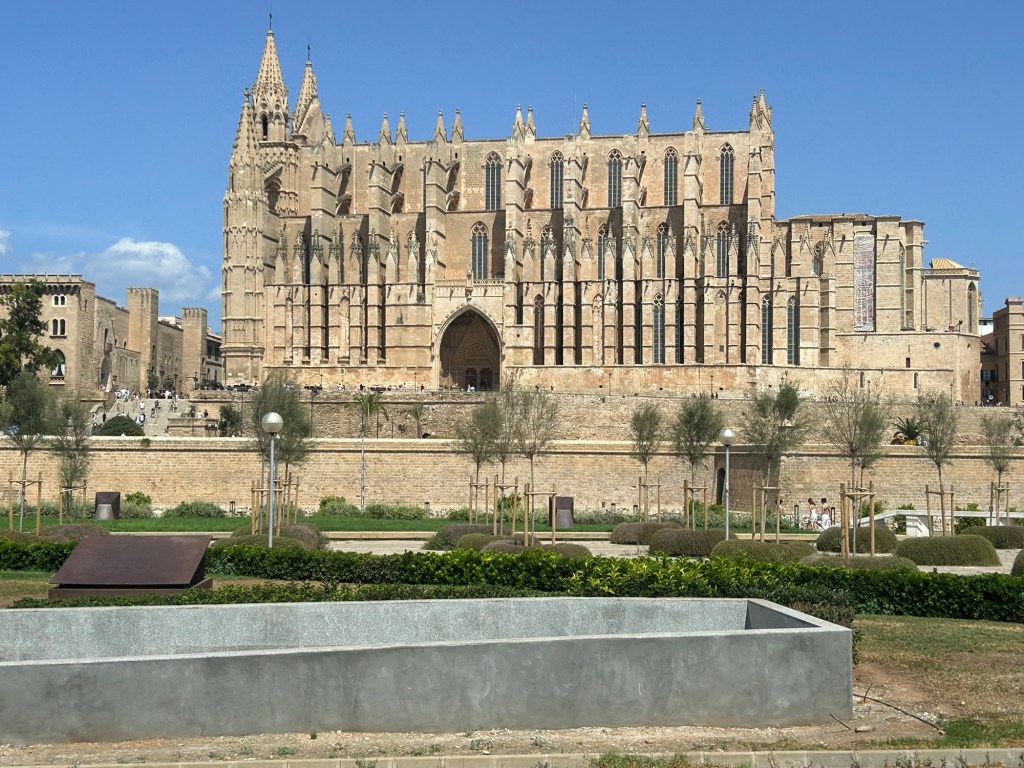
Justin starting speed triviaThe cathedral in Palma, which we saw from the busPalmanova beachMini golf!
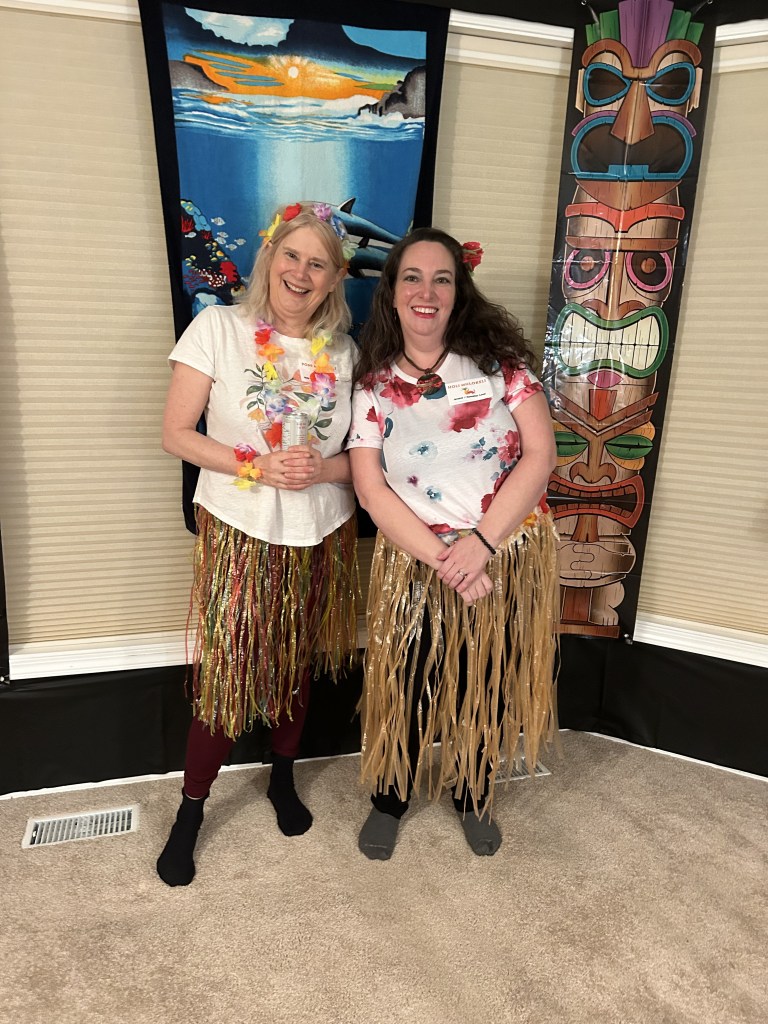
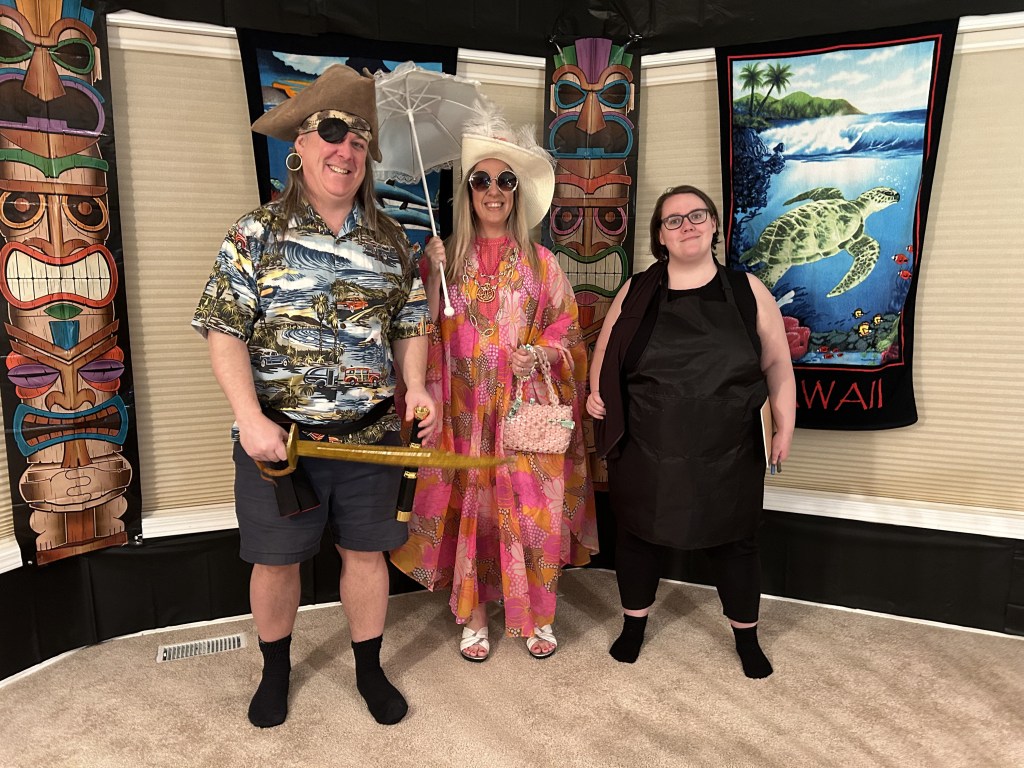
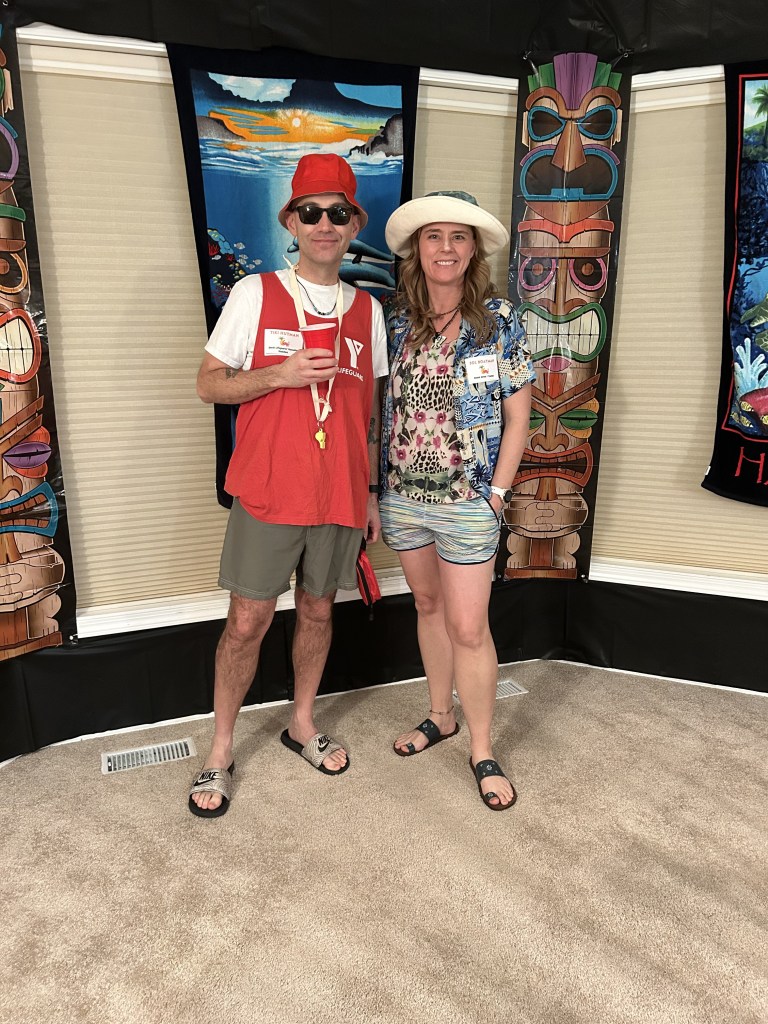
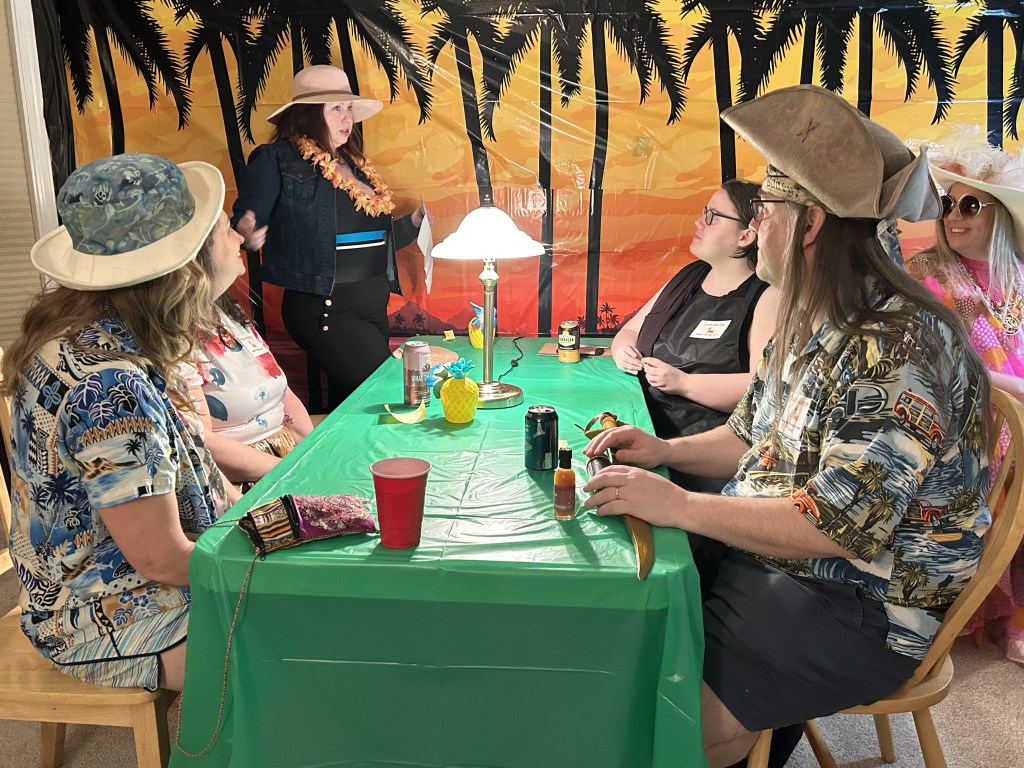
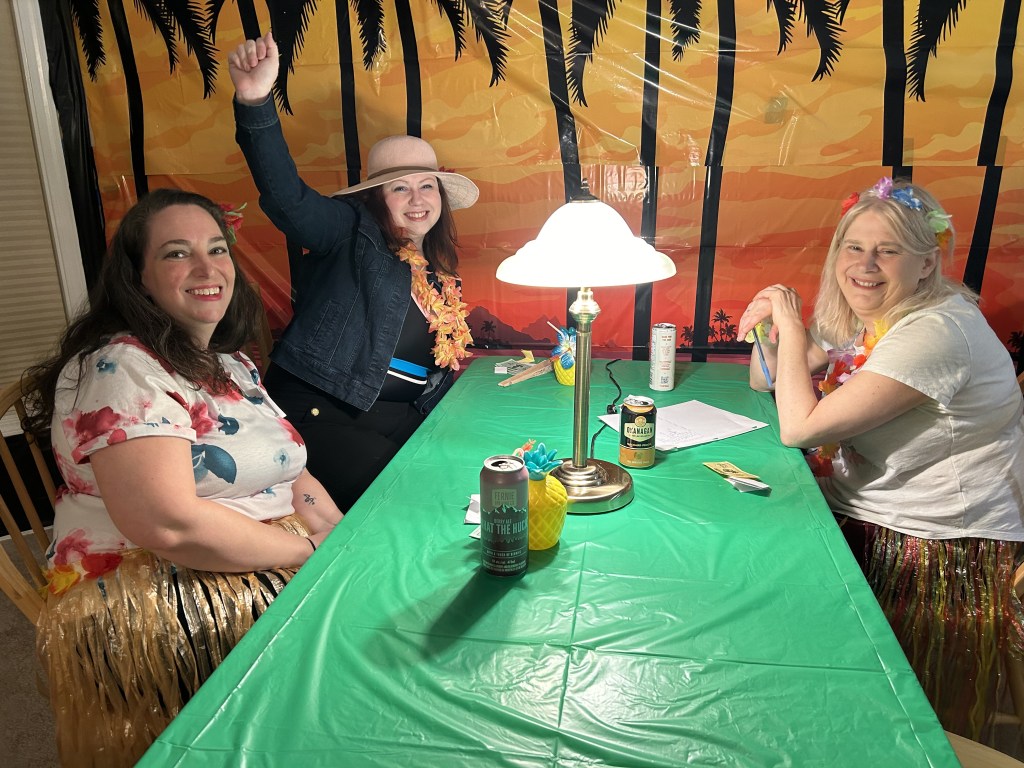
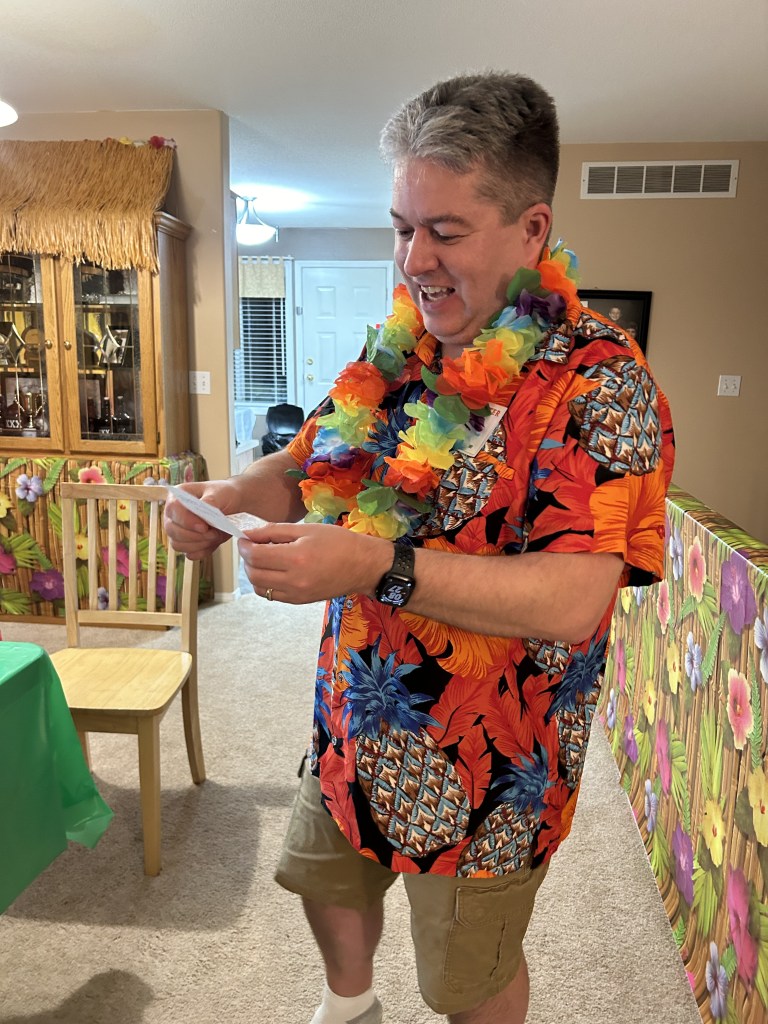
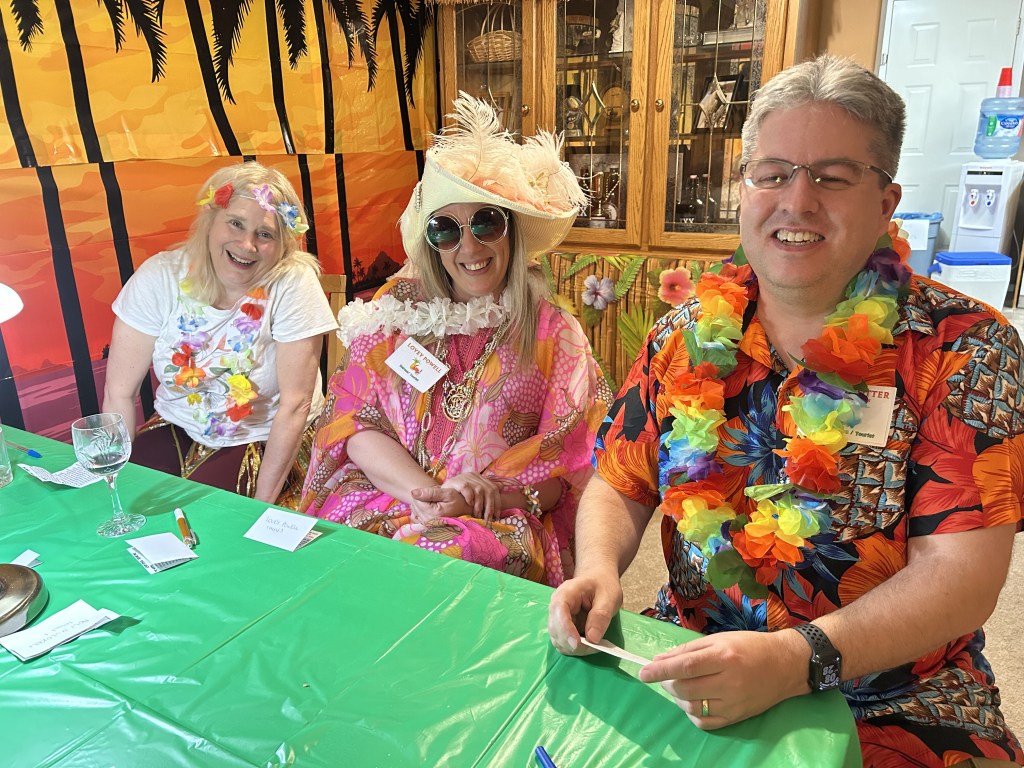
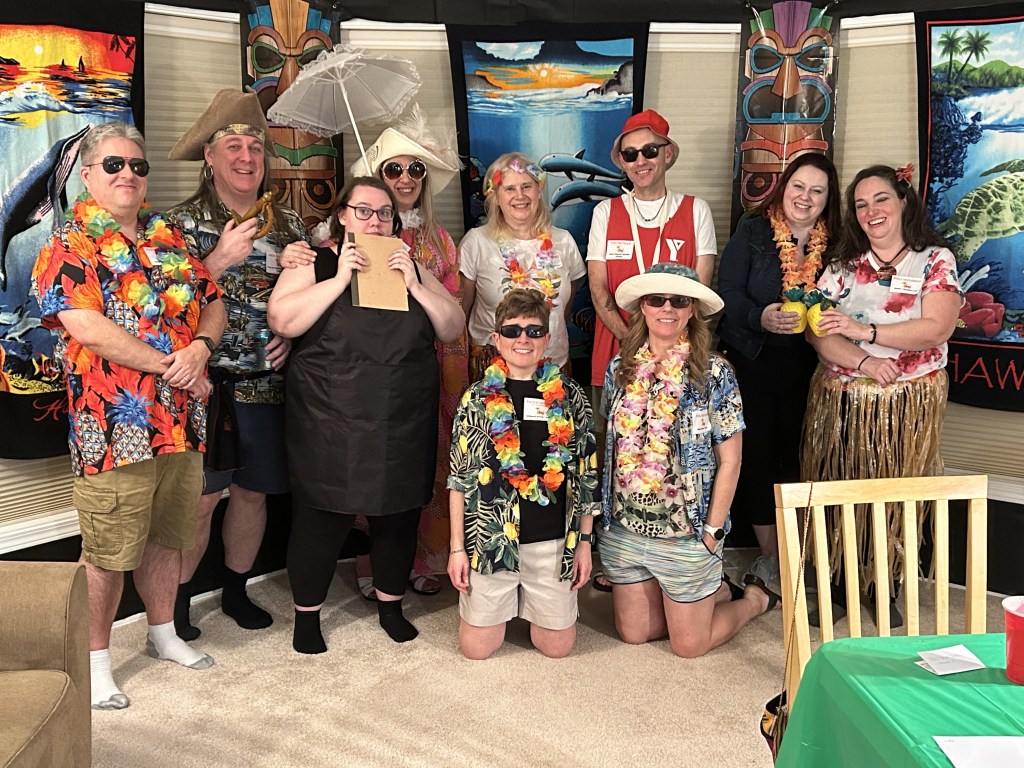
There’s nothing like preparing for a luau when it’s -25 outside. Until about a week ago, people could’ve come in their shorts and hula skirts without much of a problem, but that changed rather suddenly. So we had our Hawaiian themed murder mystery party on the coldest day of the year. I’m sure the neighbours thought we were in denial hanging beach towels in our living room windows.
But who wouldn’t want to escape to the tropics during weather like this? And I have to say, this was easily the most colourful decor we’ve had for a murder party. Those plastic scene setters really do transform a space. We couldn’t quite get the palm trees to line up, but we figured after a few drinks they would look just fine.
The costumes for this one weren’t as outlandish as for other mysteries (my instructions just said “casual yet trendy beach wear”) but people still came up with some impressive stuff. The clues were easy to follow and people really got into character—though it was funny when I had a second helping from the buffet and *then* received a clue card telling me my character was desperately trying to stay thin. Oops.
We ate, we laughed, we played some Hawaii trivia, one person got killed by a coconut, and the murderer eventually confessed (but still got away).
A great night!
The sunset scene setter was amazing!Black plastic tablecloths, beach towels I already had, and tiki banners from Amazon completed the lookHula dancers Poni and Holi MulokeliFisherman/pirate Jack Marrow, heiress Lovey Howell, and waiter Ano HaloaLifeguard Tiki Hutman and donut artist Sol BoatmanCollege student Coco BeachesHollywood actors Robbie Peters and Kirsten Withers. We were travelling under aliases, but those aliases were included on our name tags, so not much of a mystery thereThe trivia winners
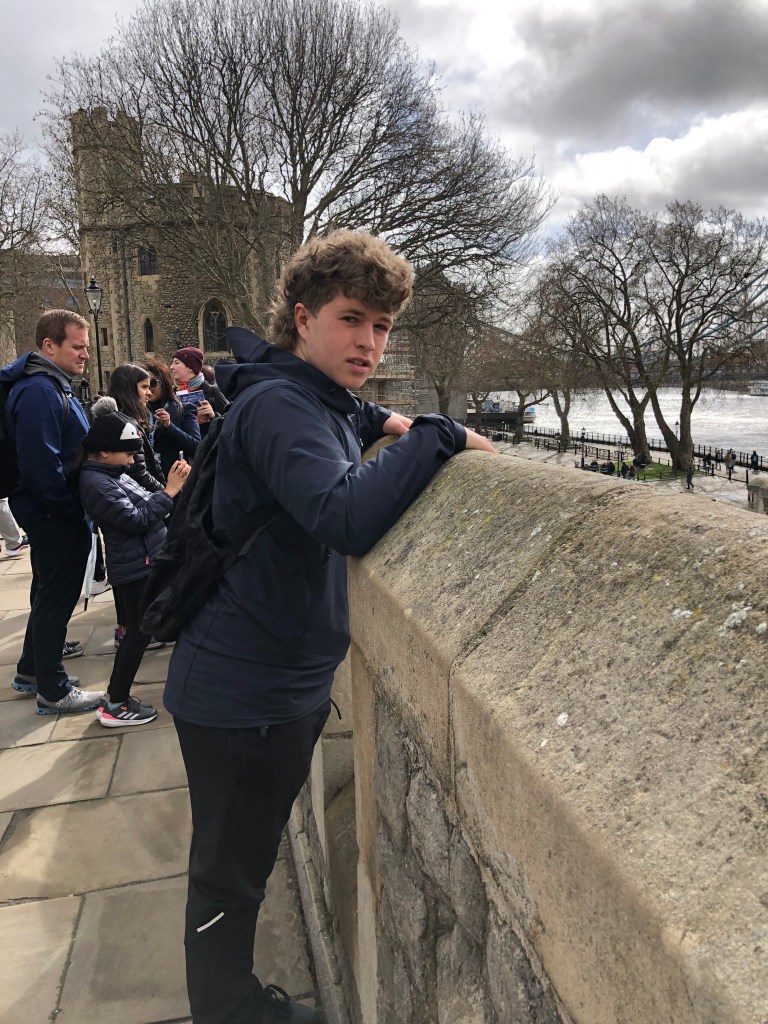
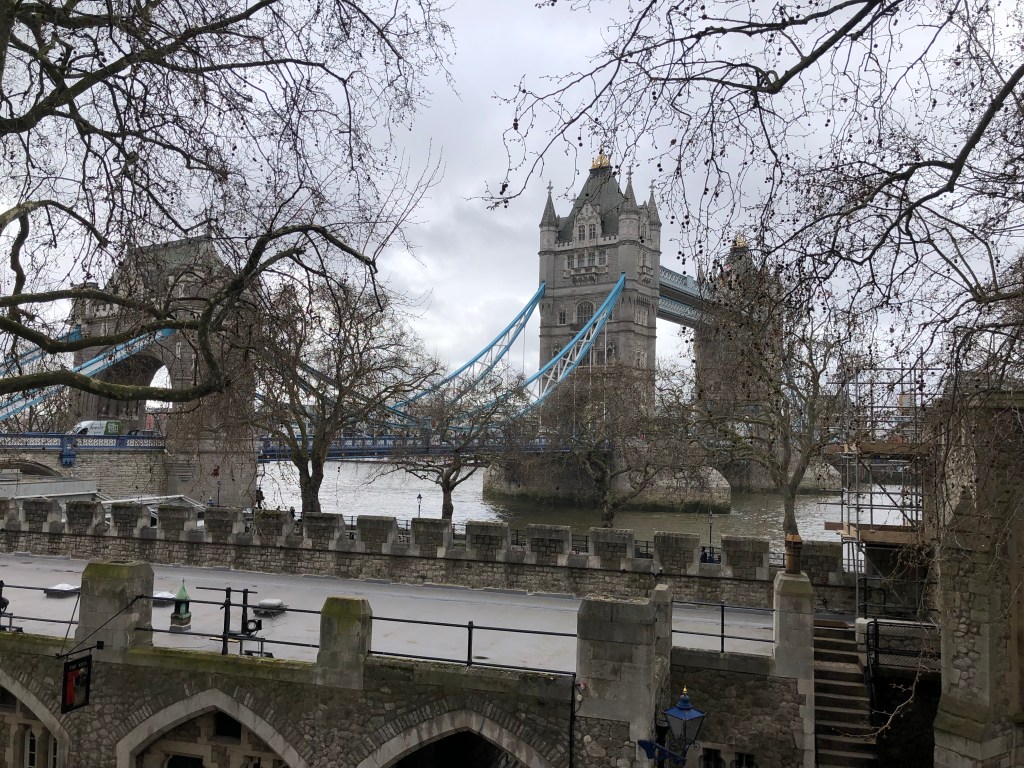
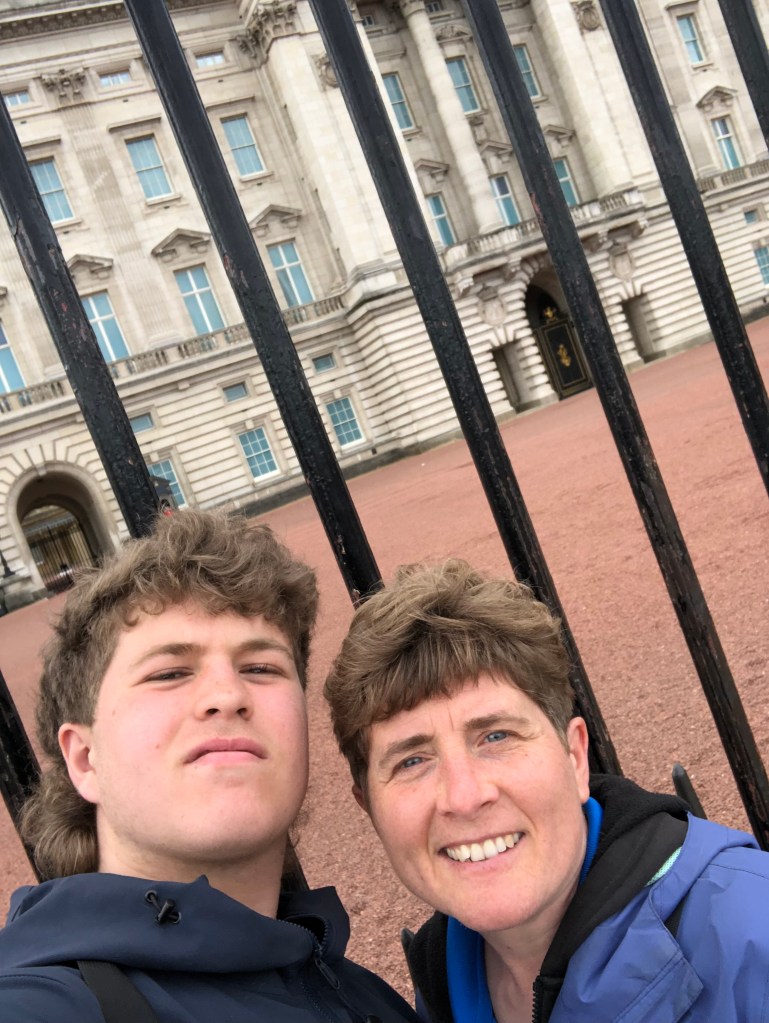
With only one full day in London, we had a lot of ground to cover. But this being day 10, we were pretty tired, so we did one big attraction (the Tower of London) and then wandered around just looking at the classic sites: Big Ben, Whitehall, Trafalgar Square, Buckingham Palace. Then we dragged our sorry asses back to the hotel for a nice long nap.
It’s been an awesome trip, and I’ve loved opening my kids’ eyes to the world beyond North America, but we’re all ready to go home tomorrow. (Going back to work is another story…)
I gotta say, it felt good to get out of Paris. We were nowhere near the protests last night, but the disruptions (and the mountains of garbage piled on the streets) were unpleasant, to say the least. And I’m still bummed that we couldn’t get to Versailles…but c’est la vie.
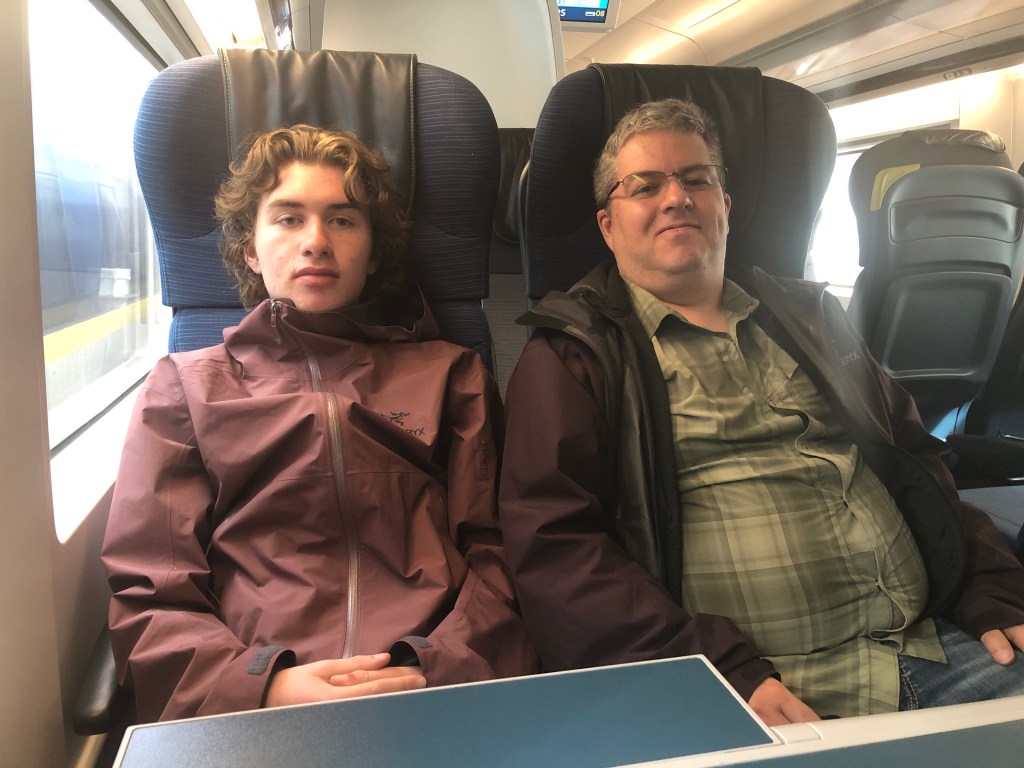
So today we zipped through the Chunnel on the Eurostar train. It’s so cool to be able to go from the centre of Paris to the centre of London in just over two hours (as opposed to a full day’s journey when you go via ferry, as I did many many years ago.) I’m not known for my navigation skills, but I’m familiar enough with London that I managed to get us from the train station to the hotel without ever looking at a map. Ha!
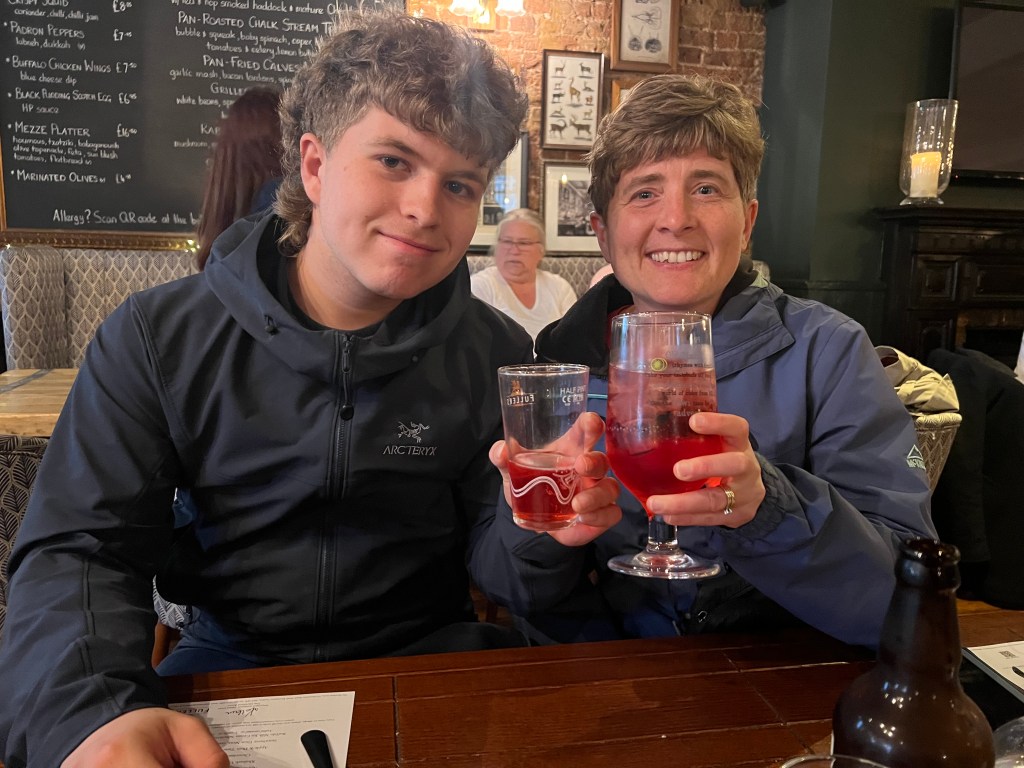
We had some great fish n chips at a local pub and Brayden and I even shared a cider. Last day to explore tomorrow—cheers!
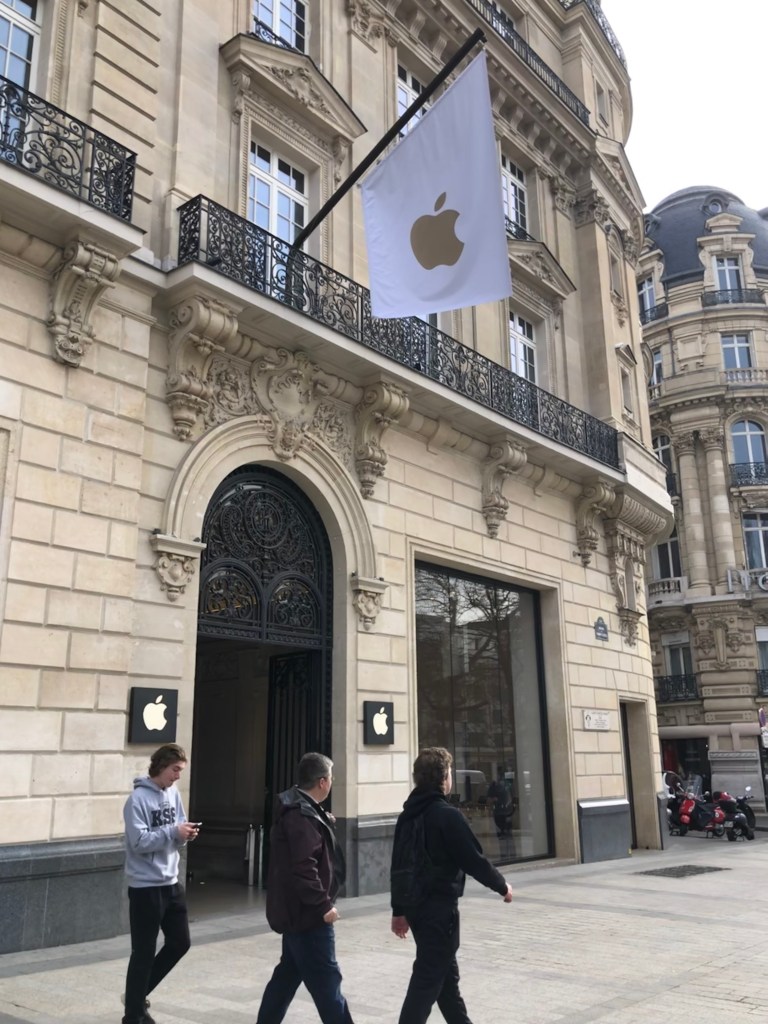
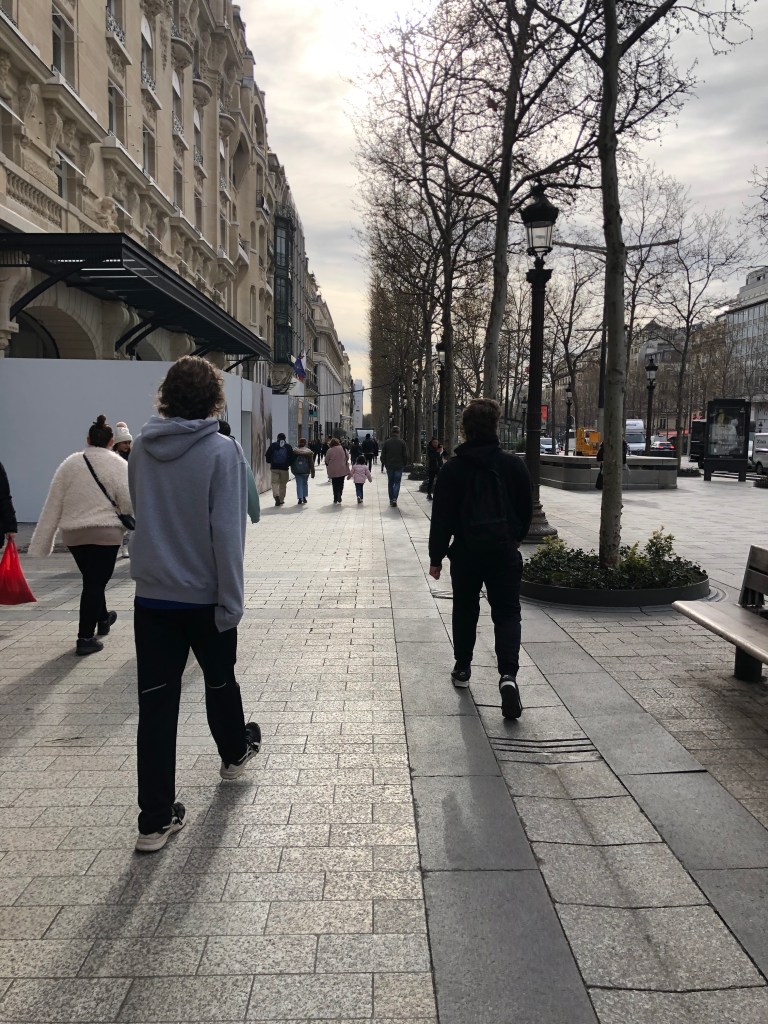
Our day trip out to Versailles got nixed due to yet another national strike (sigh) so we decided to avoid public transport and see where our feet could take us. Our hotel is super close to the Arc de Triomphe, so we began by strolling and shopping the Champs Elysees. We browsed but didn’t buy—Brayden had some gift cash to spend but quickly realized he could barely afford a bottle of water, so we pushed on.
Eventually we came to the Place de la Concorde, the largest square in Paris. The 3,300-year-old Egyptian obelisk in the centre of the square marks the spot where the guillotine stood. Thousands of people, including Louis VXI and Marie Antoinette, lost their heads there.
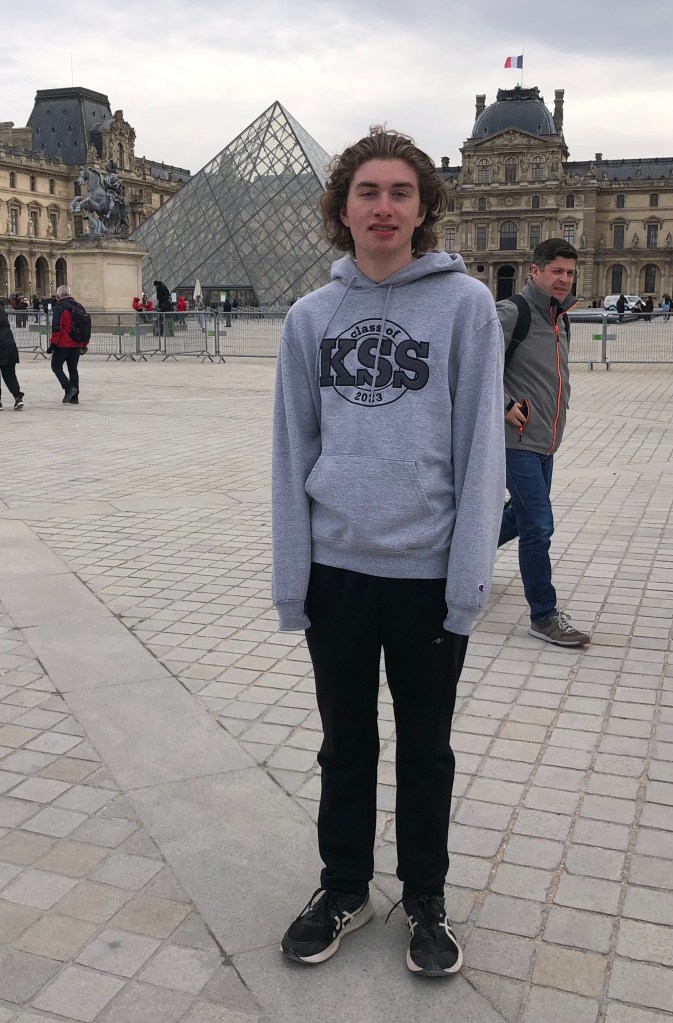
By that point the other three wanted to turn around and head back, but I convinced them to keep walking through the Tuileries Garden until we came to the Louvre. We weren’t interested in going inside, which was good because it’s closed on Tuesdays (and it undoubtedly would’ve been closed due to the strike anyway). So we got some photos, had a quick lunch, and walked all the way back. The whole journey was only about 9 km, but it felt like more.
To London tomorrow!
The Apple store…yes, we went inWalking the Champs ElyseesPlaying a free video game in one of the storesAt the Place de la ConcordeIn front of the Louvre
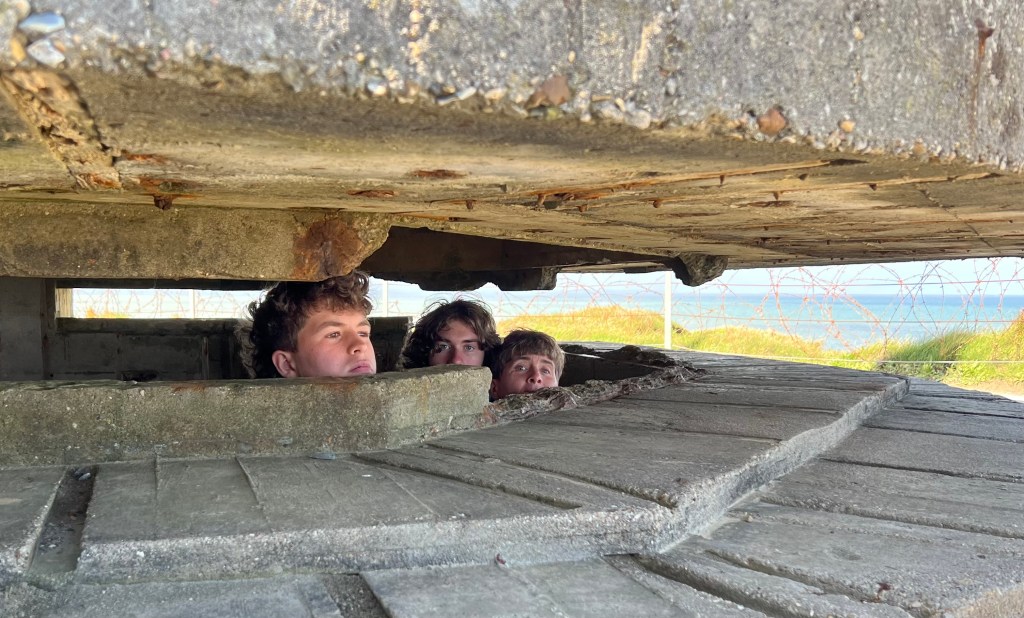
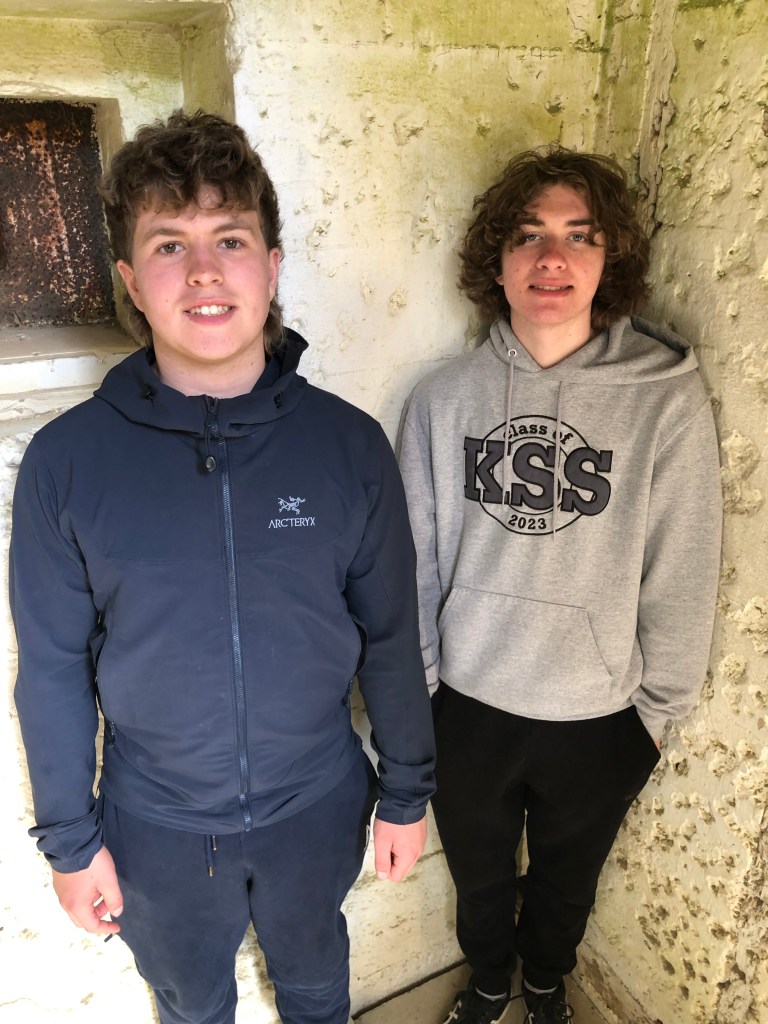
We thoroughly enjoyed our small-group tour of the D-day sites in Normandy. For one thing, it was nice to get out of the big city and see more of the “real” France. Plus it was just us, the (young) guide, and another family from New York who happened to have kids not much older than ours, so everyone got to meet some people closer to their own age.
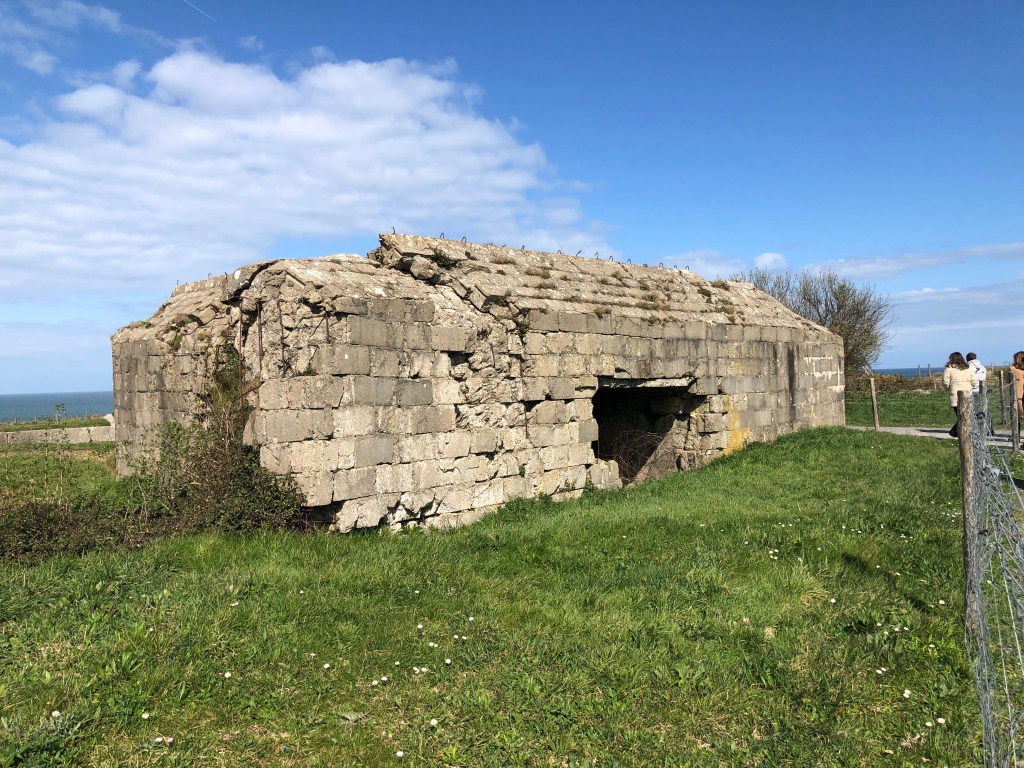
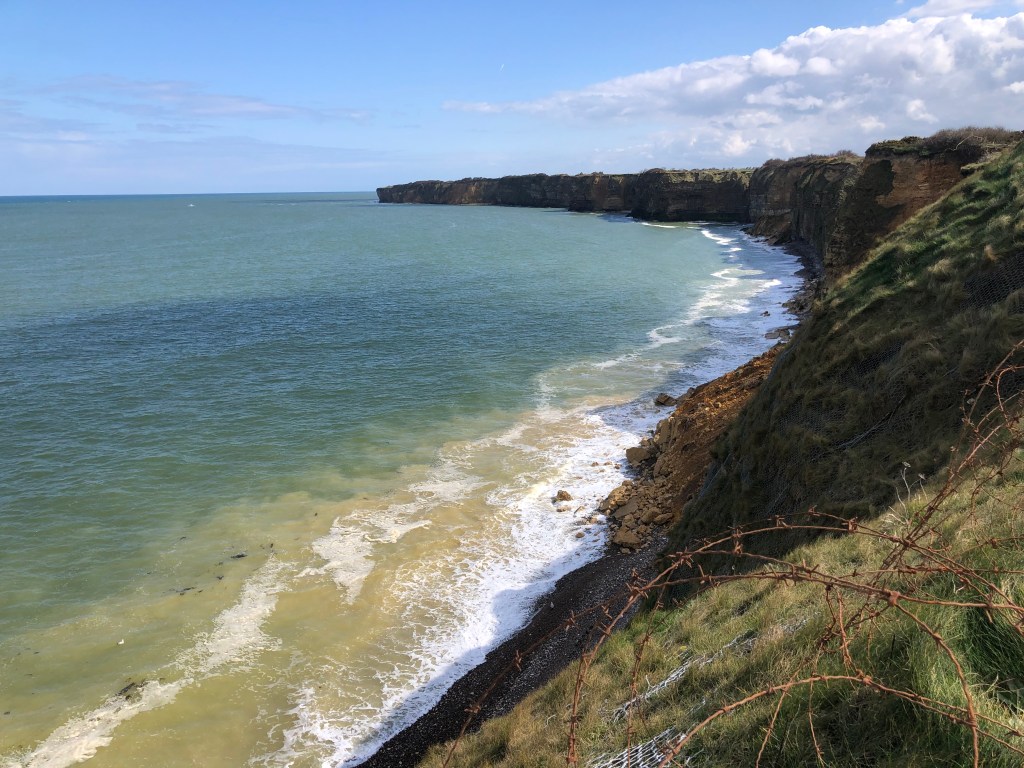
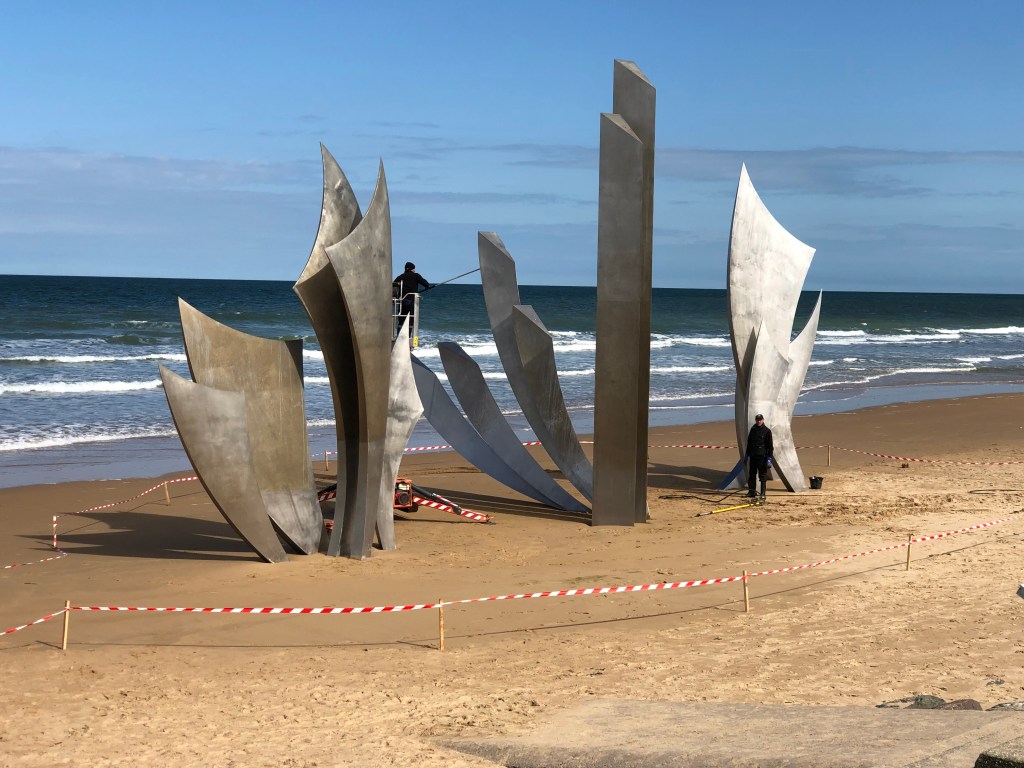
We saw a ton of stuff: some German bunkers along the Atlantic Wall, the American Cemetery, the Operation Overlord Museum, the cliffs scaled by the Army Rangers at Pointe du Hoc, and the memorial at Omaha Beach. The guide shared lots of information in a way that kept everyone engaged—no easy feat with teenagers in the group!
The tour even included a cider tasting at a family farm, which Brayden was super stoked about. (Here, it’s legal for kids of any age to drink as long as they’re supervised by a parent.) There was a basketball hoop set up in the farm’s courtyard, so when the tasting was over our boys played a quick game of 2-on-2 against our guide and the other dad from our group. That was neat to see.
Such a cool experience!
In a German bunkerCliffs at Pointe du HocOmaha Beach
While wandering around killing time before our slot at the catacombs this morning, we stumbled upon the Montparnasse cemetery, which we knew nothing about. It was full of super elaborate tombs and memorials, some of them dating all the way back to 1786. We learned later that a number of famous people are buried there, including Samuel Beckett. Huh. We just thought the place looked cool.
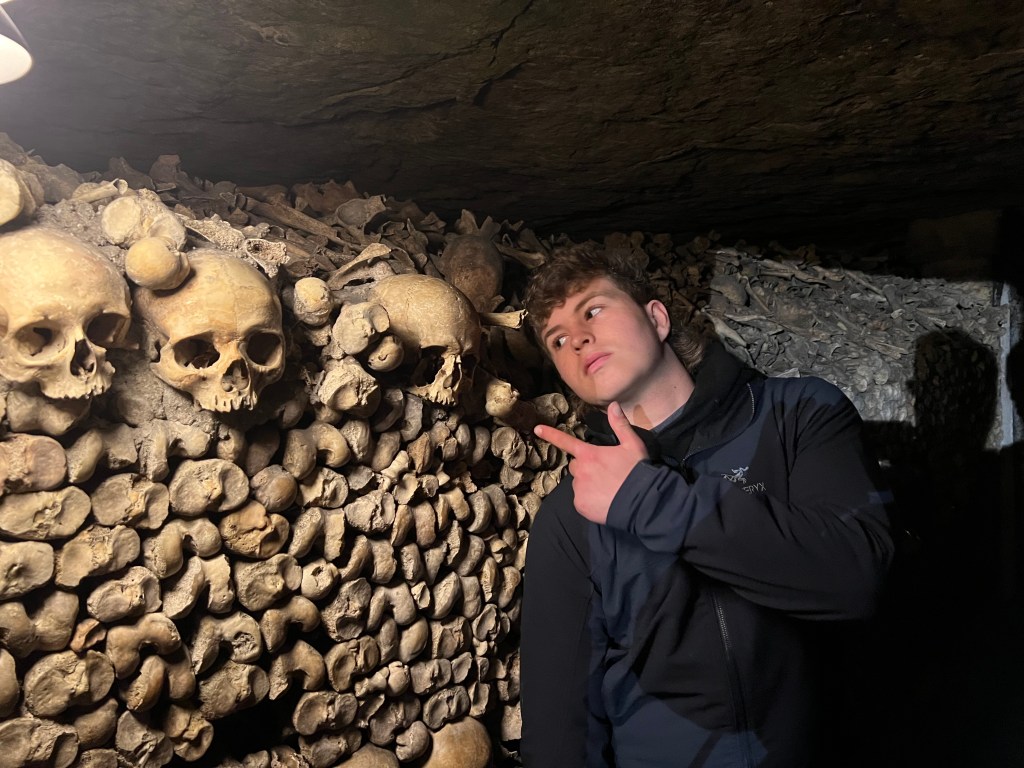
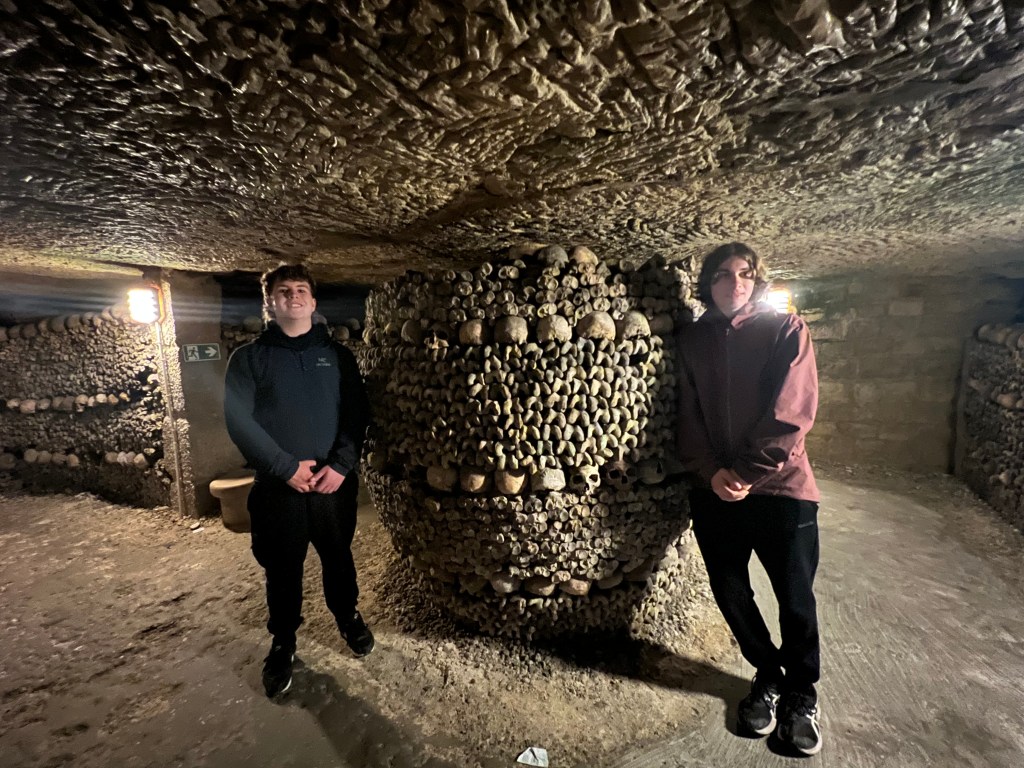
But today’s main attraction was the catacombs. They’re not as ancient as you might think: they were only created in the late 18th century. In an attempt to solve the problem of overcrowded and unhygienic medieval cemeteries, the skeletal remains of millions of long-dead Parisians were exhumed, moved to underground quarries, and (eventually) artfully arranged. We found the whole “empire of death” thing both spooky and fascinating.
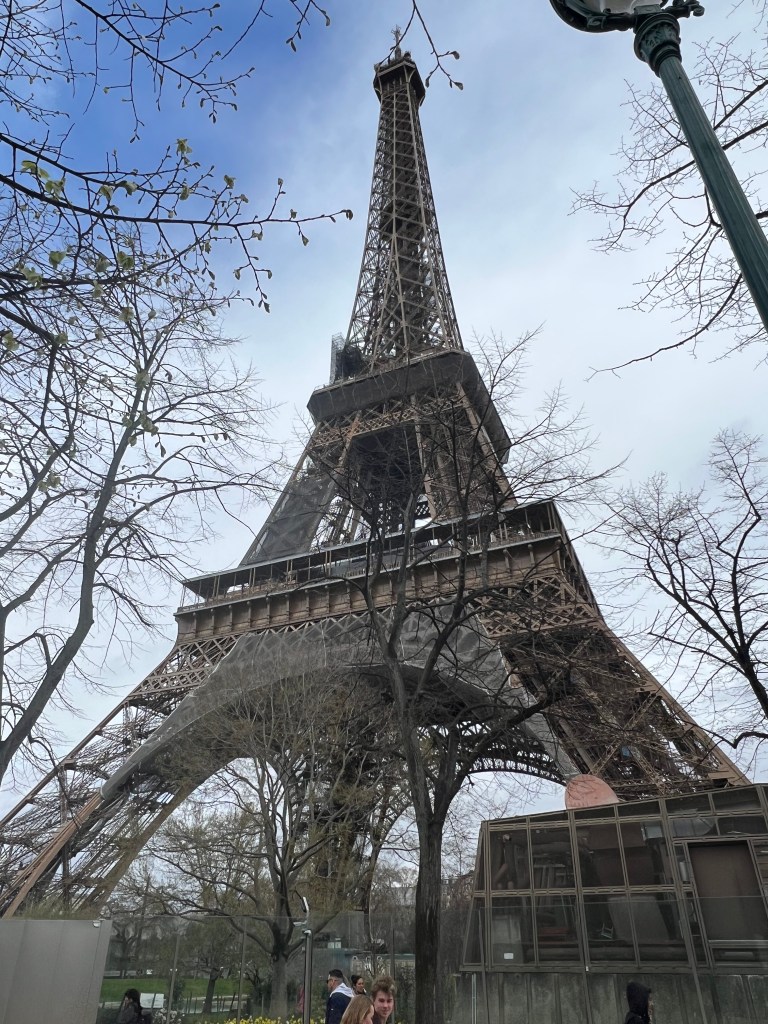
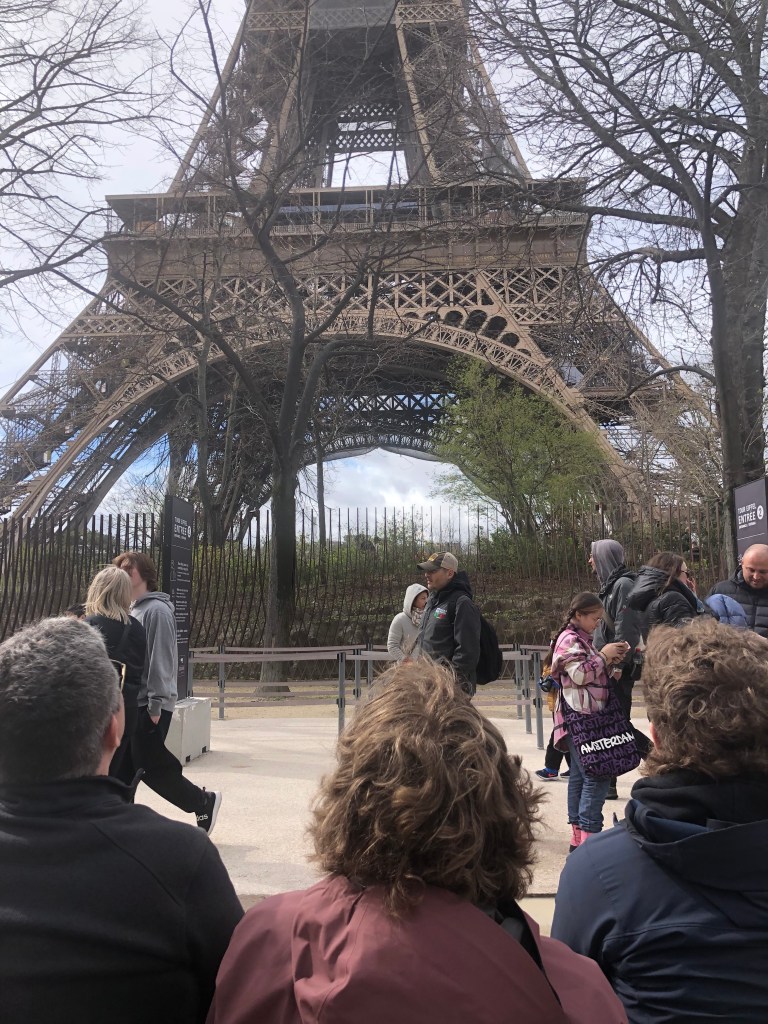
And yes, we went up the Eiffel Tower. Worth the hassle? Not really. The view from the elevator was kind of cool, but the experience was more of a “now you can say you’ve done it” kind of thing. It did save us from going all the way to Notre Dame, since we saw the cathedral from up above and that was enough for the boys.










 Legend has it that the builder misheard the sultan’s request for “altın minareler” (gold minarets) as “altı minare” (six minarets), but only the mosque in Mecca was supposed to have that many. To make up for the error, the sultan ordered a seventh minaret to be built at the Mecca mosque.































































































 Crystal's Commentary