
Once again, I did all my real-time blogging on Facebook. Here’s the collection of posts for posterity:
June 15 – ATHENS, GREECE
Welcome to our latest adventure: a cruise of Greece and Turkey. I’m a huge history buff but have never been to Athens or the Aegean area before, so this is awesome.
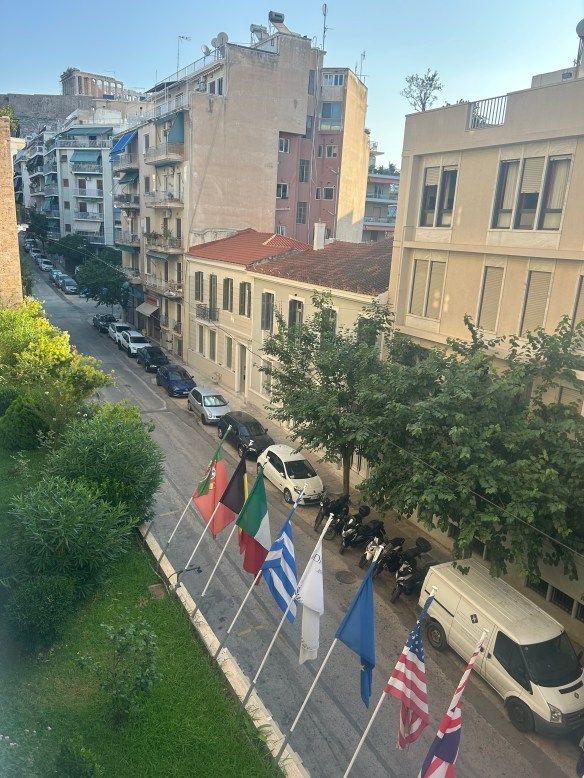
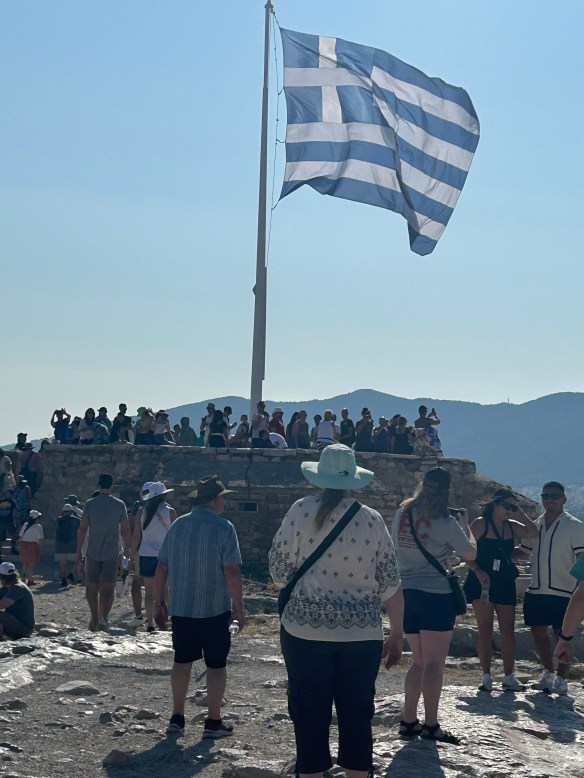
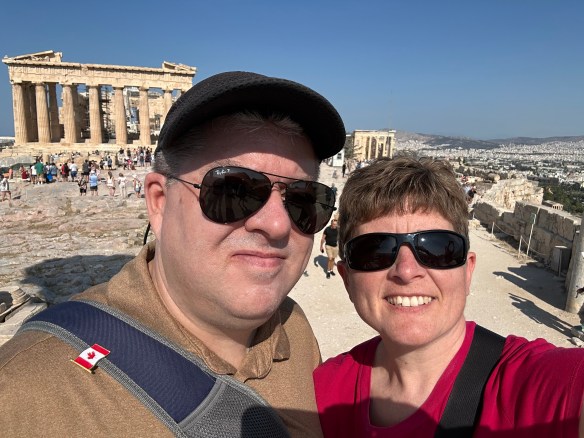
Naturally, we started with the Acropolis, where the Parthenon has stood for close to 2,500 years. It’s been damaged partly by time, but mostly by a Venetian siege in the late 17th century and the pillaging of a British lord in the early 19th century. Restoration work is ongoing. The place does look amazing all lit up at night!
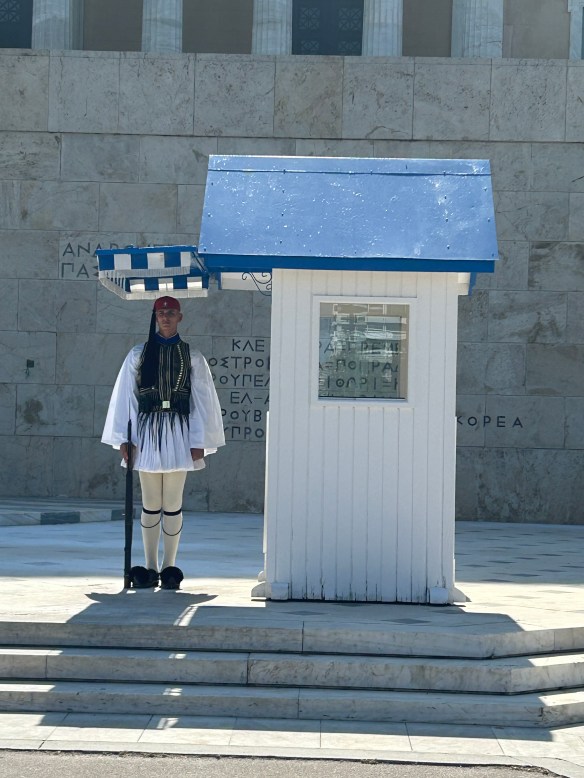
We also made our way to the former royal palace turned Greek Parliament. The Evzones in traditional uniform guard the Tomb of the Unknown Soldier just in front of the building. They perform a ceremonial changing of the guard each hour; we caught a few minutes of it.
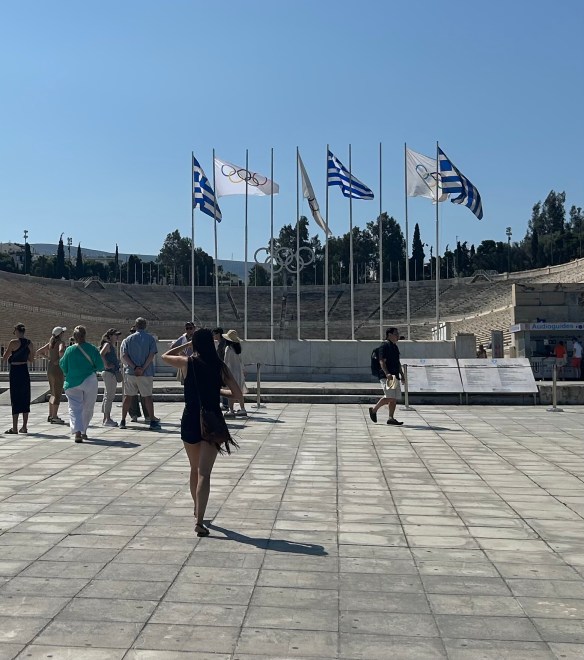
Our final stop was the Panathenaic Stadium. This is where the Olympic flame gets handed over to the host nation. Fun fact: it’s the only stadium in the world built entirely of marble.
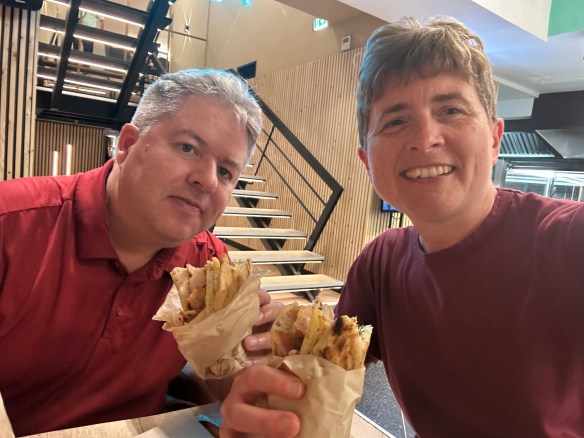
I love, love, love the food (and the prices) here in Athens! We have seriously never had a bad meal in Greece, and we’re coming in way under my food budget.
Tomorrow we board our ship!


June 16 – ATHENS
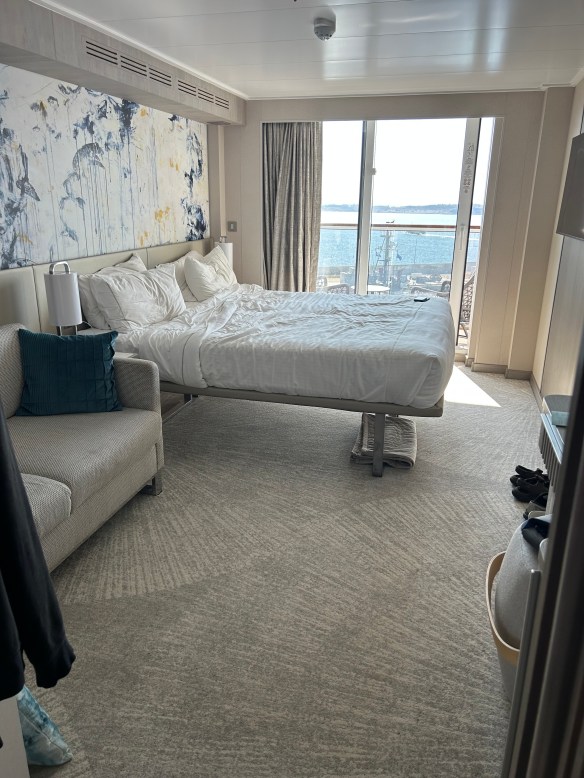
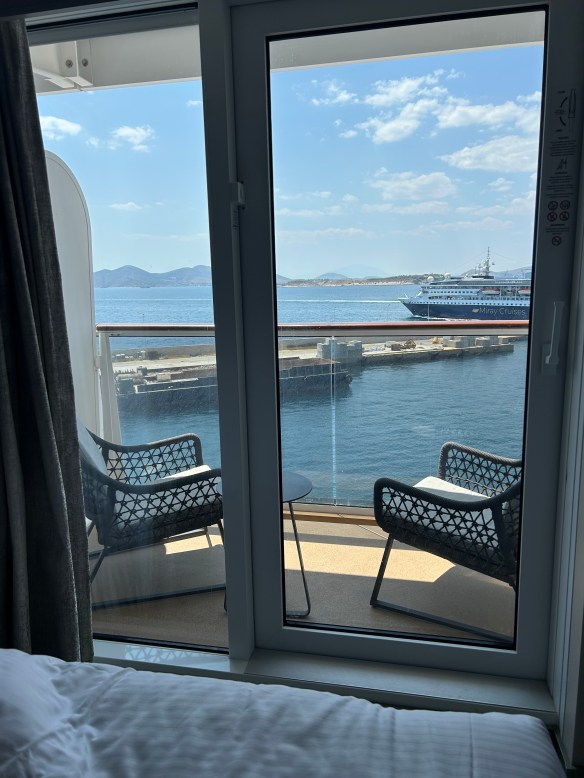
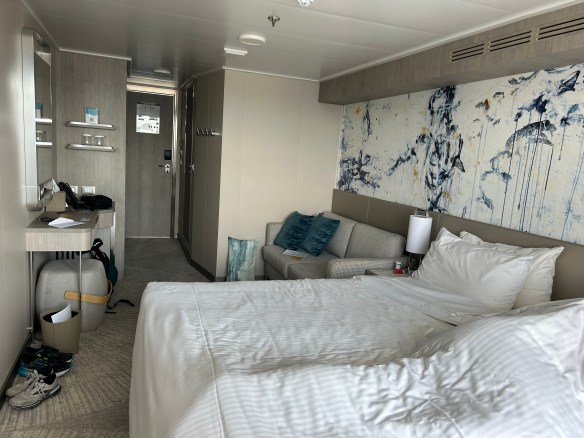
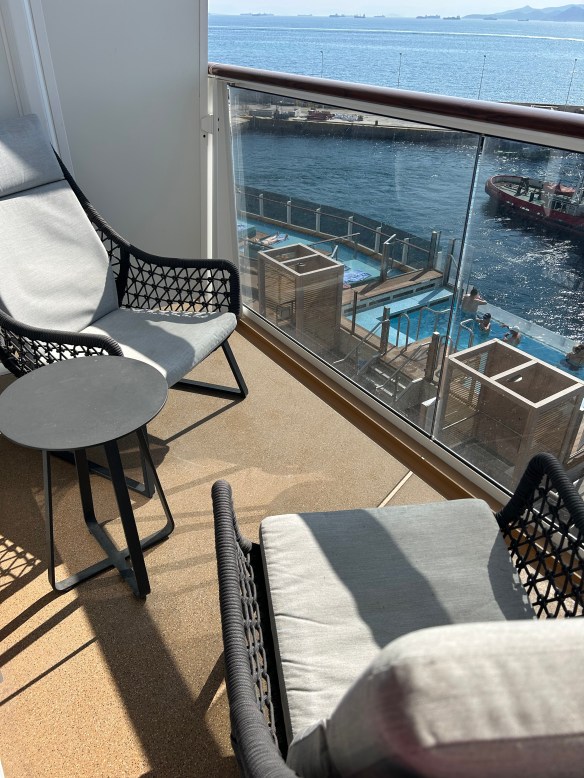
I haven’t seen too much of the ship yet, but the staterooms certainly are beautiful (padded balcony chairs…what a luxury!) Our cabin seems incredibly spacious, but that may just be because a) we’re minimalist packers and b) we’re used to squeezing four people in a room.
We have reservations at the specialty Italian restaurant tonight, but Chris has a tender tummy after a bout of food poisoning last night (shortly after I raved about how we’ve never had a bad meal in Greece). So we won’t be getting our money’s worth, but I’ll do my best!
Getting ready to sail…
June 17 – METEORA, GREECE
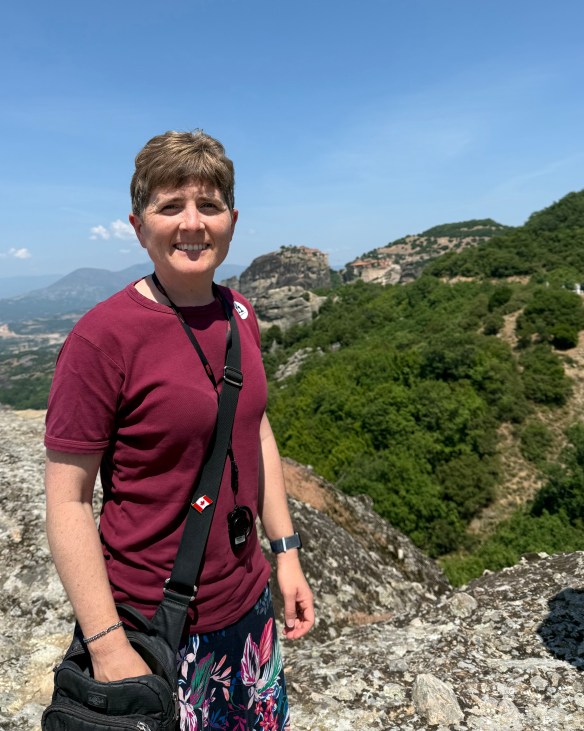
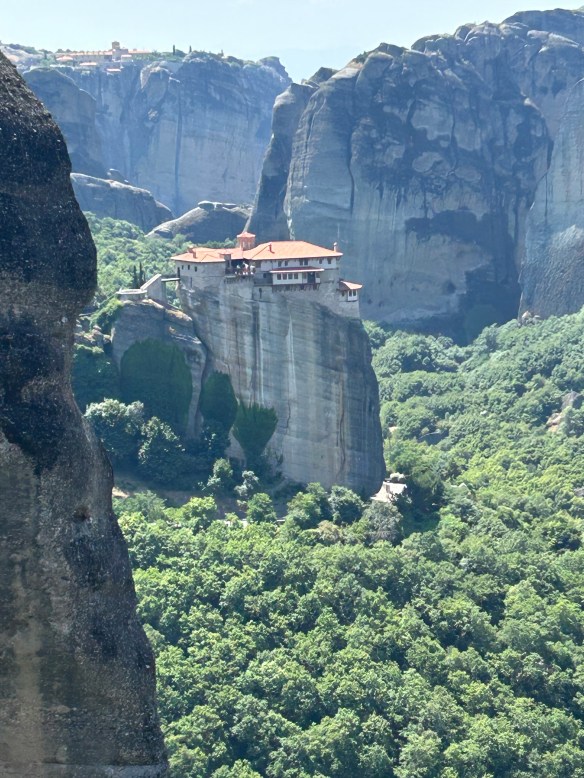
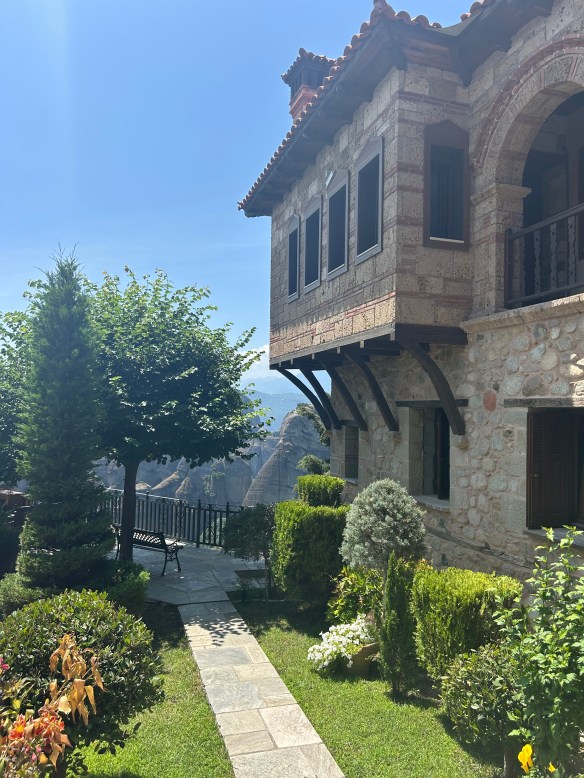
Back in the 1300s, a group of monks wanted an isolated place to hide from waves of invading Turks, so they built monasteries high on the rocks of Meteora. It would have been hard to find a more inaccessible location: the only way to get people, building materials, or anything else up to the top was via removable ladders or hoisting ropes. Today there are stone steps, but you still have to work at it. We toured a couple of the monasteries and admired the spectacular views.
Our first Turkish port tomorrow!



June 18 – EPHESUS, TURKEY
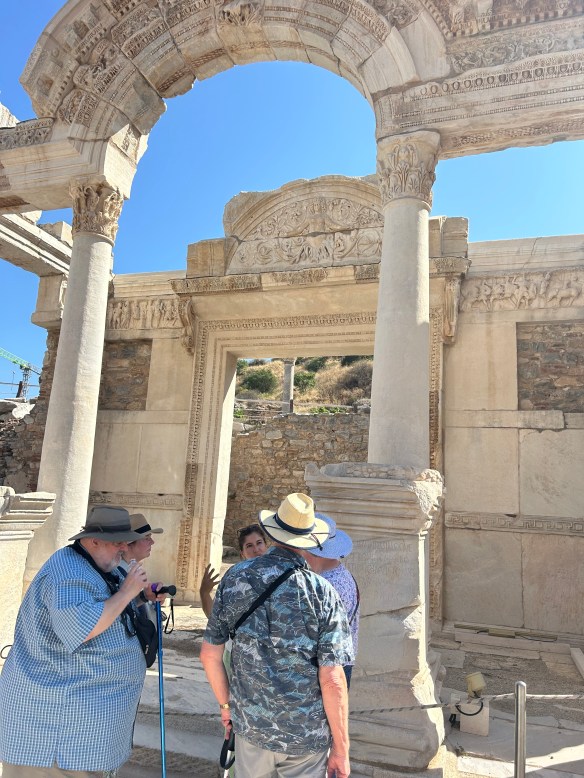
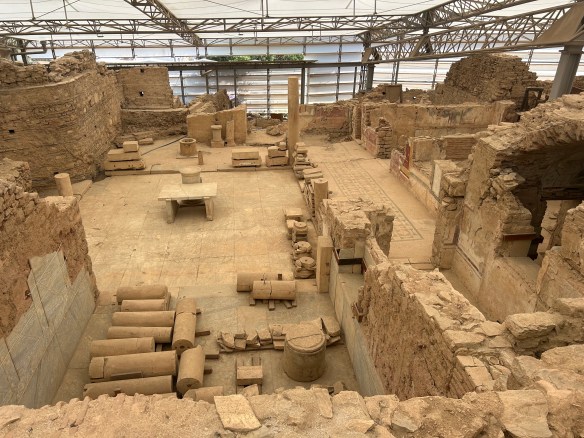
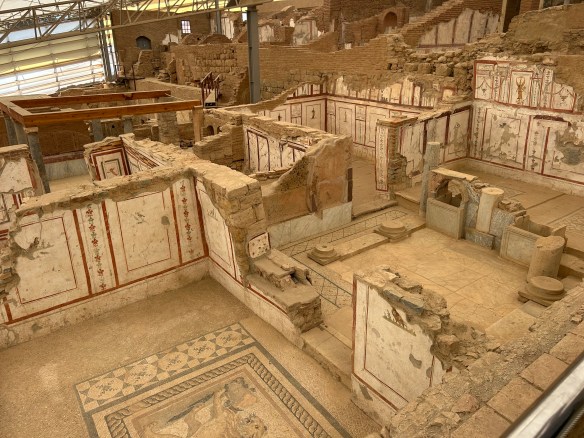
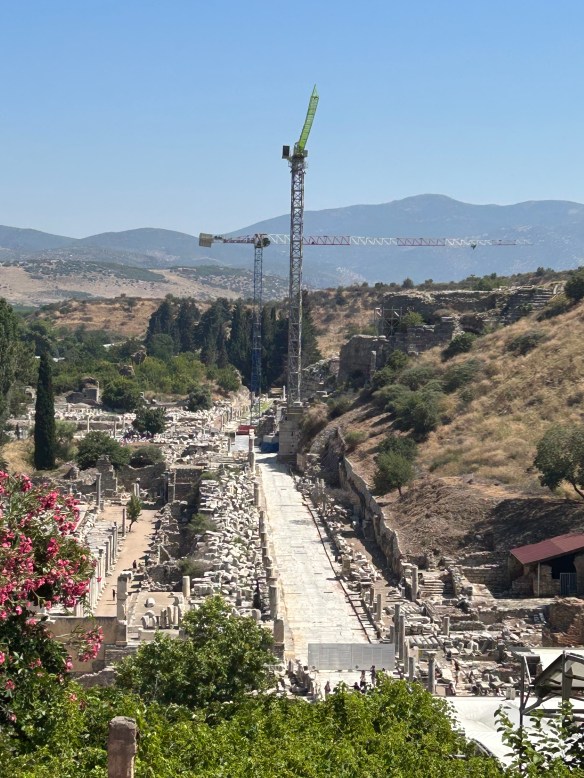
Ephesus is one of the largest archaeological sites in the eastern Mediterranean. The ancient city in present-day Turkey came to prominence under the Roman Empire as the capital of Asia Minor. (Now I’ve stood on every continent except Antarctica—so cool!)
The Temple of Artemis, one of the Seven Wonders of the Ancient World, once stood here. The Gospel of John was written here. Cleopatra briefly lived here. The significance of this place just goes on and on.
It was hot and there were plenty of people, but we were there early and our guide did a great job avoiding the worst of the crowds. By the time we finished, the buses were literally lined up for miles just waiting to get into the parking lot. (!)
Overall, I actually liked Ephesus better than Pompeii, which is really saying something.
In other news…Chris finally had a few bites last night after two days of eating absolutely nothing, so things are looking up there.
Tomorrow is the port I’ve been looking forward to most: Istanbul!


June 19 – ISTANBUL, TURKEY
The only city in the world that straddles two continents, Istanbul has a long history as the capital of the Roman, Byzantine, and Ottoman empires. It’s been on my bucket list for a long time, and I’m so stoked to be here!
A brief overview: Founded as Byzantium in 656 BC, the city was renamed Constantinople in 330 AD and became the capital of the Roman Empire. When the western part of the empire collapsed in 476, Constantinople remained the capital of the eastern part (AKA the Byzantine Empire). Then in 1453, Sultan Mehmed II conquered the city and declared it the capital of the Ottoman Empire. The name was officially changed to Istanbul in 1930 when the Republic of Turkey was formed.
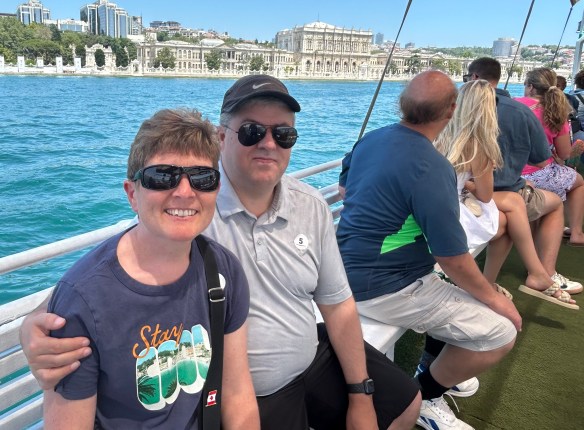
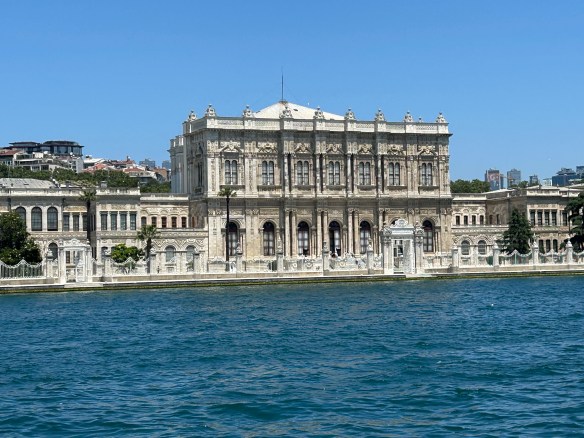
The Bosphorus Strait connects the Sea of Marmara with the Black Sea and divides the city between Europe and Asia. We took a day cruise along its shores to see some very cool highlights.
The ship is in port overnight, so we get another full day to explore tomorrow!

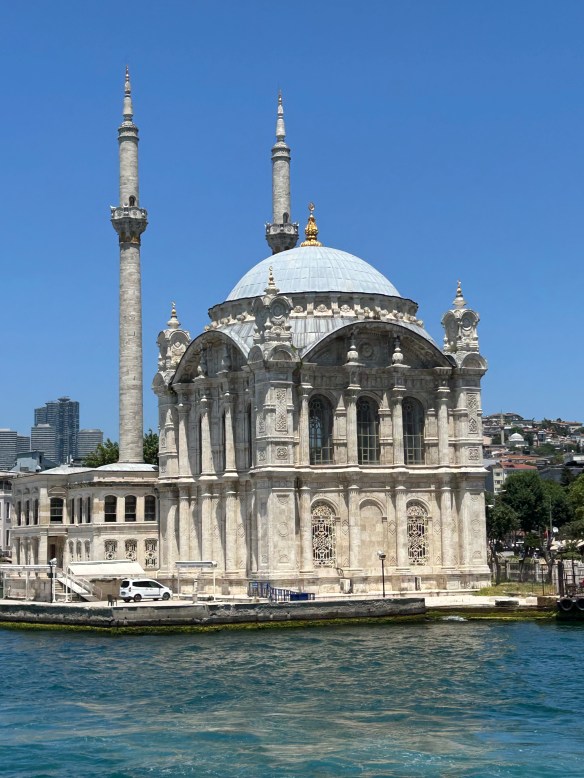
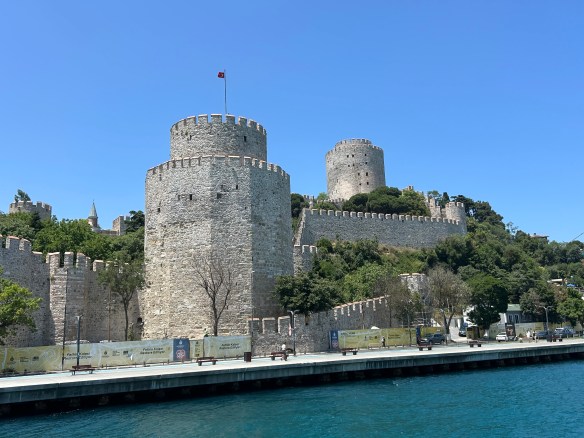
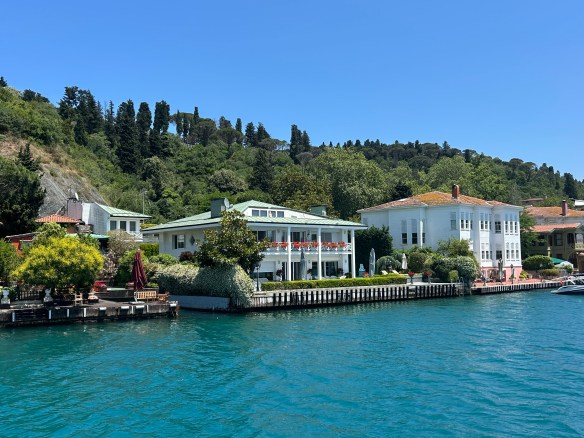
June 20 – ISTANBUL, TURKEY
While Turkey is officially a secular state, 99% of the population is Muslim, and the call to prayer echoes across Istanbul five times a day. I heard it at 4:30 this morning and couldn’t get back to sleep, but seize the day, right?
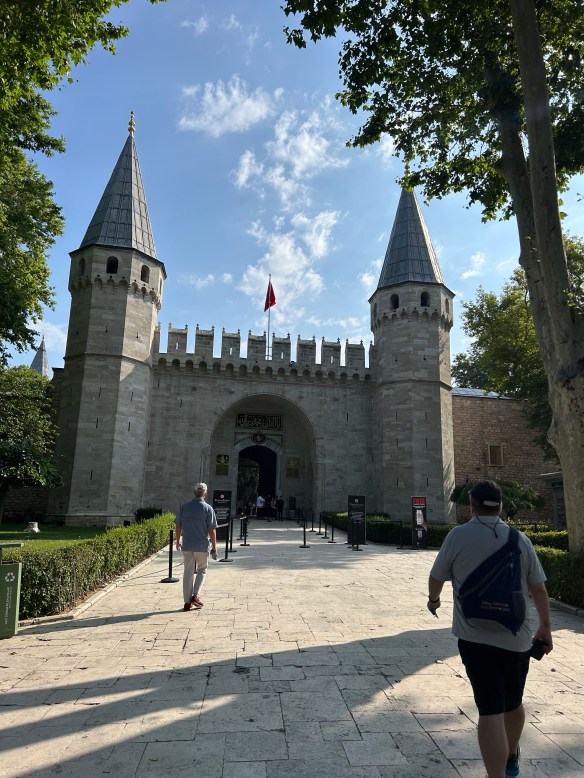
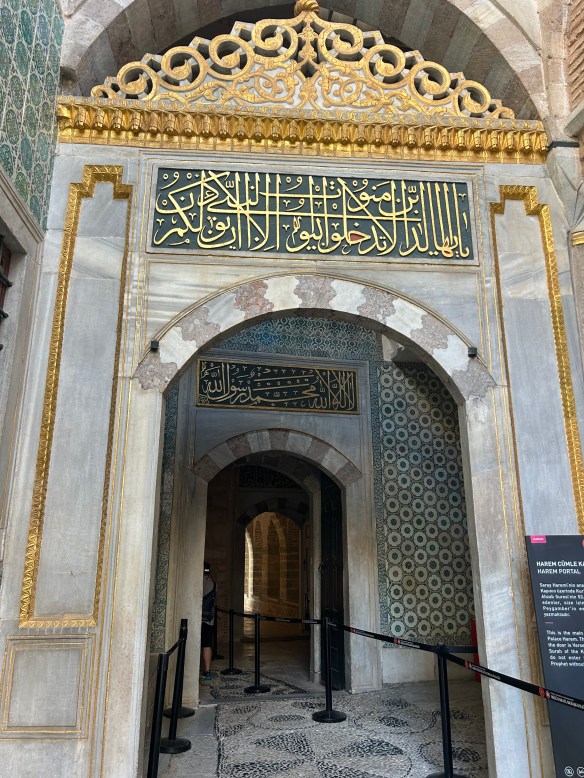
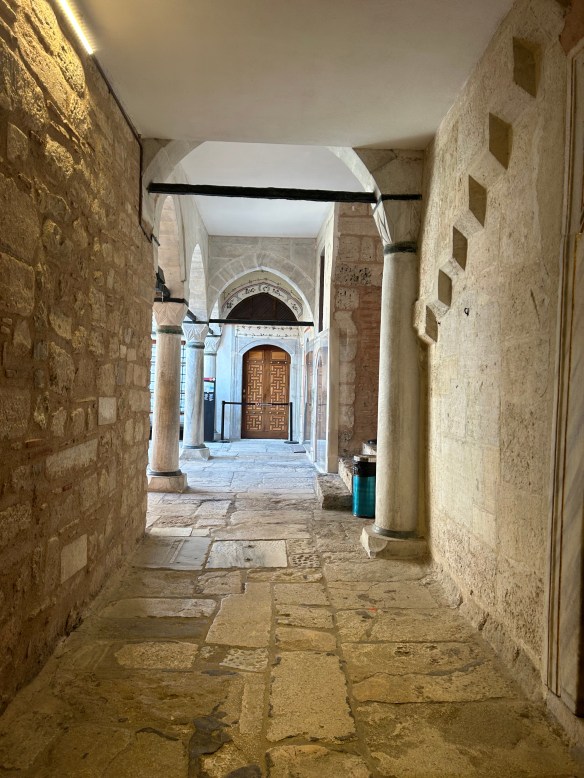
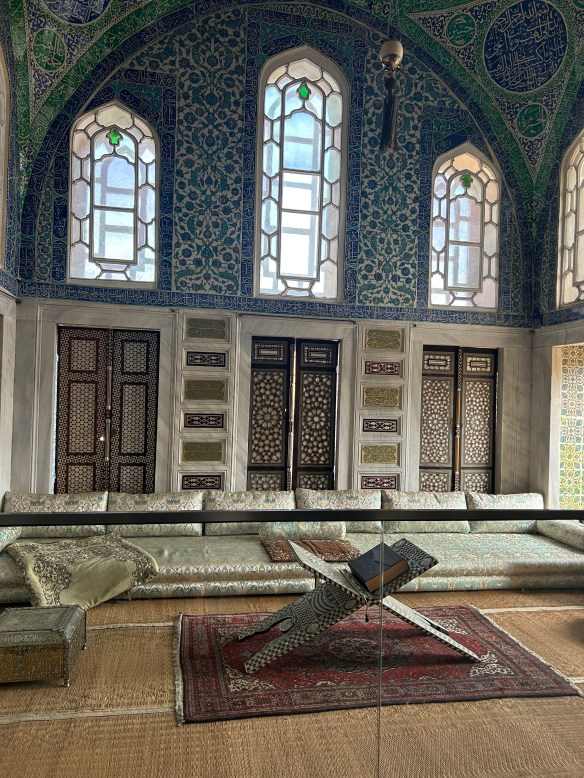
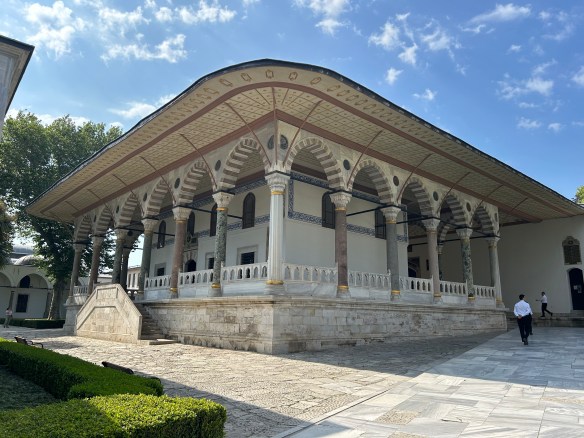
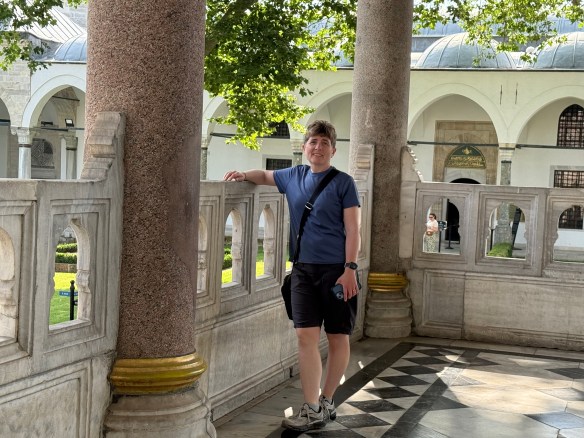
Our main goal for today was to see Topkapi Palace. This was the home of the Ottoman sultans for 400 years. The main attraction is the harem, where the female members of the sultan’s family (his mother, wives, concubines, and children) lived with their servants/guards (eunuchs). Fun fact: Since Islam does not allow the enslavement of Muslim women, most of the concubines were Jews or Christians, given to the sultans as gifts.
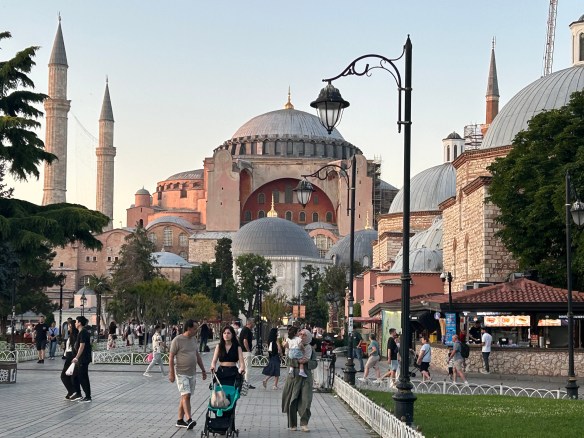
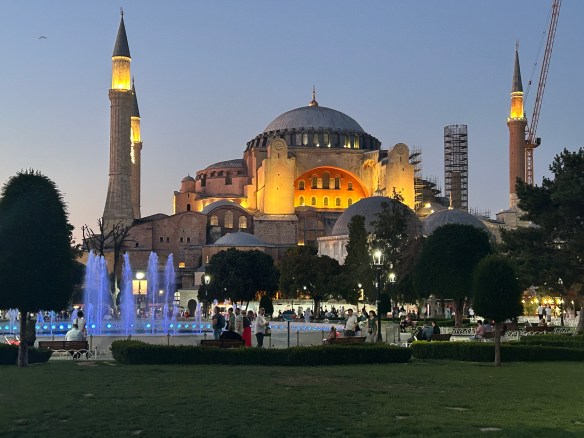
We also saw the other sights in the historic centre, like Hagia Sophia. Completed during the Byzantine era in 537 AD, it was originally a Christian cathedral. When the Ottomans took over, they converted it to a mosque. It was turned into a museum in 1935 and (controversially) turned back into a mosque in 2020. The lines were long and the entry fee was high, so we took a few pictures of the exterior and moved on.
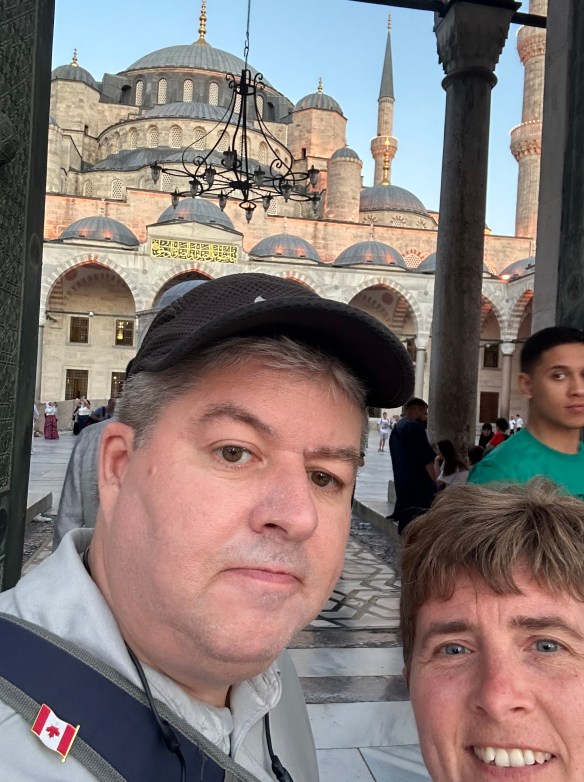
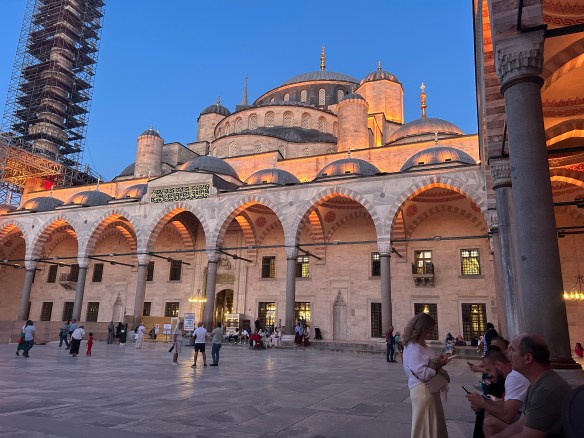
The nearby Sultanahmet Mosque is an Ottoman-era mosque from the 17th century. It’s popularly known as the Blue Mosque because of the 20,000 blue tiles that decorate the interior (which unfortunately we didn’t get to see).  Legend has it that the builder misheard the sultan’s request for “altın minareler” (gold minarets) as “altı minare” (six minarets), but only the mosque in Mecca was supposed to have that many. To make up for the error, the sultan ordered a seventh minaret to be built at the Mecca mosque.
Thankfully the public tram system is cheap and efficient—there are 20 million people in this city and I’ve seen how most of them drive. 
Day at sea tomorrow…






June 21 – AT SEA
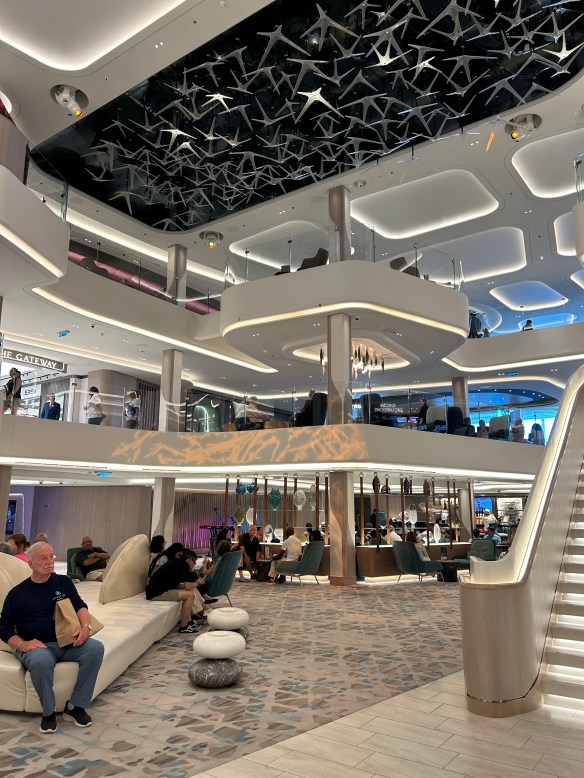
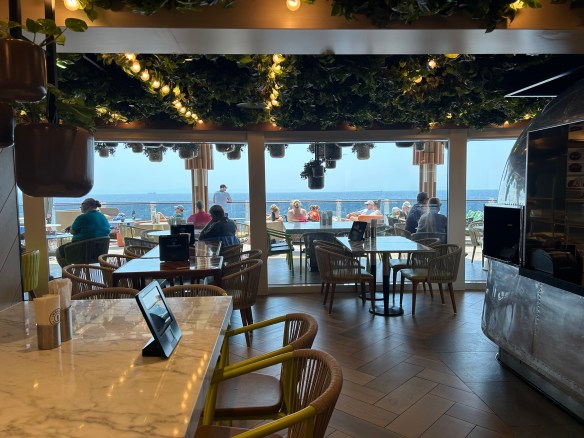
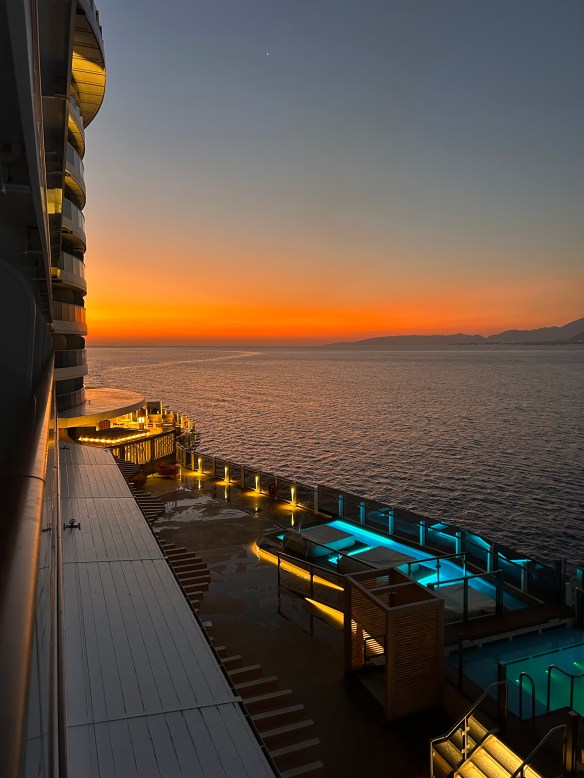
A full day at sea gave us a chance to relax on this beautiful ship. We joined a couple trivia games, watched an interesting Q&A with the captain and chief engineer, and checked out the action on the ship’s go-kart track. Might catch a show in the theatre tonight, but we’ll see.
Tomorrow: Mykonos!


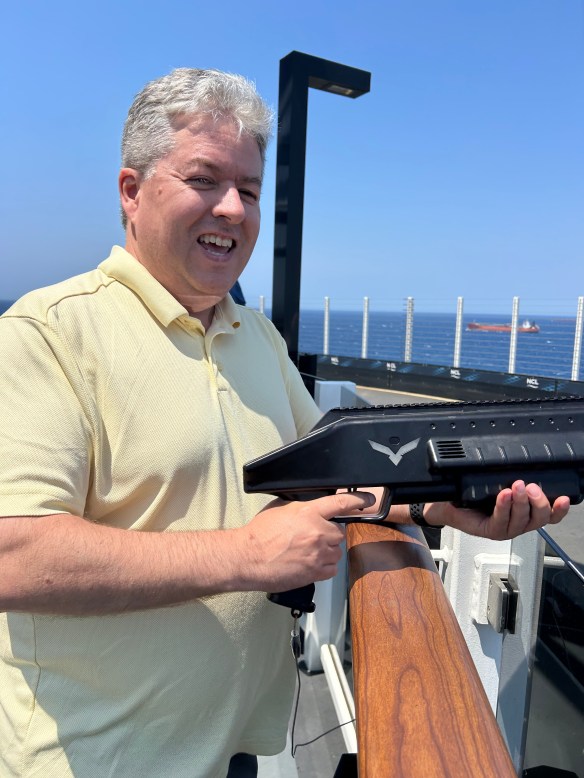


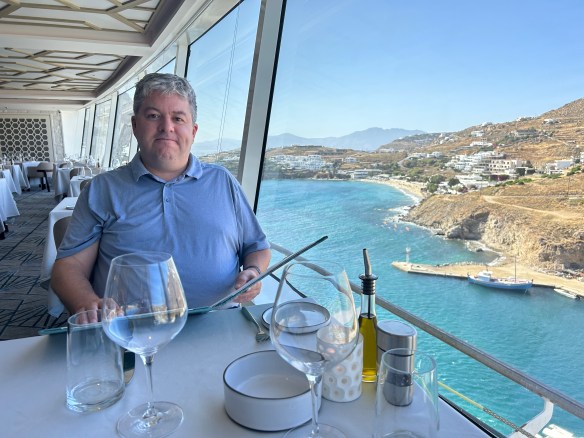
June 22 – MYKONOS, GREECE
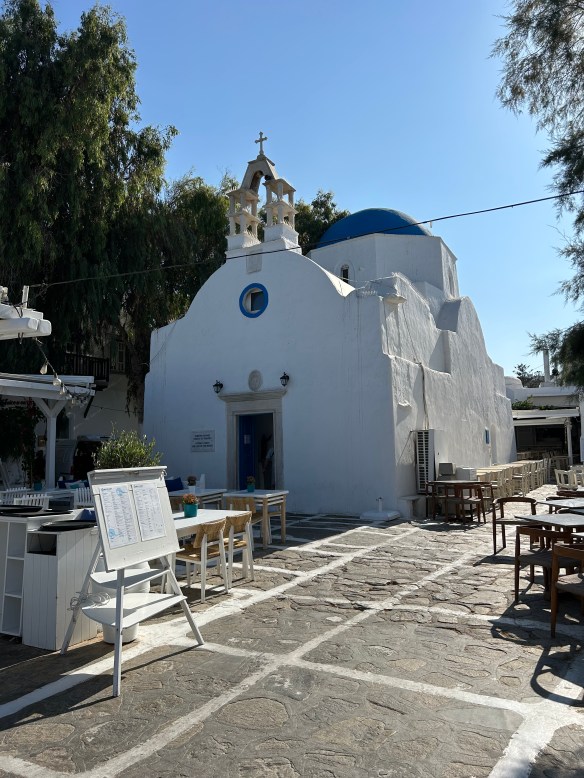
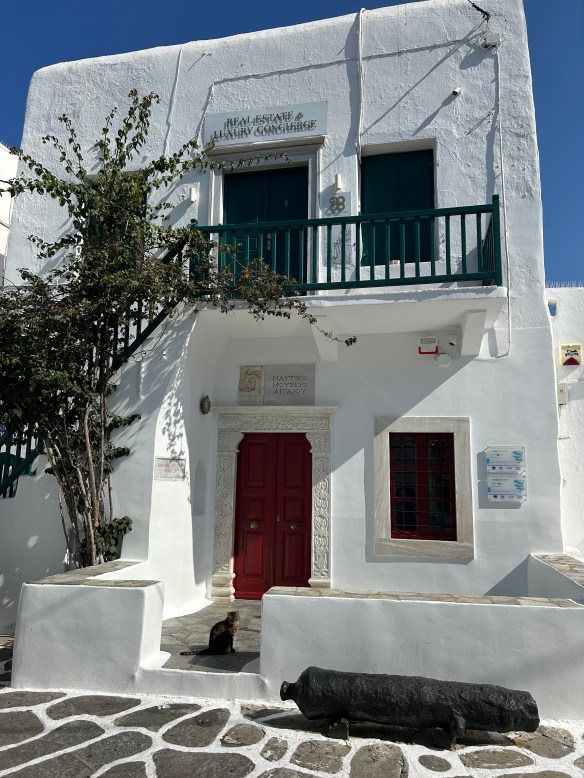
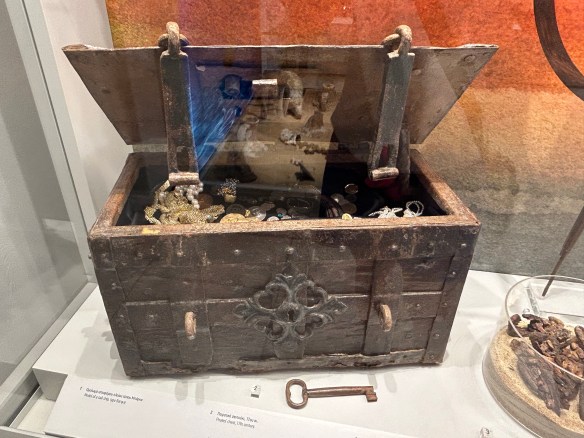
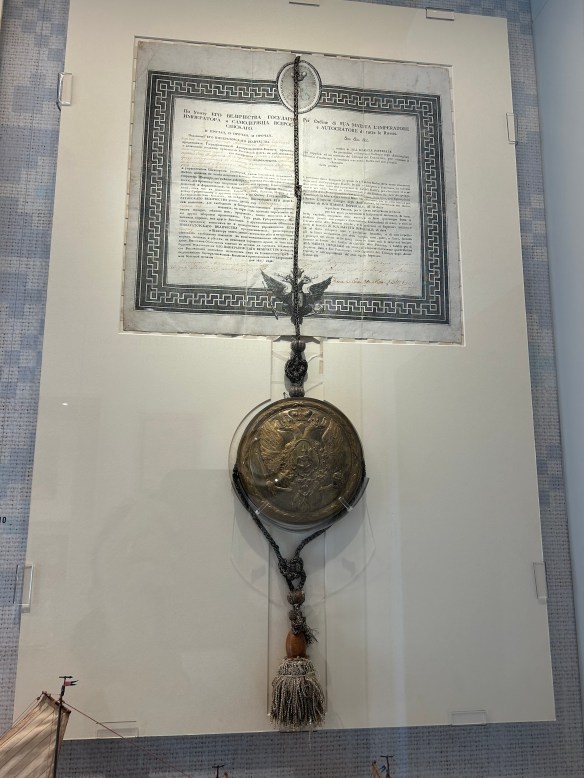
To be honest, I could have happily skipped Mykonos. The island is renowned for its beaches and nightlife, but neither of those things appeal to us. There *is* a significant archeological site nearby, but it requires a ferry ride that can be rough, and I have motion sickness issues. So we wandered through the maze of streets (purposely designed to confuse attacking pirates) and toured the tiny Aegean Maritime Museum, which was full of cool historical artifacts.
Next up: Santorini!
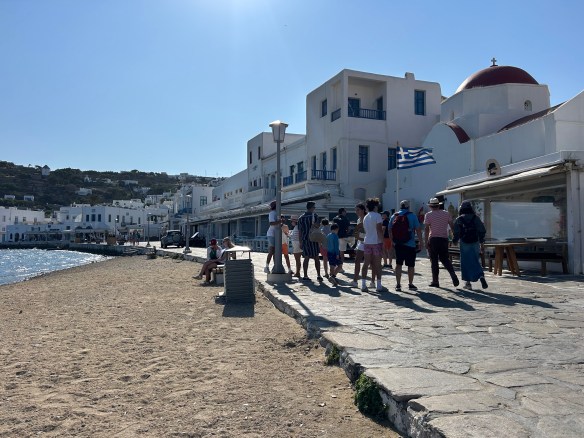


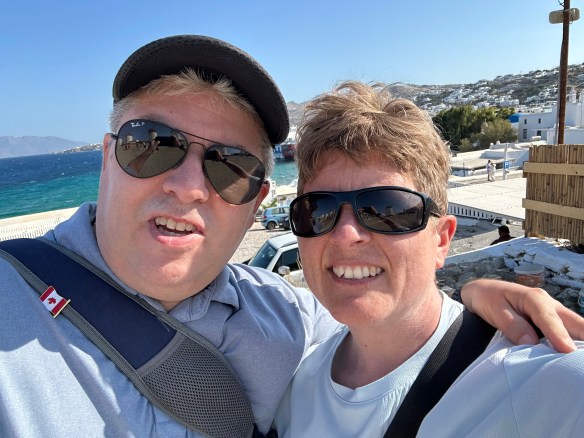
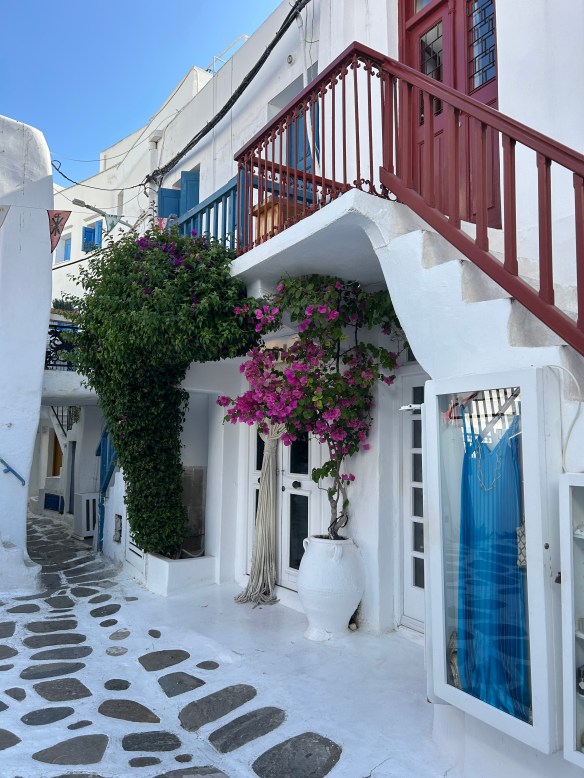
June 23 – SANTORINI, GREECE
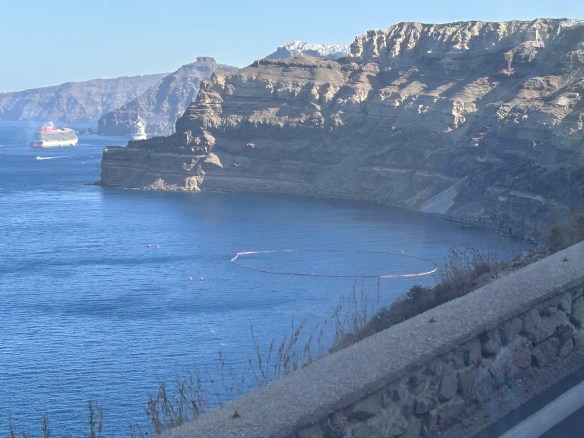
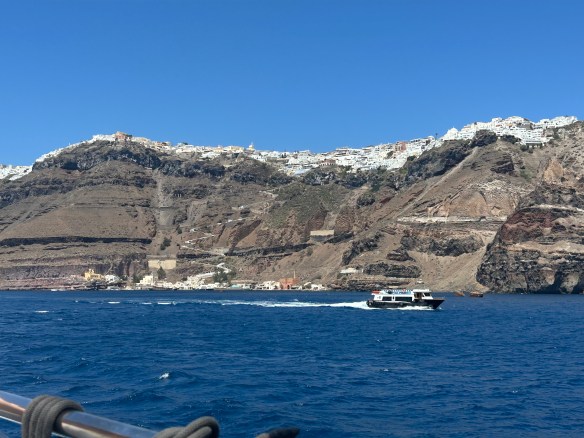
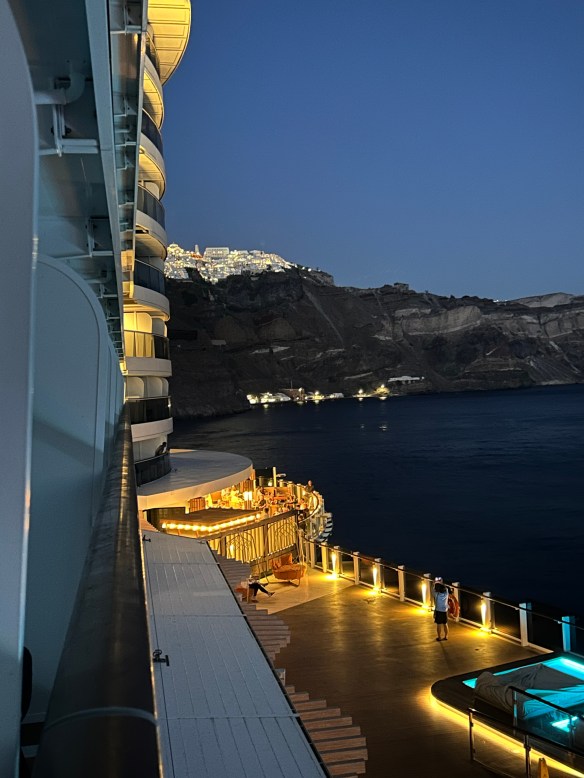
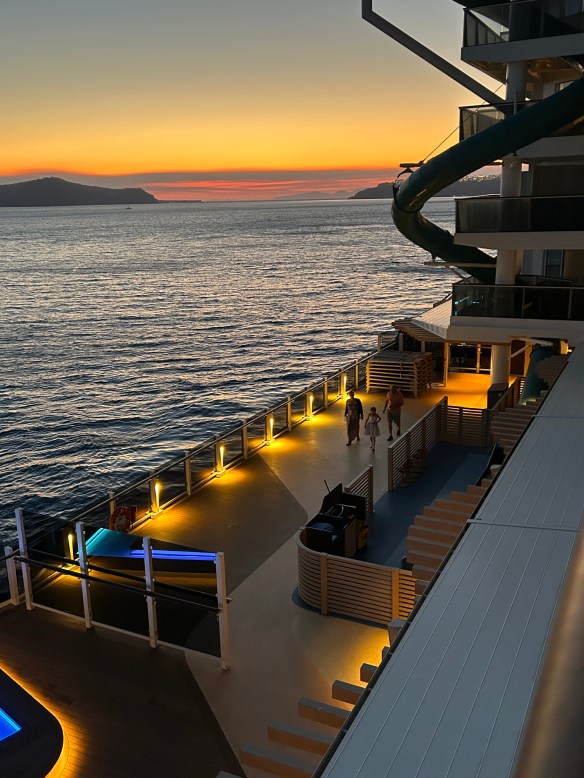
Santorini is actually a group of islands that were formed by intensive volcanic activity; each violent eruption caused the collapse of the volcano’s central part, creating a large crater (caldera). Cruise ships now park in the caldera; it’s so deep that they can’t actually anchor, so they have to use their engines and thrusters to stay in place. (!)
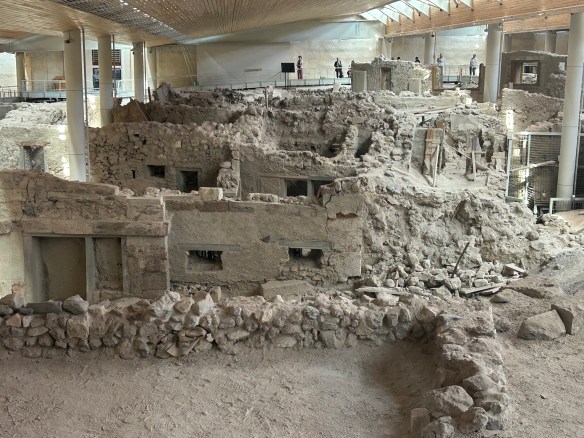
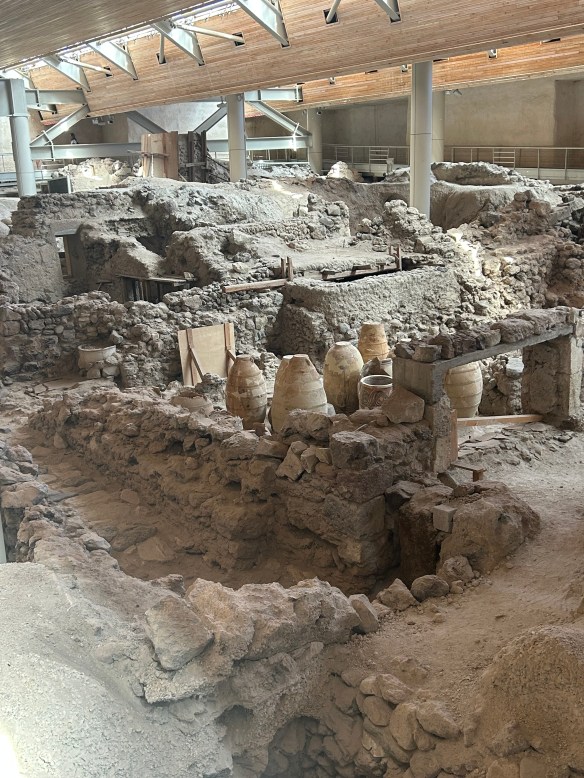
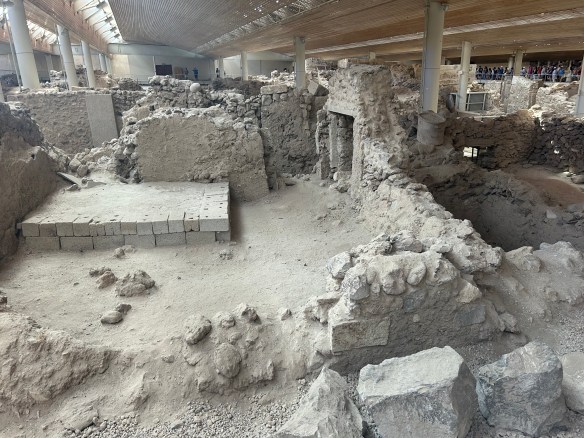
We started at the archeological site of Akrotiri, known as the Pompeii of the Aegean. Akrotiri was a Bronze Age settlement inhabited by the Minoans of Crete. It got destroyed in a catastrophic volcanic eruption around 1600 BC and was buried in volcanic ash, which preserved many objects and artworks. Unlike at Pompeii, no human remains were found, which suggests people had time to evacuate. The site was unearthed in 1967 and excavations are still going on.
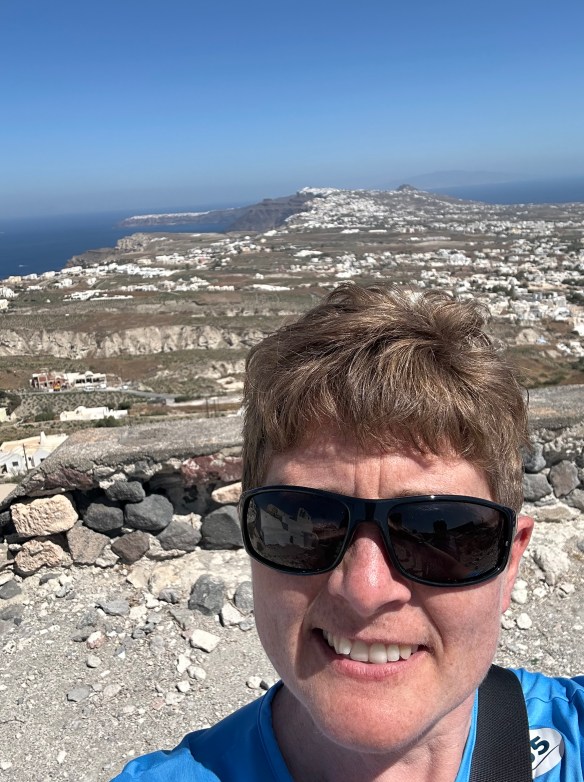
From there we went to Pyrgos, the highest village on Santorini. Its “castle” was built in 1580 and offers panoramic views of the island.
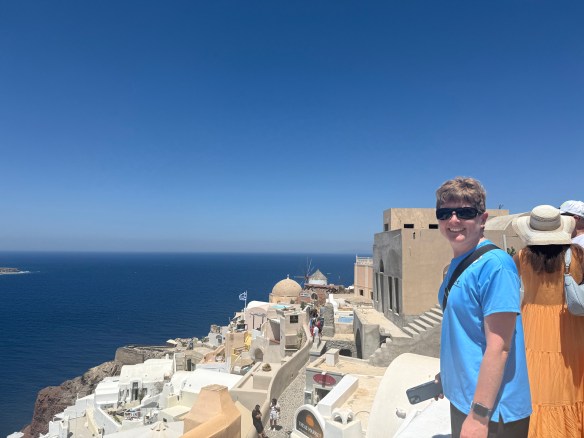
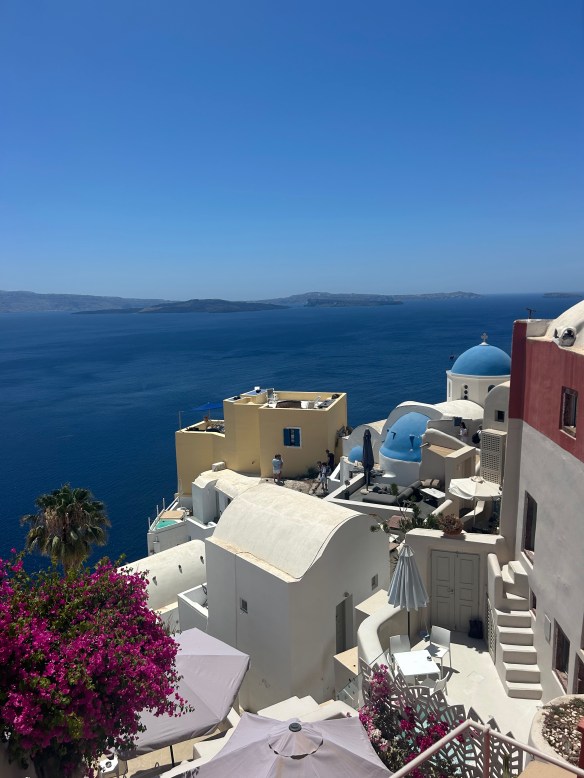
Oia (pronounced EE-ah) is where you’ll find the blue domes that adorn every postcard of Greece. *Everyone* wants a photo there, so it’s a tourist madhouse. We snapped a few pics and then ducked into a gelateria for a snack while we waited for the rest of the group.
Tomorrow: Rhodes!


June 24 – RHODES, GREECE
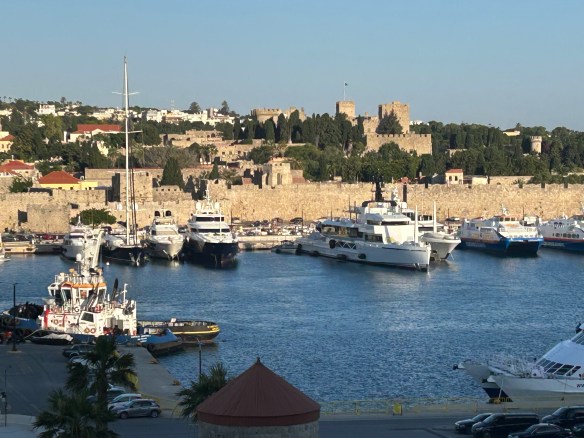
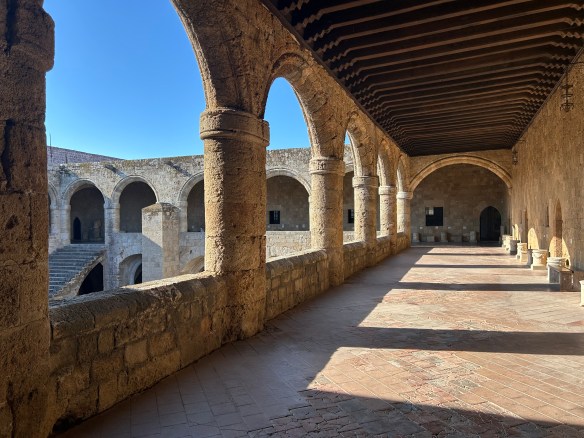
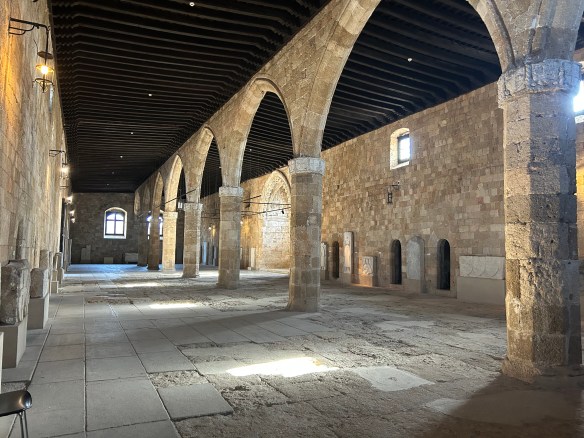
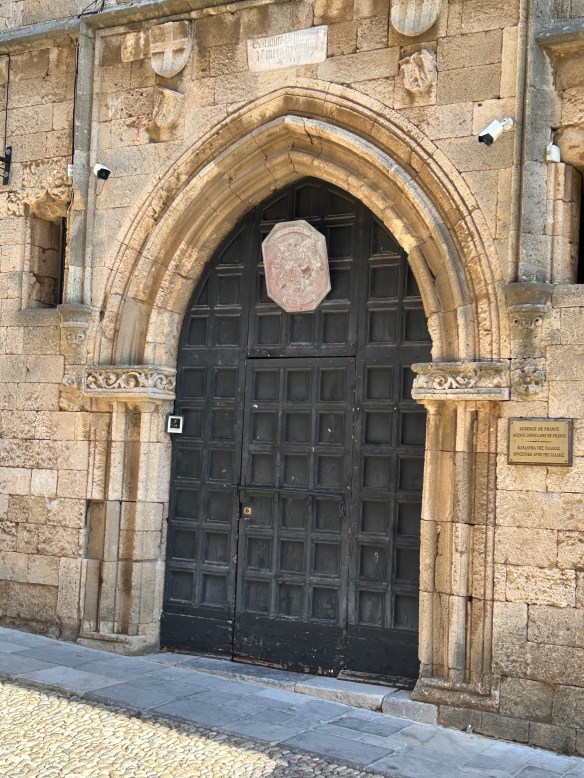
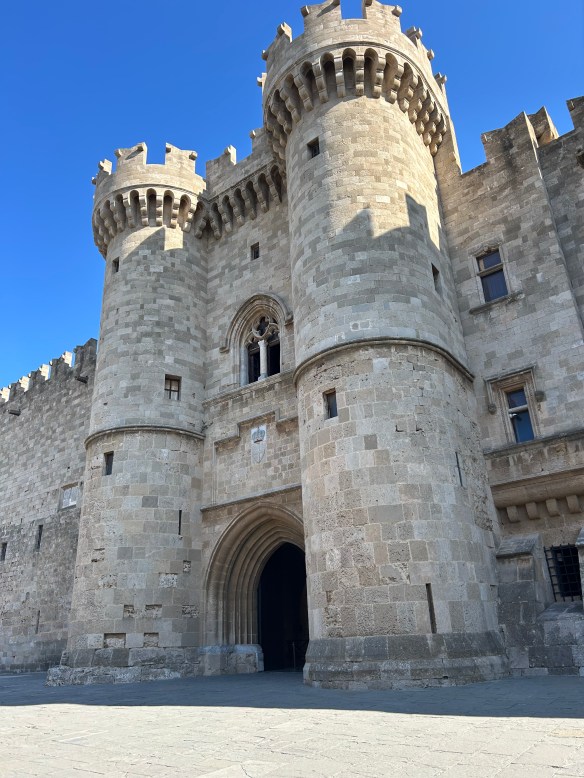
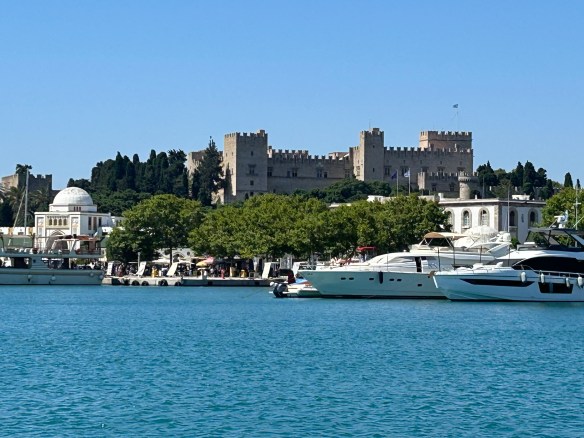
Over the centuries, Rhodes has been controlled by the Romans, Ottomans, Italians, and others. But it was the Knights of St. John who fortified the old city and gave it much of its medieval character. Also known as the Knights Hospitaller, this Catholic military order occupied Rhodes from 1309 to 1523. The old city they created is now a UNESCO World Heritage site—and our ship docked right next to it!
We began at the Archeological Museum, which is housed in the former hospital of the knights. It has displays of pottery, mosaics, funerary monuments, and more. It also has some pretty gardens.
The knights were organized into seven “tongues” based on where they were from: England, Germany, Italy, France, Provence, Auvergne or Aragon. Each tongue had its own “auberge” or “inn” – a communal building that served as residence, meeting place, and dining hall. Walking along the Street of the Knights, you can still see the inscriptions on the walls that indicate which tongue of the knights lived there.
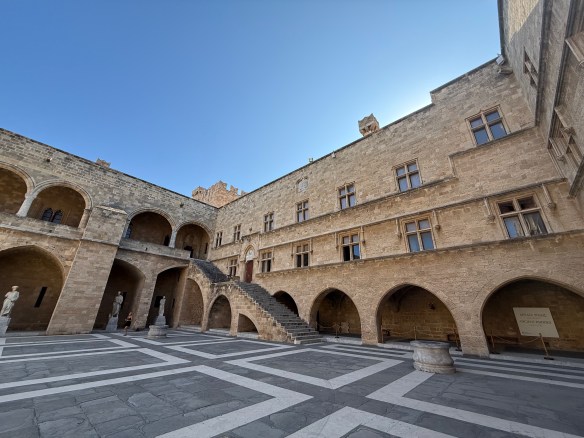
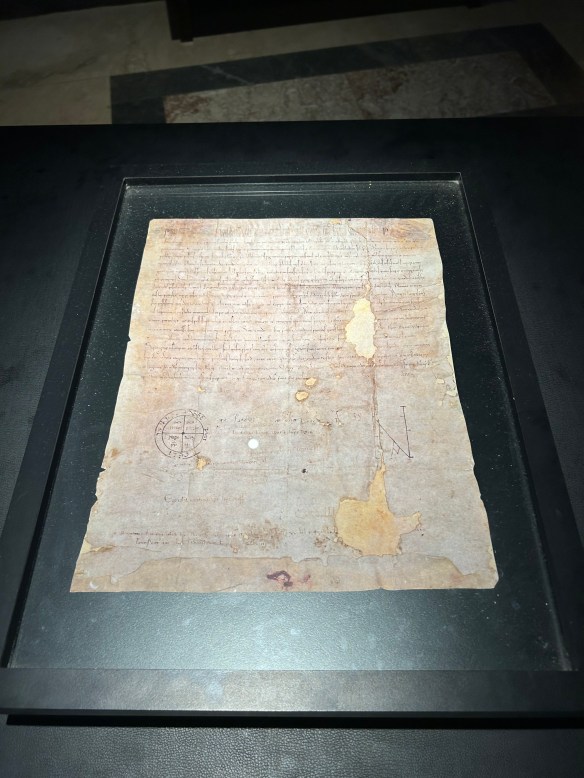
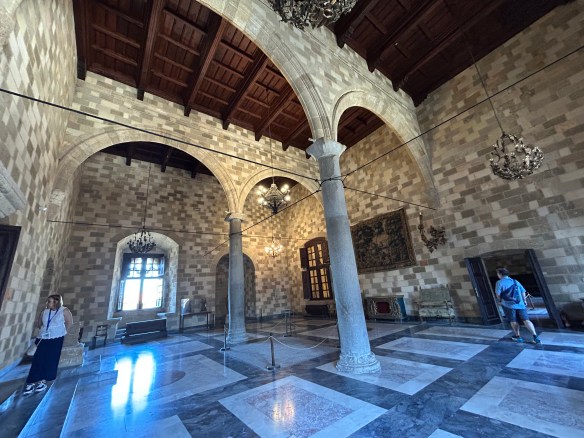
That led us to the Palace of the Grand Master. It’s super impressive on the outside, but sorely lacking on signage inside. There was lots of info on the floor mosaics, but nothing to tell us about what room we were in or how it was used. A bit of a disappointment.
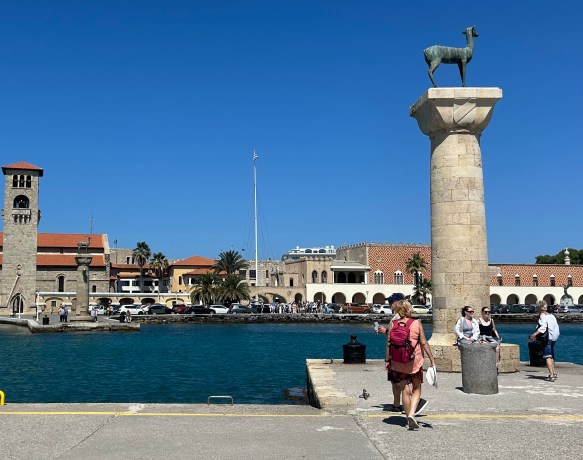
A final highlight was along the waterfront. You’ve probably heard of the Colossus of Rhodes, another one of the Seven Wonders of the Ancient World. It was a 30-metre-high bronze statue dedicated to the sun god Helios that experts believe stood at the entrance to Rhodes harbor. It was destroyed in an earthquake in 226 BC, but two statues now mark where it was believed to have been.
Overall, this definitely ranks among my favorite ports!
Tomorrow is our final stop: Crete!










June 25 – CRETE, GREECE
Our guide claimed Crete is the only place in the world that is within 200 miles of three continents: Asia (Turkey), Africa (Libya), and Europe (mainland Greece). Not sure what continent he thinks Crete is actually in, but that is a cool way to look at it.
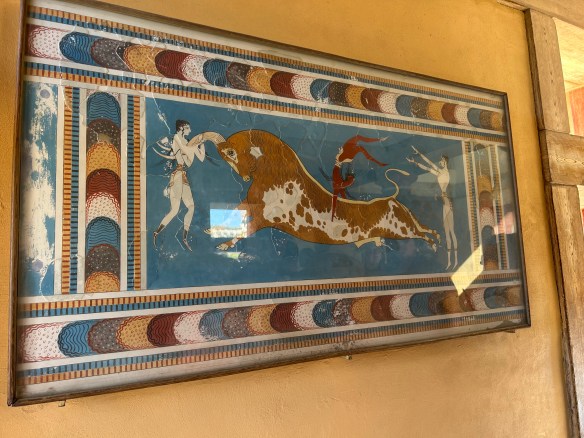
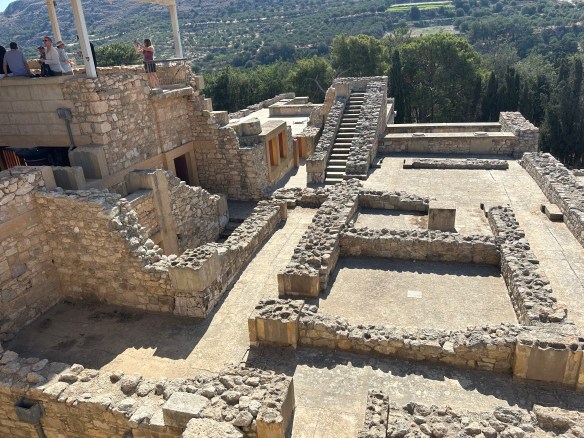
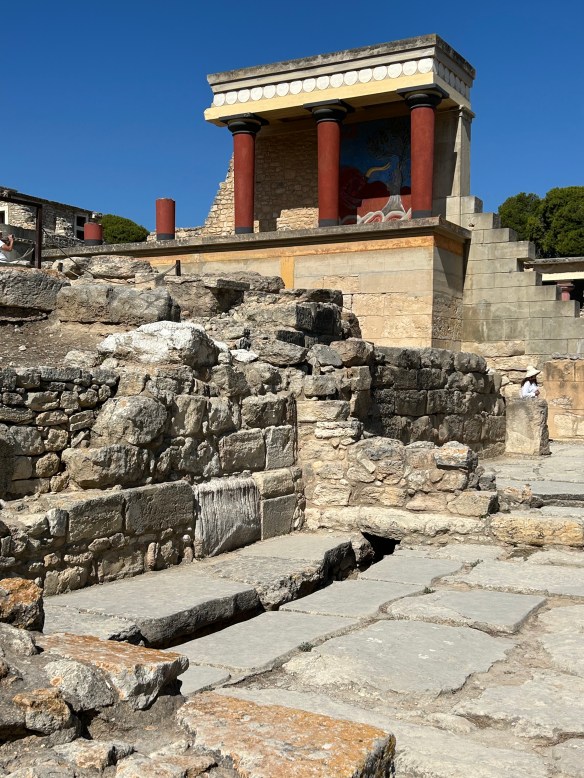
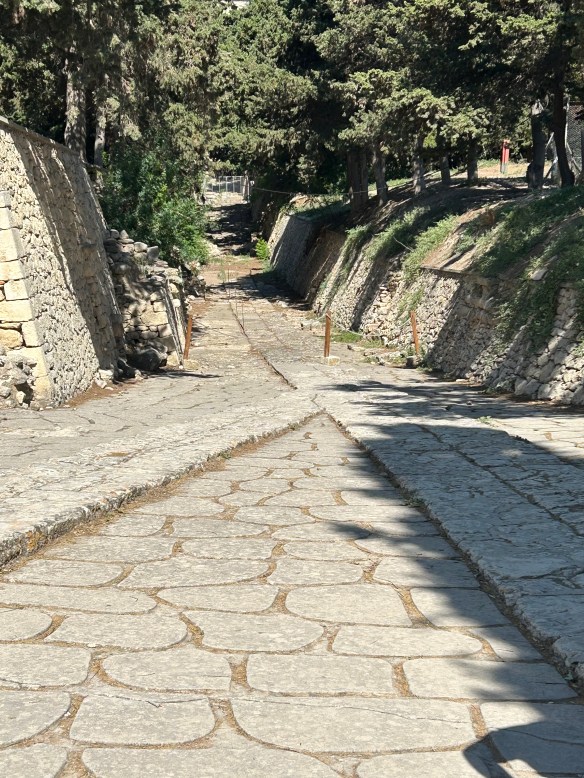
Our destination today was the Palace of Knossos, which dates from 2000 BC and was the centre of Minoan civilization and culture. It’s particularly associated with the myth of the minotaur. Like all Greek mythology, the story is long and complicated, but here it is in a nutshell:
King Minos of Crete prayed to Poseidon for a sign of his divine right to rule. The god sent a magnificent white bull from the sea. Minos was supposed to sacrifice the bull, but he kept it out of greed. As punishment, Poseidon cursed Minos’ wife, Pasiphae, to fall in love with the bull. Their union resulted in the birth of the minotaur—a creature that was half man and half bull. Enraged, Minos ordered a craftsman to build a massive maze-like structure (labyrinth) at Knossos to imprison the beast.
The cataclysmic volcanic eruption at nearby Santorini in 1600 BC (did I forget to mention that it was one of the largest eruptions in human history, with the force of 250 nuclear bombs?) hastened the decline of Minoan civilization, and Knossos was abandoned by 1350 BC.
Tomorrow we disembark in Athens and begin the long journey home. It’s been an outstanding cruise—one of the best.
And that’s a wrap!



 Crystal's Commentary