Greece and Turkey 2025

Once again, I did all my real-time blogging on Facebook. Here’s the collection of posts for posterity:

June 15 – ATHENS, GREECE

Welcome to our latest adventure: a cruise of Greece and Turkey. I’m a huge history buff but have never been to Athens or the Aegean area before, so this is awesome.

Naturally, we started with the Acropolis, where the Parthenon has stood for close to 2,500 years. It’s been damaged partly by time, but mostly by a Venetian siege in the late 17th century and the pillaging of a British lord in the early 19th century. Restoration work is ongoing. The place does look amazing all lit up at night!

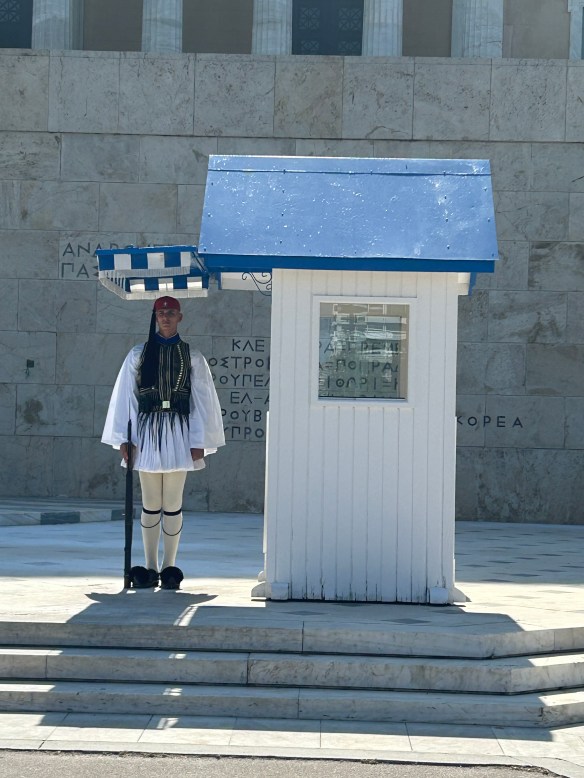
We also made our way to the former royal palace turned Greek Parliament. The Evzones in traditional uniform guard the Tomb of the Unknown Soldier just in front of the building. They perform a ceremonial changing of the guard each hour; we caught a few minutes of it.

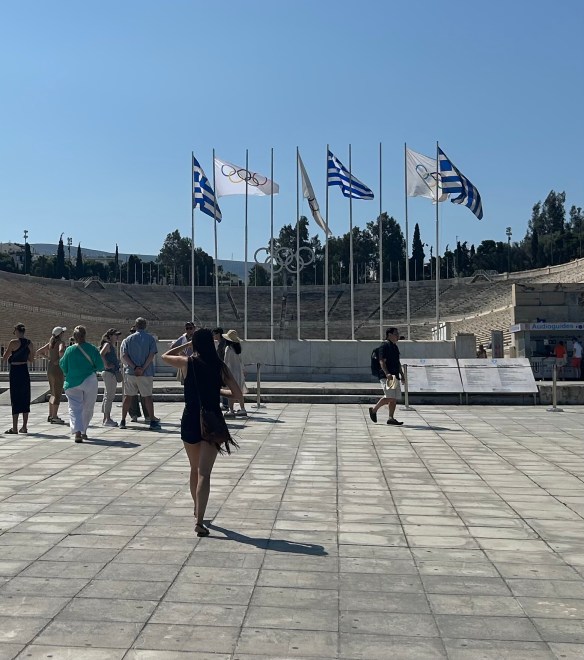
Our final stop was the Panathenaic Stadium. This is where the Olympic flame gets handed over to the host nation. Fun fact: it’s the only stadium in the world built entirely of marble.

I love, love, love the food (and the prices) here in Athens! We have seriously never had a bad meal in Greece, and we’re coming in way under my food budget.

Tomorrow we board our ship!
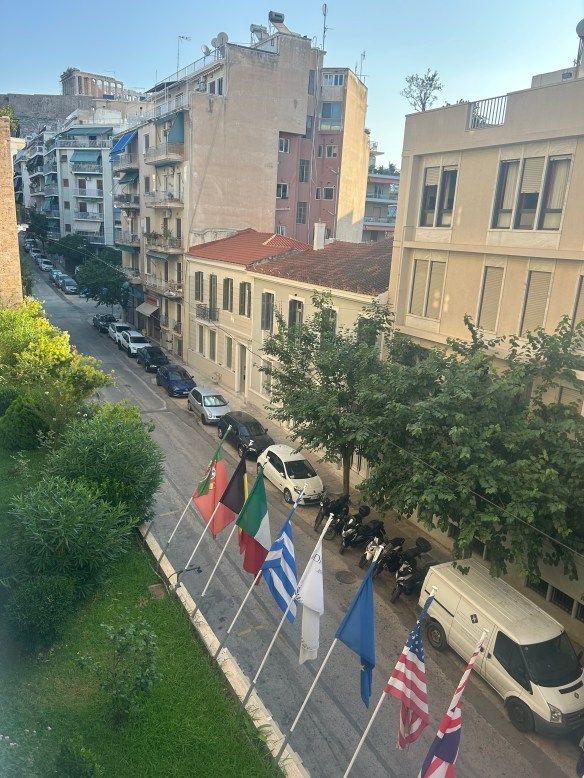
We can see the Parthenon from our hotel balcony
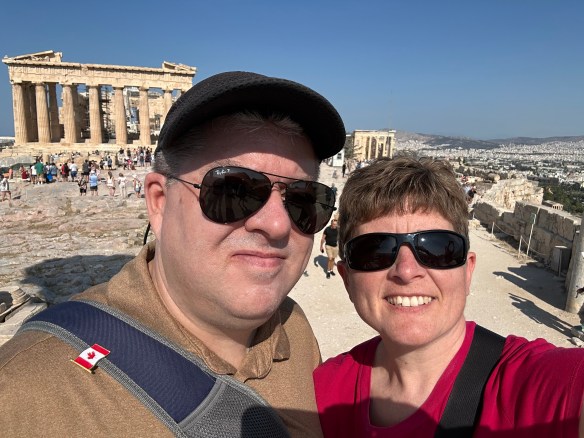
In front of the Parthenon
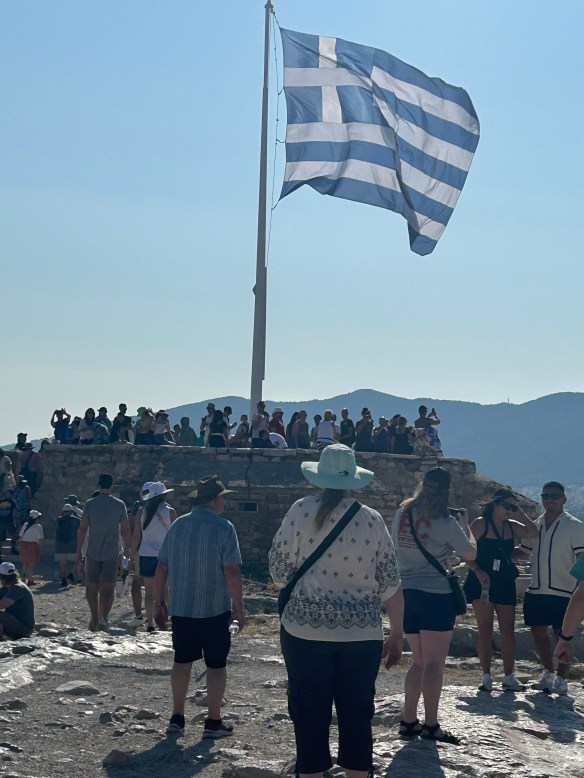
In 1941, two teenage boys scaled the Acropolis and replaced the Nazi flag with a Greek flag in one of the first acts of resistance
Standing atop the Acropolis
Guarding the Tomb of the Unknown Soldier
The Panathenaic Stadium, where the Olympic torch gets handed to the host nation
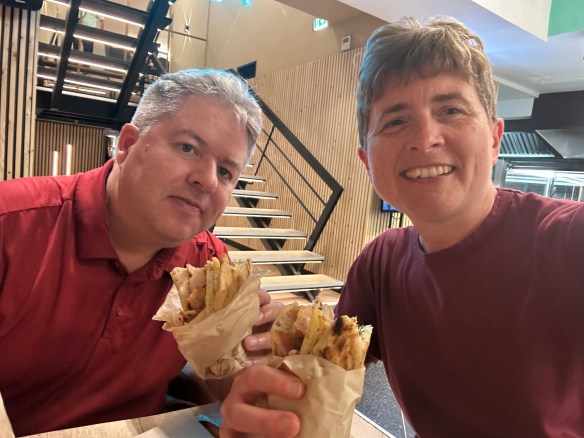
Love the food!
Gorgeous lights of the Acropolis

June 16 – ATHENS

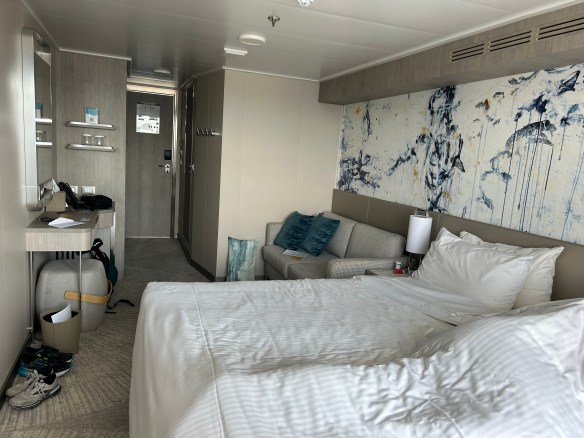
I haven’t seen too much of the ship yet, but the staterooms certainly are beautiful (padded balcony chairs…what a luxury!) Our cabin seems incredibly spacious, but that may just be because a) we’re minimalist packers and b) we’re used to squeezing four people in a room.

We have reservations at the specialty Italian restaurant tonight, but Chris has a tender tummy after a bout of food poisoning last night (shortly after I raved about how we’ve never had a bad meal in Greece). So we won’t be getting our money’s worth, but I’ll do my best!

Getting ready to sail…
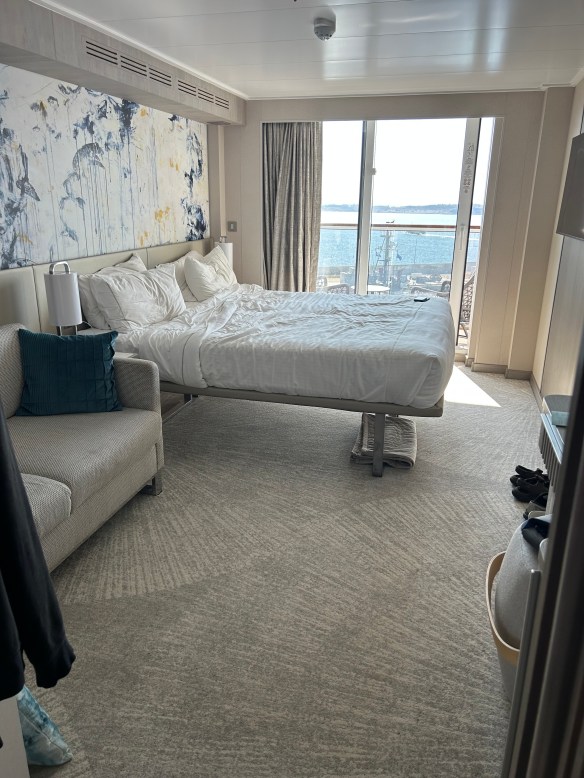
So much space!
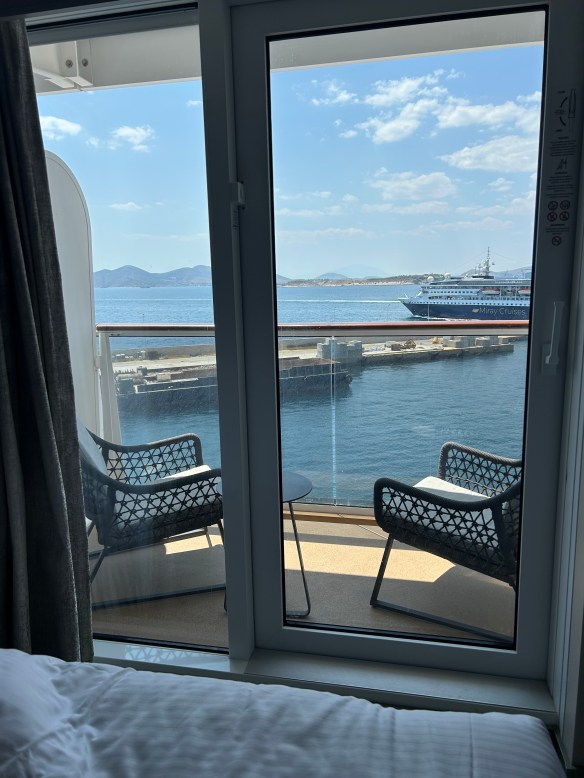
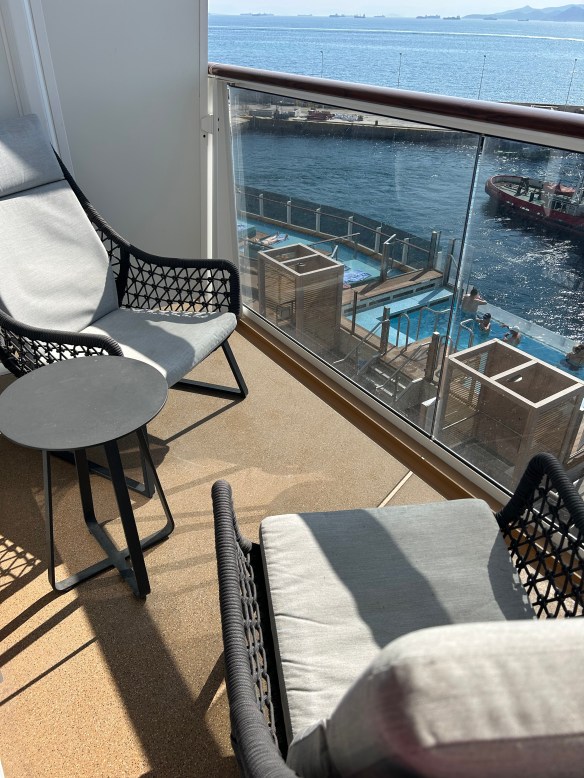
Padded deck chairs are a nice touch. A bit of a strange view, as we overlook the ship’s infinity pools two decks down.

June 17 – METEORA, GREECE

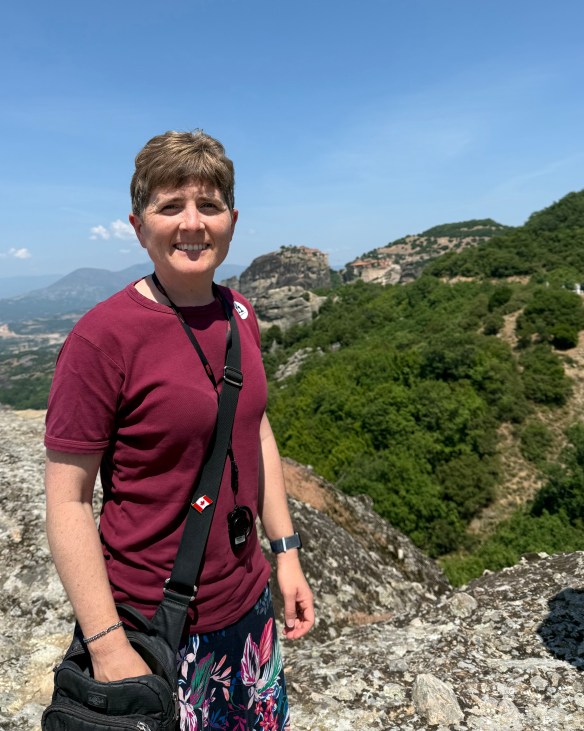
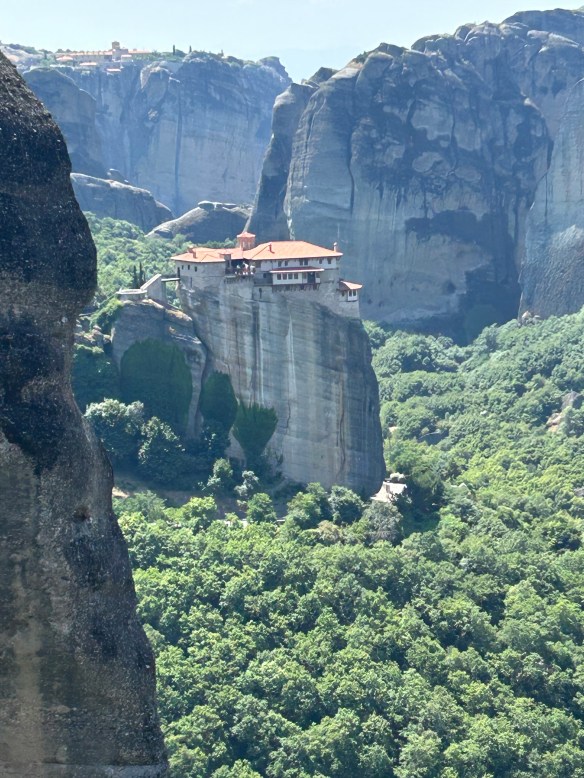
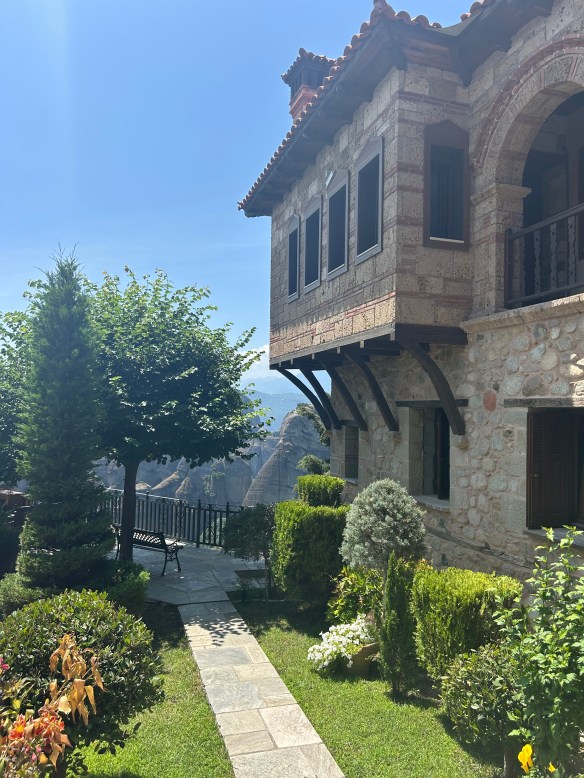
Back in the 1300s, a group of monks wanted an isolated place to hide from waves of invading Turks, so they built monasteries high on the rocks of Meteora. It would have been hard to find a more inaccessible location: the only way to get people, building materials, or anything else up to the top was via removable ladders or hoisting ropes. Today there are stone steps, but you still have to work at it. We toured a couple of the monasteries and admired the spectacular views.

Our first Turkish port tomorrow!

June 18 – EPHESUS, TURKEY

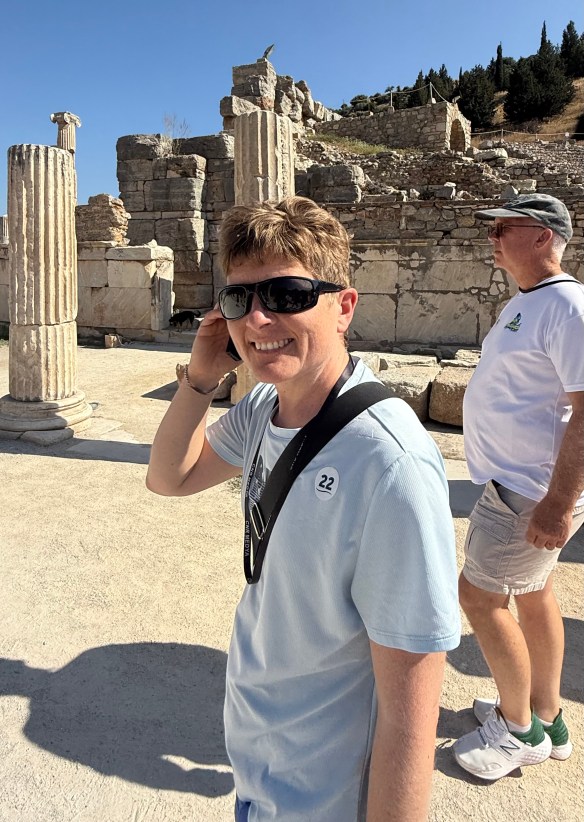
Ephesus is one of the largest archaeological sites in the eastern Mediterranean. The ancient city in present-day Turkey came to prominence under the Roman Empire as the capital of Asia Minor. (Now I’ve stood on every continent except Antarctica—so cool!)

The Temple of Artemis, one of the Seven Wonders of the Ancient World, once stood here. The Gospel of John was written here. Cleopatra briefly lived here. The significance of this place just goes on and on.

It was hot and there were plenty of people, but we were there early and our guide did a great job avoiding the worst of the crowds. By the time we finished, the buses were literally lined up for miles just waiting to get into the parking lot. (!)

Overall, I actually liked Ephesus better than Pompeii, which is really saying something.

In other news…Chris finally had a few bites last night after two days of eating absolutely nothing, so things are looking up there.

Tomorrow is the port I’ve been looking forward to most: Istanbul!
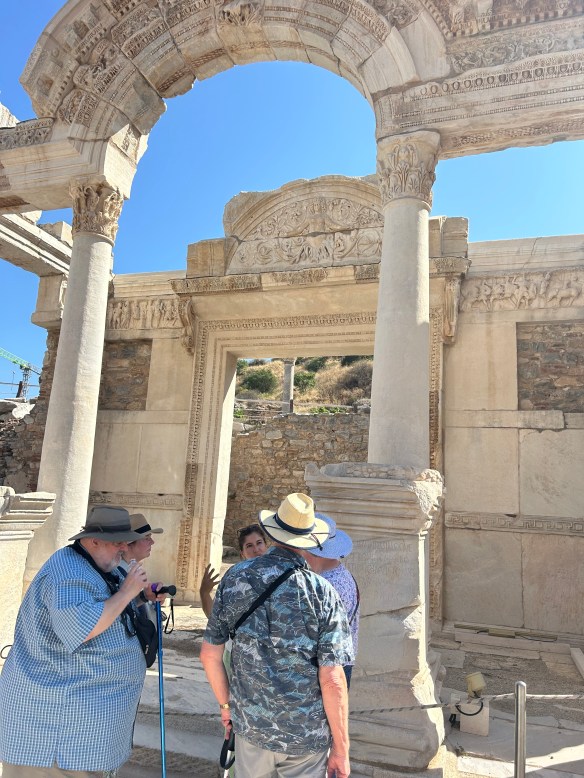
The Temple of Hadrian dates from the second century. Note the Medusa head carved over the top of the inner door–this was believed to ward off evil.
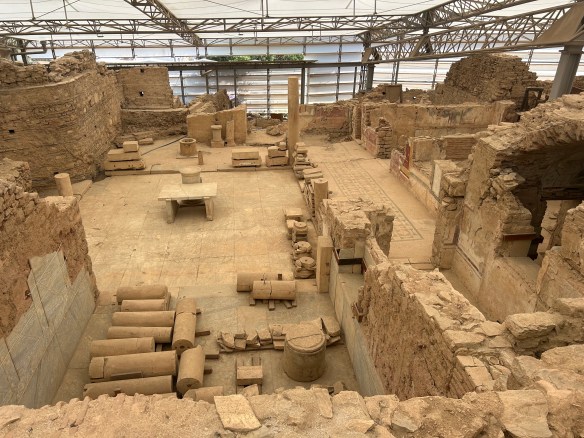
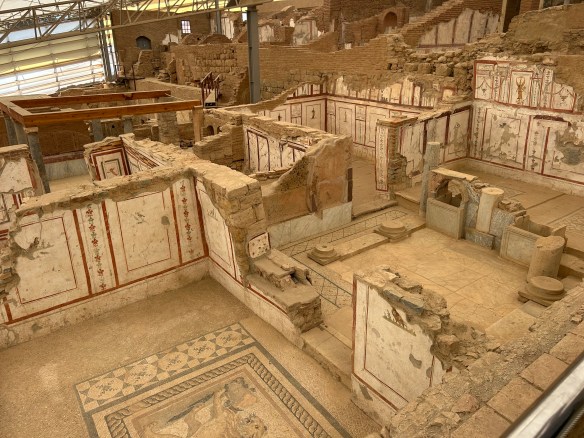
The Terrace Houses are six luxury Roman residences featuring mosaics on the floor and frescos on the walls. The oldest structure dates to the first century BC.
Terrace Houses
More frescos and mosaics in the Terrace Houses
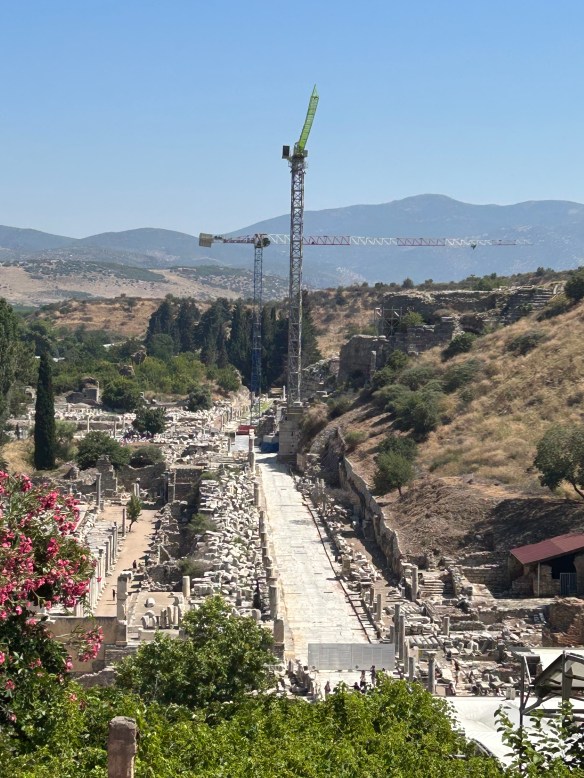
Looking over the commercial agora
The Library of Celsus once held 12,000 scrolls. The building faces east so that the reading rooms could make best use of the morning light.

June 19 – ISTANBUL, TURKEY

The only city in the world that straddles two continents, Istanbul has a long history as the capital of the Roman, Byzantine, and Ottoman empires. It’s been on my bucket list for a long time, and I’m so stoked to be here!

A brief overview: Founded as Byzantium in 656 BC, the city was renamed Constantinople in 330 AD and became the capital of the Roman Empire. When the western part of the empire collapsed in 476, Constantinople remained the capital of the eastern part (AKA the Byzantine Empire). Then in 1453, Sultan Mehmed II conquered the city and declared it the capital of the Ottoman Empire. The name was officially changed to Istanbul in 1930 when the Republic of Turkey was formed.

The Bosphorus Strait connects the Sea of Marmara with the Black Sea and divides the city between Europe and Asia. We took a day cruise along its shores to see some very cool highlights.

The ship is in port overnight, so we get another full day to explore tomorrow!
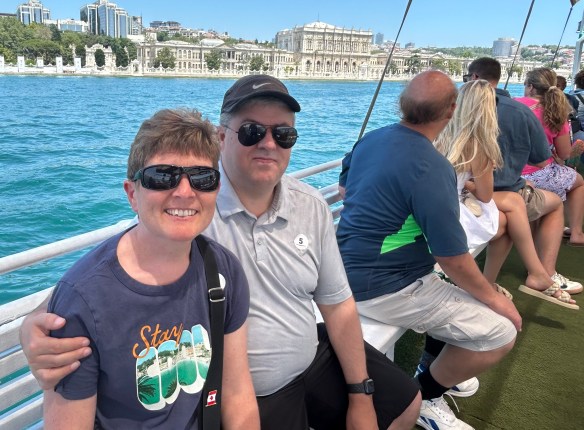
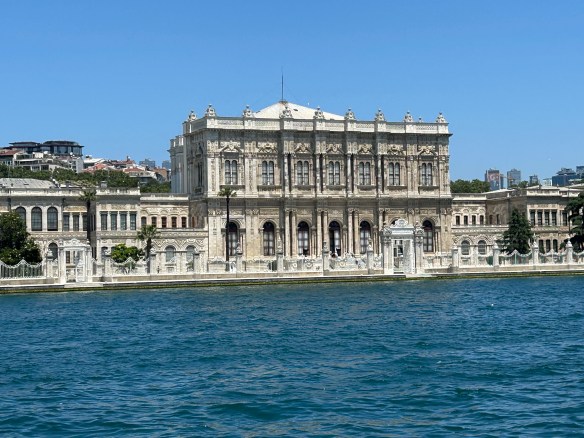
Near Dolmabahce Palace, home to six sultans from 1856 to 1924
European-style Dolmabahce Palace
One of two bridges that connect the continents. You have to pay to go from Europe to Asia but not the other way.
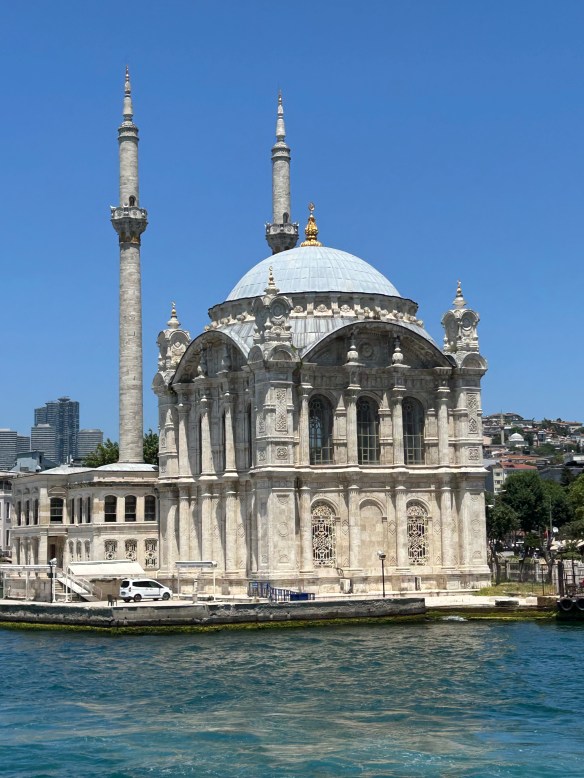
A mosque on the European side
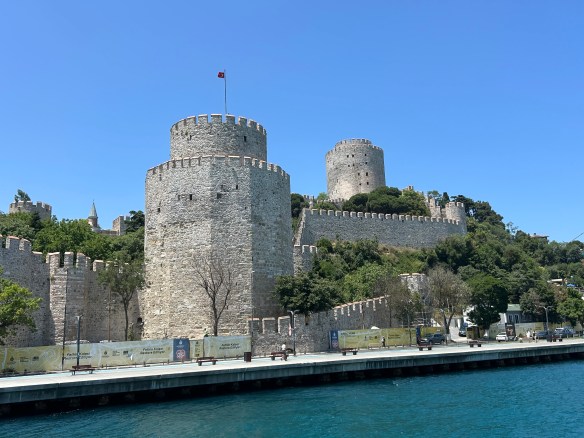
A military fortress built by Mehmet II in the 15th century. He was planning his conquest and wanted to guard against enemy help coming from the Black Sea.
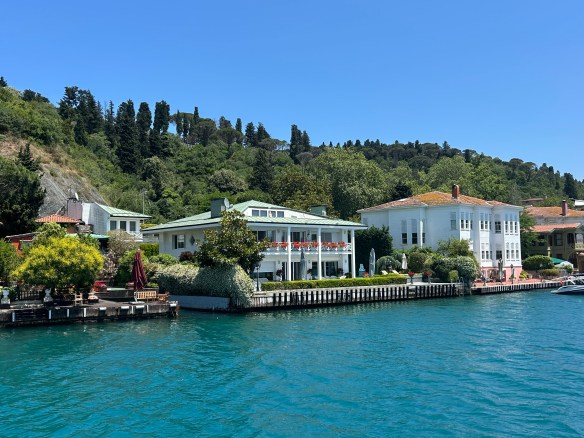
Some beautiful homes on the Asian side

June 20 – ISTANBUL, TURKEY

While Turkey is officially a secular state, 99% of the population is Muslim, and the call to prayer echoes across Istanbul five times a day. I heard it at 4:30 this morning and couldn’t get back to sleep, but seize the day, right?

Our main goal for today was to see Topkapi Palace. This was the home of the Ottoman sultans for 400 years. The main attraction is the harem, where the female members of the sultan’s family (his mother, wives, concubines, and children) lived with their servants/guards (eunuchs). Fun fact: Since Islam does not allow the enslavement of Muslim women, most of the concubines were Jews or Christians, given to the sultans as gifts.

We also saw the other sights in the historic centre, like Hagia Sophia. Completed during the Byzantine era in 537 AD, it was originally a Christian cathedral. When the Ottomans took over, they converted it to a mosque. It was turned into a museum in 1935 and (controversially) turned back into a mosque in 2020. The lines were long and the entry fee was high, so we took a few pictures of the exterior and moved on.

The nearby Sultanahmet Mosque is an Ottoman-era mosque from the 17th century. It’s popularly known as the Blue Mosque because of the 20,000 blue tiles that decorate the interior (which unfortunately we didn’t get to see). 👉 Legend has it that the builder misheard the sultan’s request for “altın minareler” (gold minarets) as “altı minare” (six minarets), but only the mosque in Mecca was supposed to have that many. To make up for the error, the sultan ordered a seventh minaret to be built at the Mecca mosque.

Thankfully the public tram system is cheap and efficient—there are 20 million people in this city and I’ve seen how most of them drive. 😱

Day at sea tomorrow…

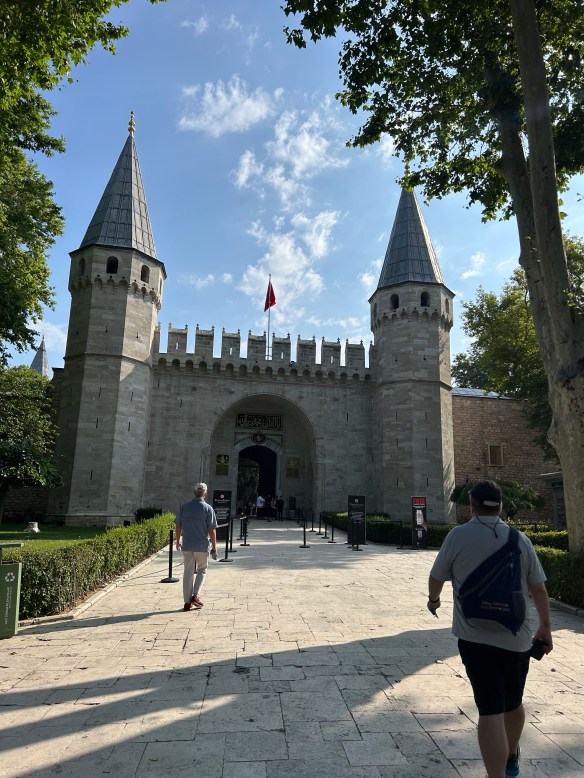
Main entrance of Topkapi Palace
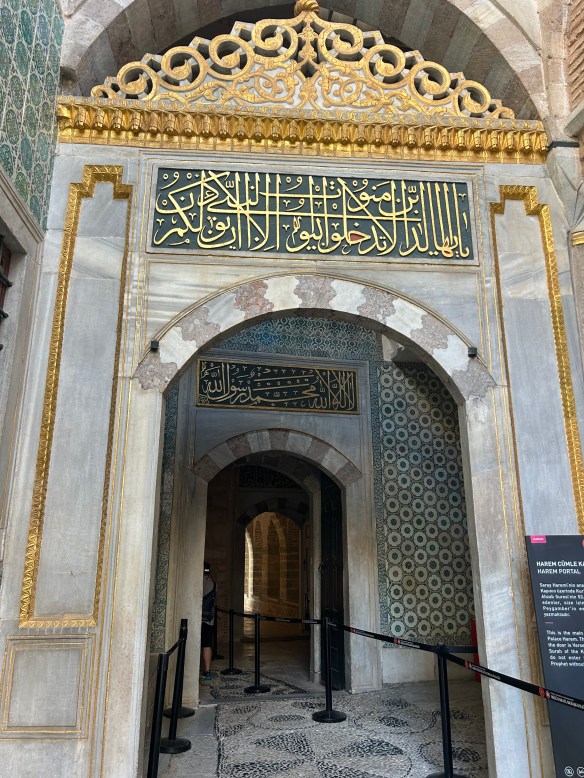
Entrance to the harem
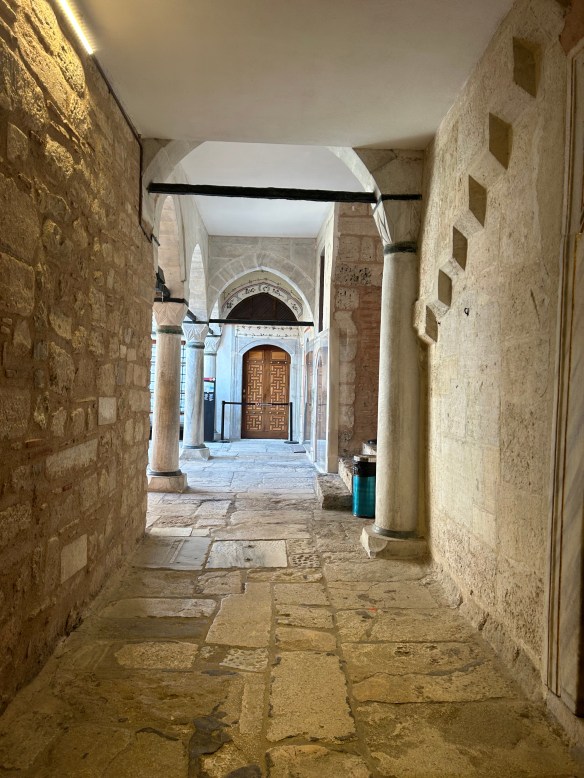
The concubine passageway
The sultan’s hammam (bath house)
The sultan’s throne in the imperial hall
The imperial hall
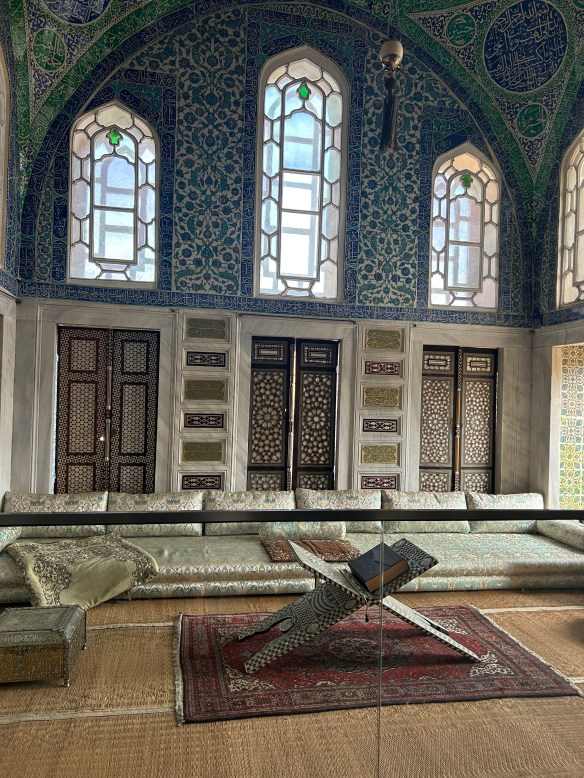
The sultan’s prayer room
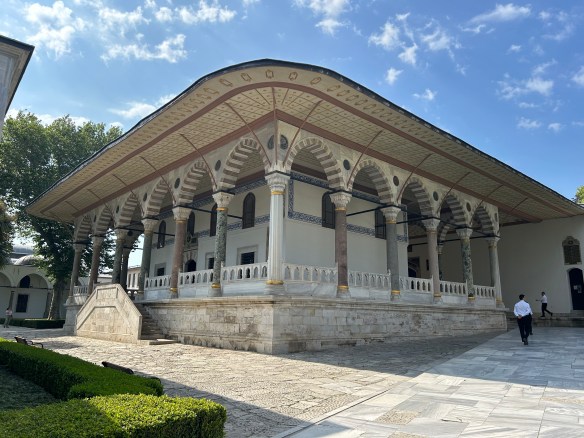
Outside of the audience chamber
Audience chamber entrance
Inside the audience chamber
By the audience chamber
The Blue Mosque with its six minarets, though you can’t see them all in this photo. Is it terrible that it makes me think of Star Wars?
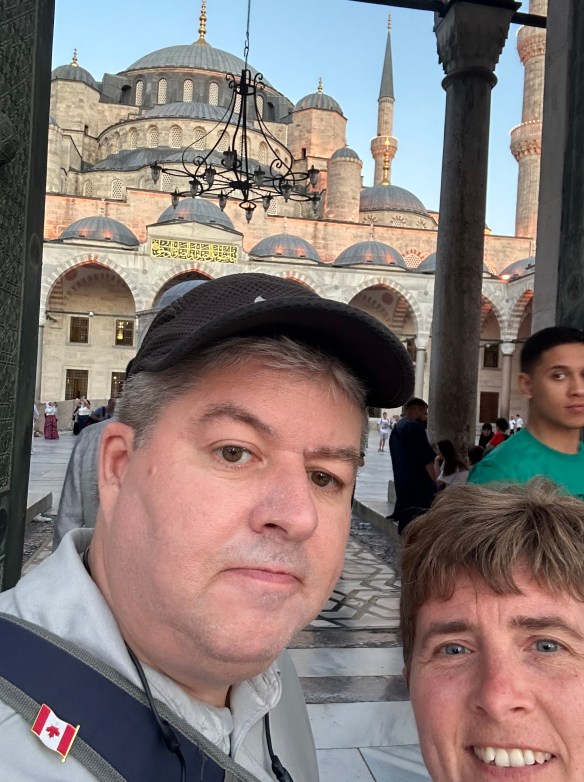
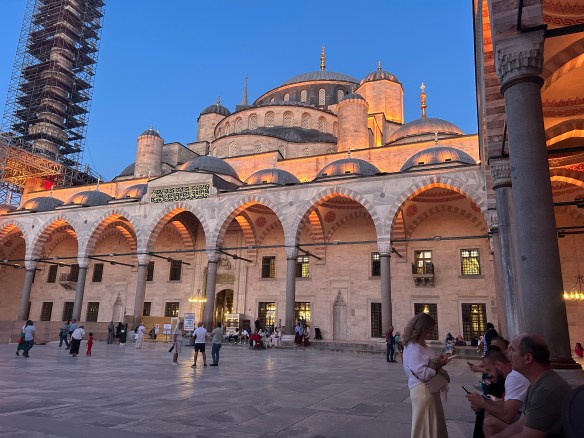
Entering the inner courtyard of the Blue Mosque
In the inner courtyard of the Blue Mosque
Inner courtyard of the Blue Mosque
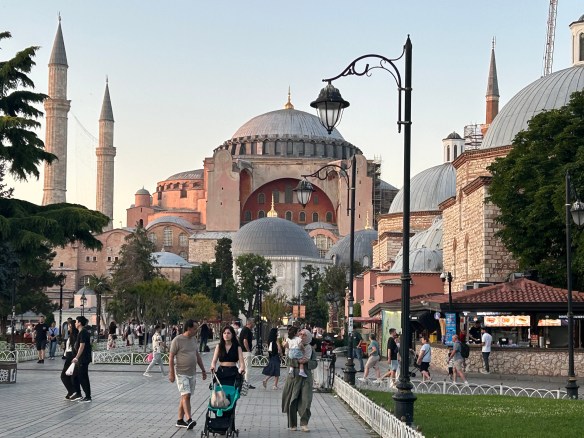
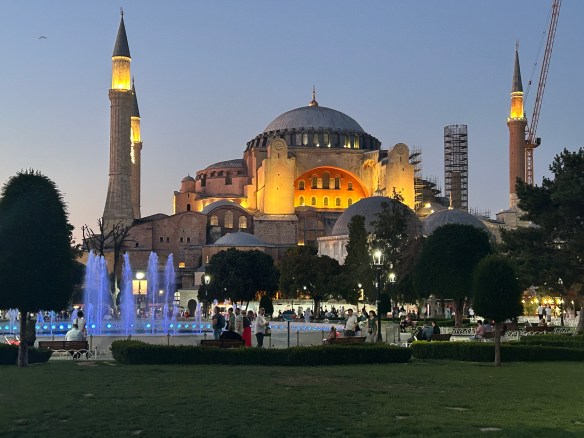
Hagia Sophia
Hagia Sophia all lit up

June 21 – AT SEA

A full day at sea gave us a chance to relax on this beautiful ship. We joined a couple trivia games, watched an interesting Q&A with the captain and chief engineer, and checked out the action on the ship’s go-kart track. Might catch a show in the theatre tonight, but we’ll see.

Tomorrow: Mykonos!
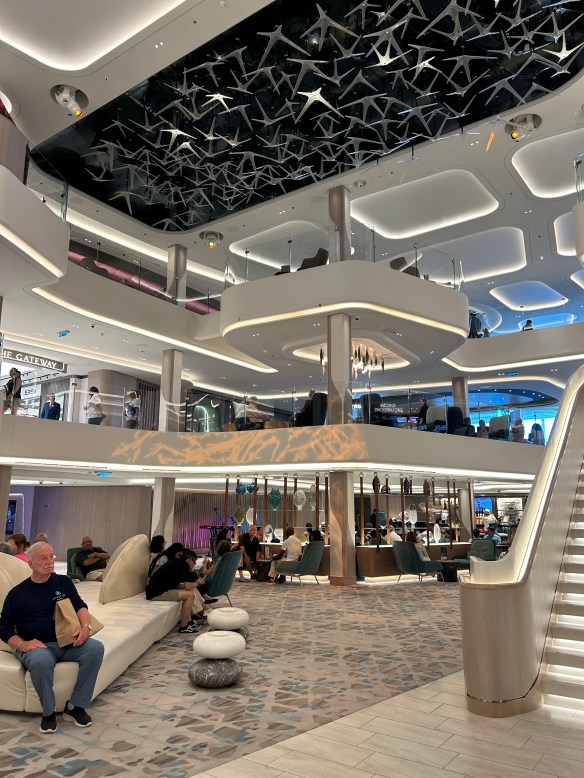
The atrium
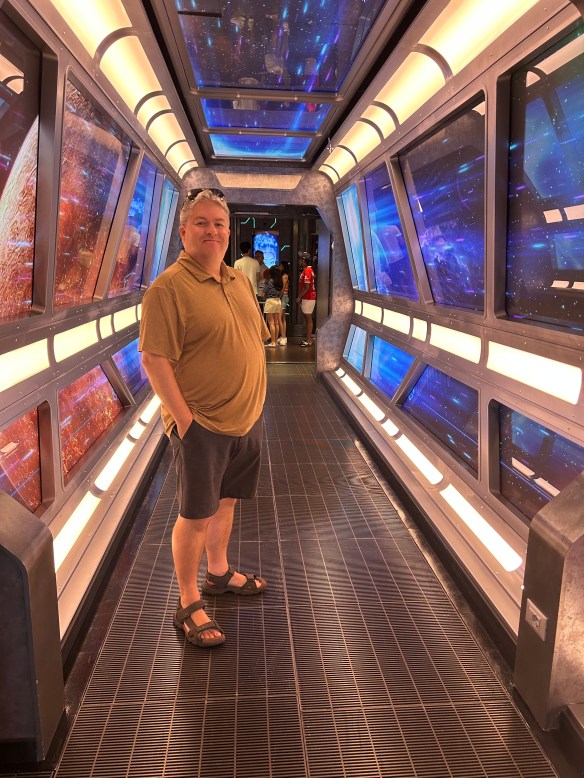
The entrance to the arcade was pretty impressive
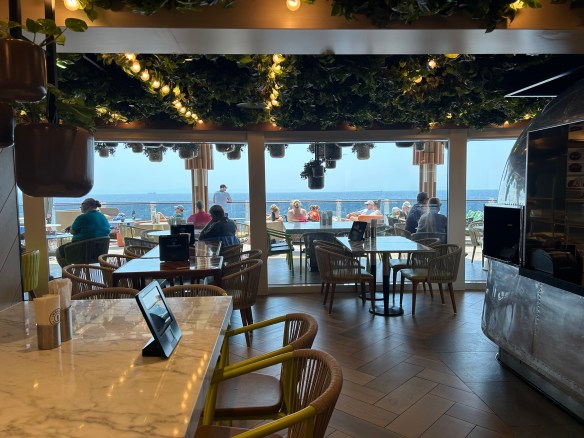
One restaurant was basically a collection of themed food trucks. You order from any of them via a tablet at your table and the food gets delivered within minutes. Very cool.
The food hall has indoor and outdoor seating. I love the decor.
Outdoors at the food hall
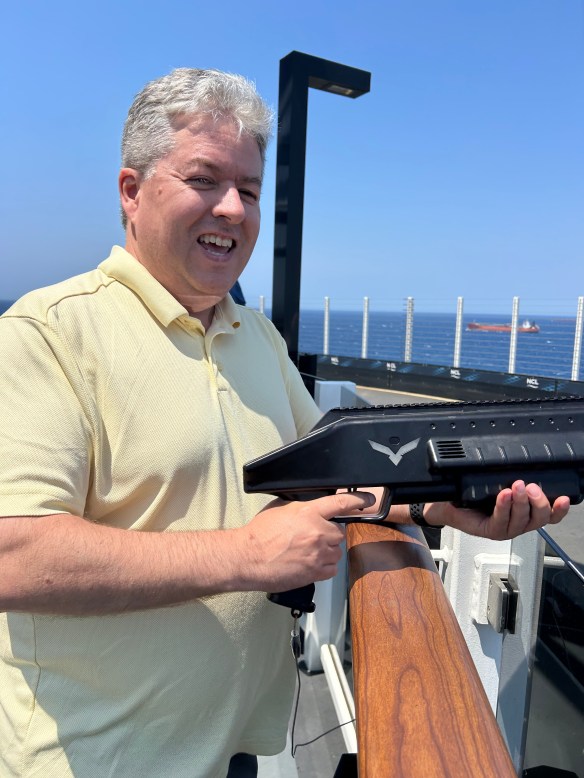
Spectators can score points by shooting at targets on the go-karts as they whizz by
Real-life Mario Kart!
Shooting at random drivers
We came in second in the trivia
The main dining room is absolutely gorgeous

June 22 – MYKONOS, GREECE

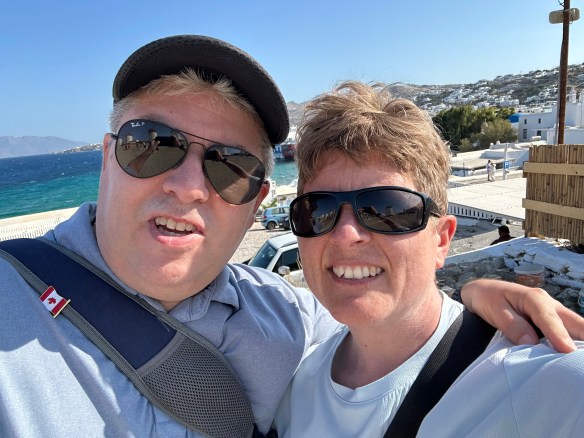
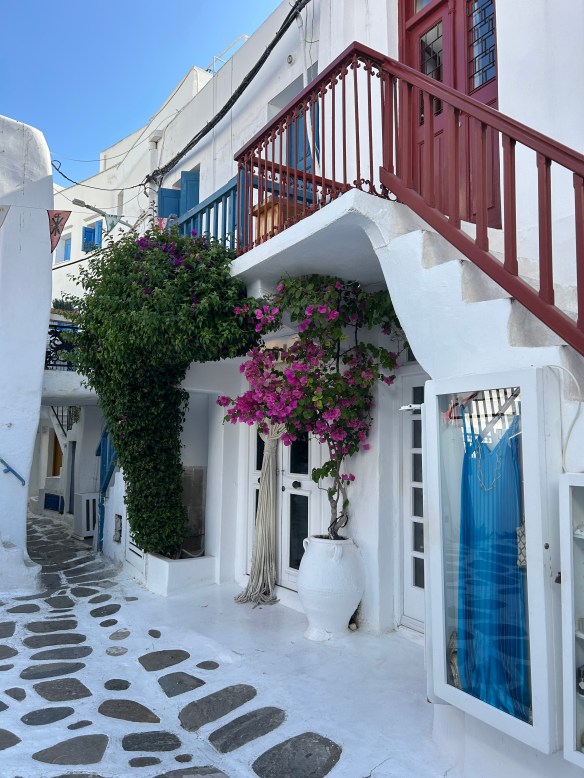
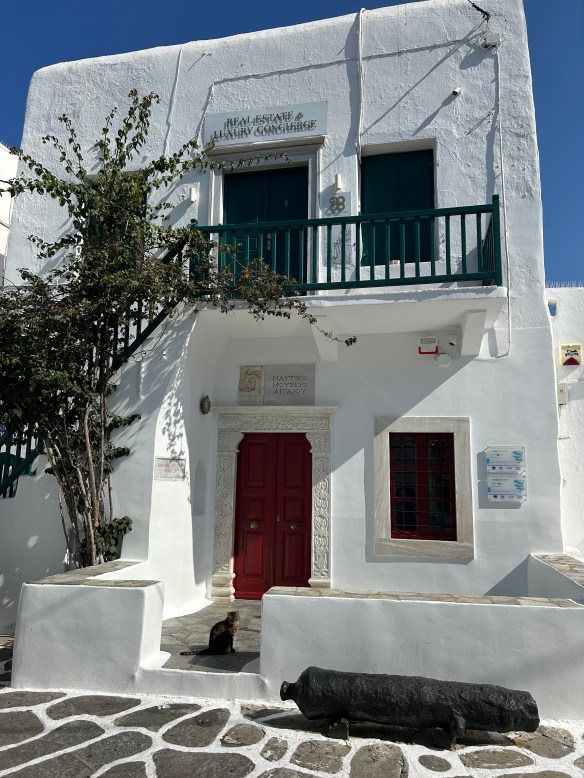
To be honest, I could have happily skipped Mykonos. The island is renowned for its beaches and nightlife, but neither of those things appeal to us. There *is* a significant archeological site nearby, but it requires a ferry ride that can be rough, and I have motion sickness issues. So we wandered through the maze of streets (purposely designed to confuse attacking pirates) and toured the tiny Aegean Maritime Museum, which was full of cool historical artifacts.

Next up: Santorini!
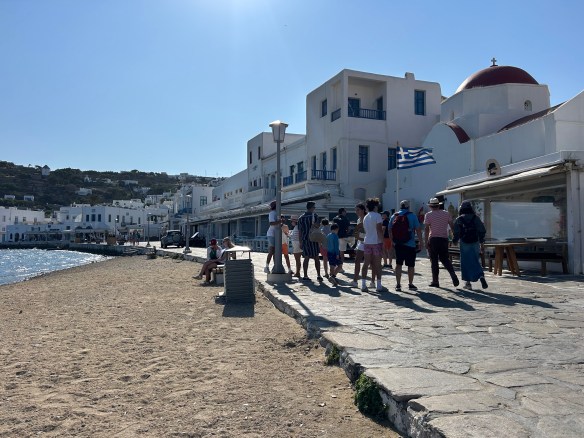
Waterfront area
Windmills
The Little Venice area, so called because of the balconies that hang over the sea
Typical Mykonos scenery
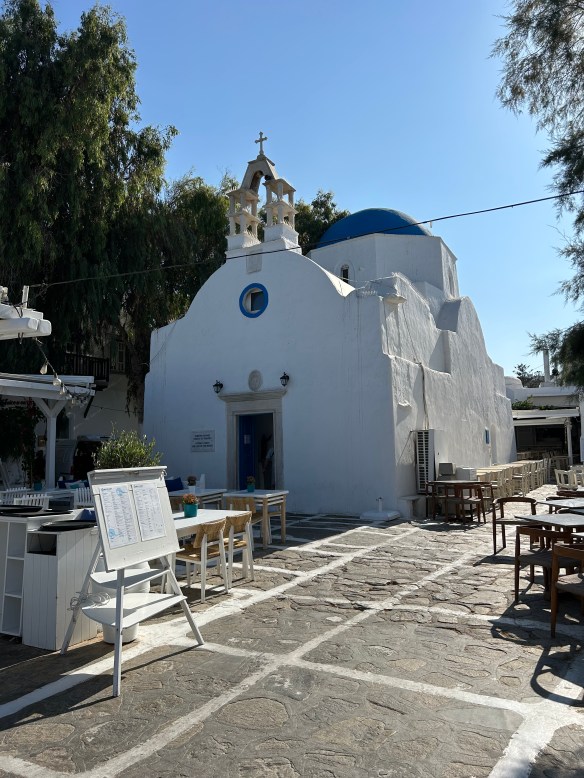
Random church
Aegean Maritime Museum
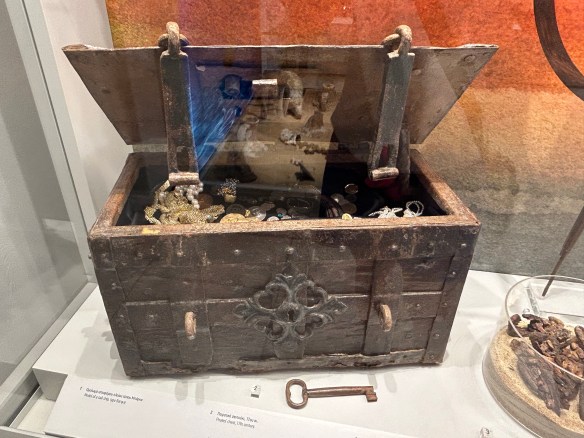
Pirate chest from the 17th century
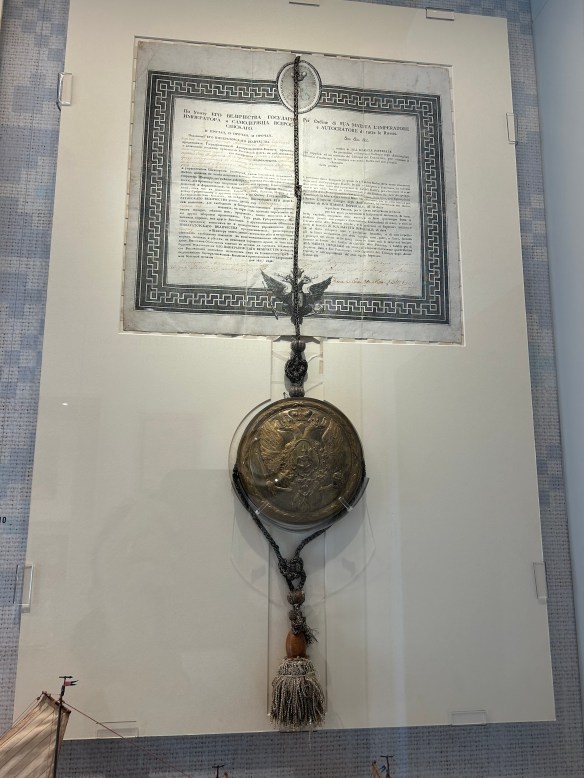
Shipping document of 1819 bearing the Imperial Seal of Czar Alexander. Such documents were issued by the Russian authorities to the Hellenic ships for uninterrupted traversing of the seas.
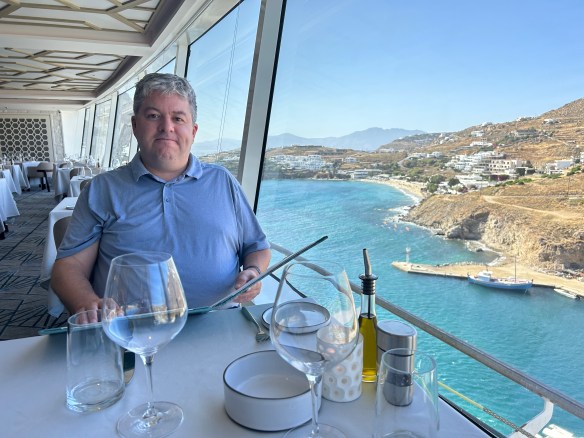
Dinner with a view!

June 23 – SANTORINI, GREECE

Santorini is actually a group of islands that were formed by intensive volcanic activity; each violent eruption caused the collapse of the volcano’s central part, creating a large crater (caldera). Cruise ships now park in the caldera; it’s so deep that they can’t actually anchor, so they have to use their engines and thrusters to stay in place. (!)

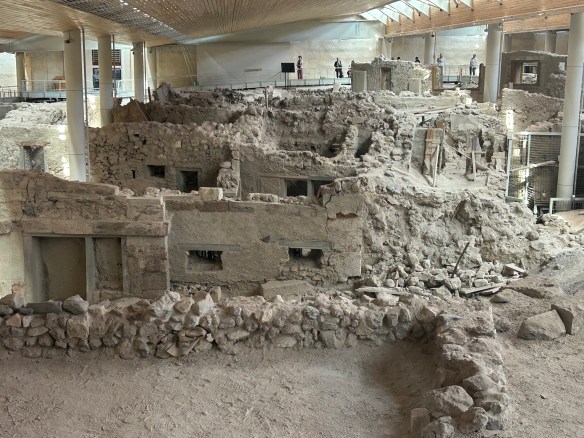
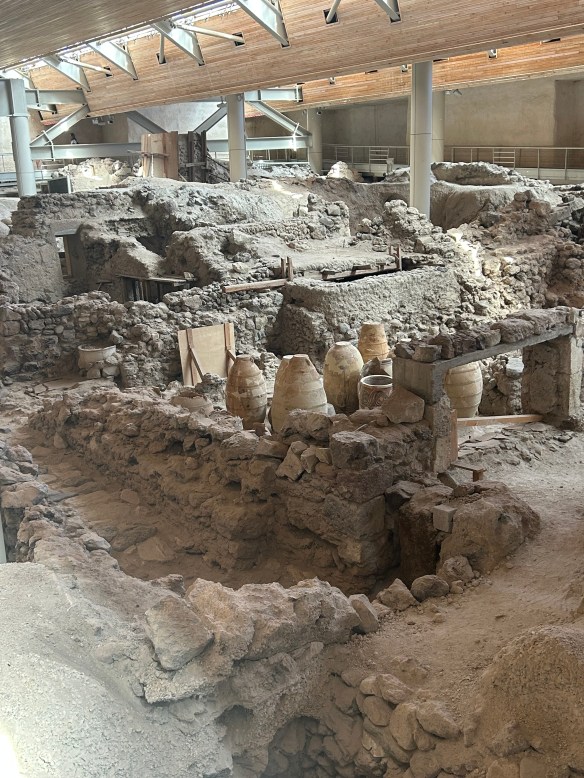
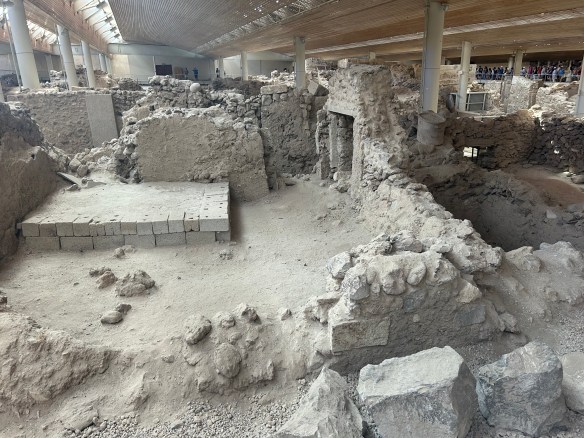
We started at the archeological site of Akrotiri, known as the Pompeii of the Aegean. Akrotiri was a Bronze Age settlement inhabited by the Minoans of Crete. It got destroyed in a catastrophic volcanic eruption around 1600 BC and was buried in volcanic ash, which preserved many objects and artworks. Unlike at Pompeii, no human remains were found, which suggests people had time to evacuate. The site was unearthed in 1967 and excavations are still going on.

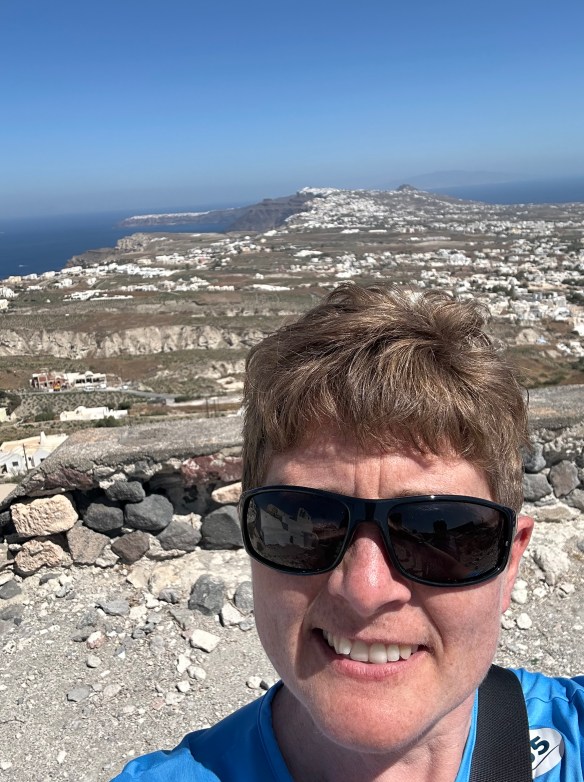
From there we went to Pyrgos, the highest village on Santorini. Its “castle” was built in 1580 and offers panoramic views of the island.

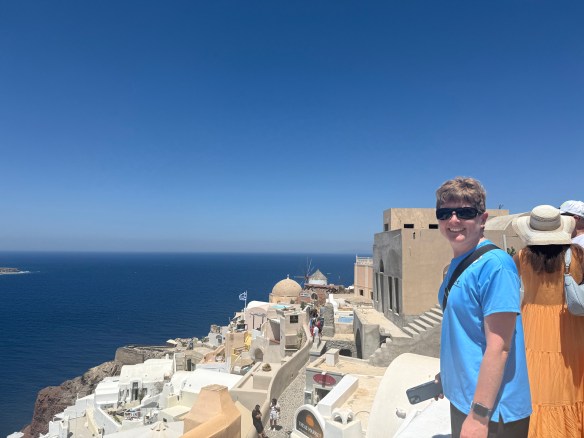
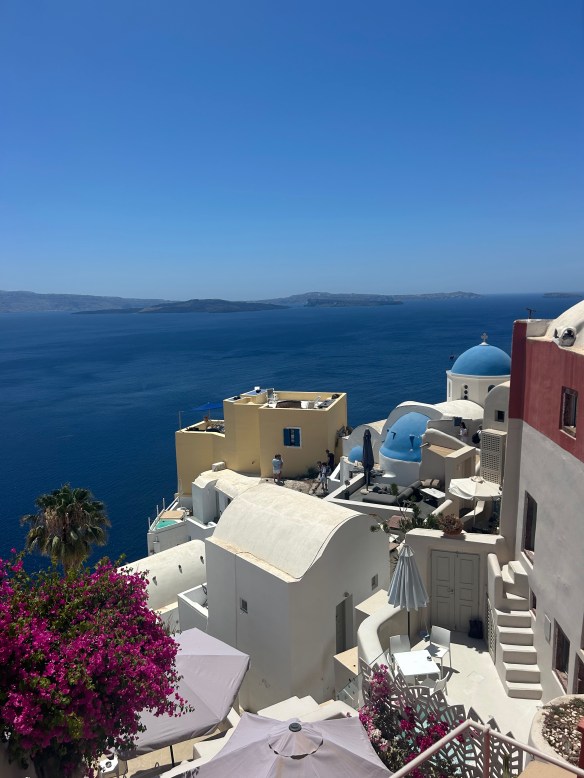
Oia (pronounced EE-ah) is where you’ll find the blue domes that adorn every postcard of Greece. *Everyone* wants a photo there, so it’s a tourist madhouse. We snapped a few pics and then ducked into a gelateria for a snack while we waited for the rest of the group.

Tomorrow: Rhodes!
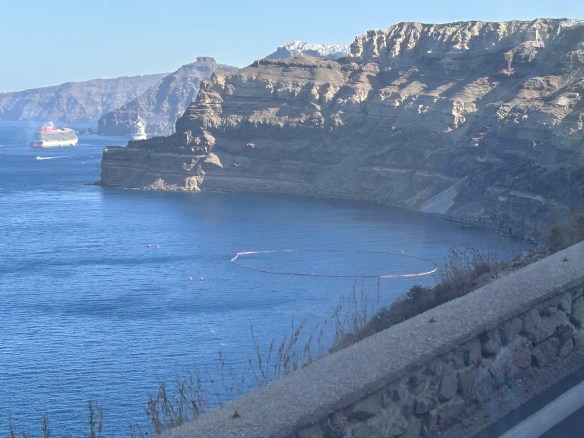
View of the caldera from the bus as we wound our way up the cliff. The circle you see on the water marks where the Sea Diamond cruise ship sank in 2007–the circle is there to contain the oil that continues to leak from the sunken ship.
Ruins at Akrotiri
Akrotiri
Akrotiri
View from Pyrgos
Looking out from Pyrgos
At Oia
View from Oia
The money shot! At Oia
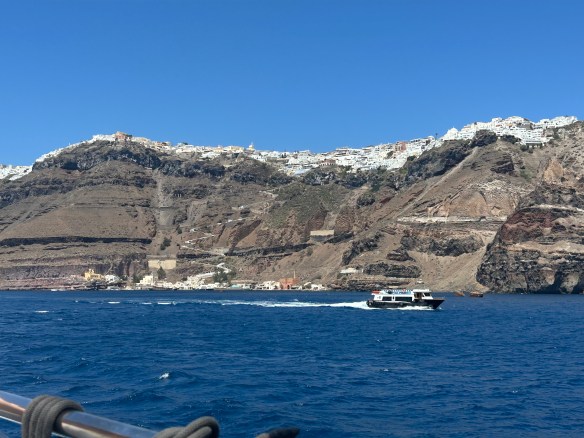
A shot of the capital Fira on top of the cliff. Tourists arriving by ship generally have to take a cable car (or a donkey) up and down. We were lucky that our tour had a dedicated tender, so we didn’t have to stand in what is usually a very long line for the cable car.
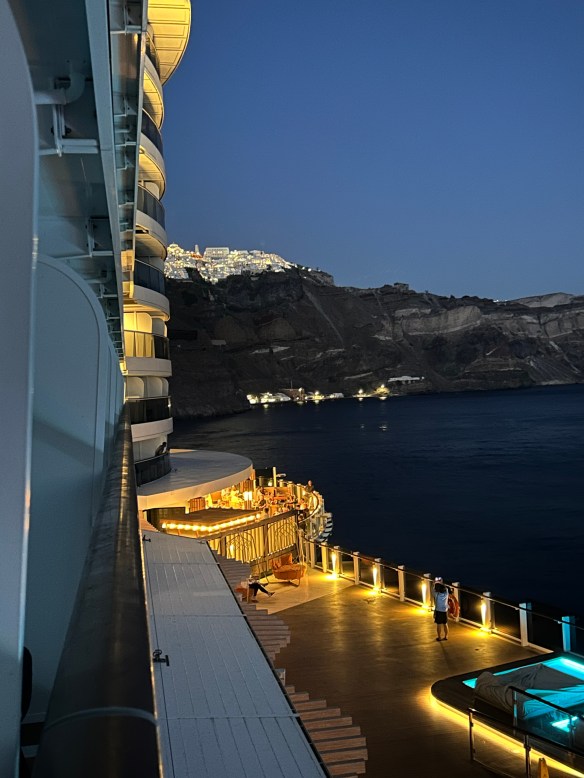
View from our balcony as we left Santorini
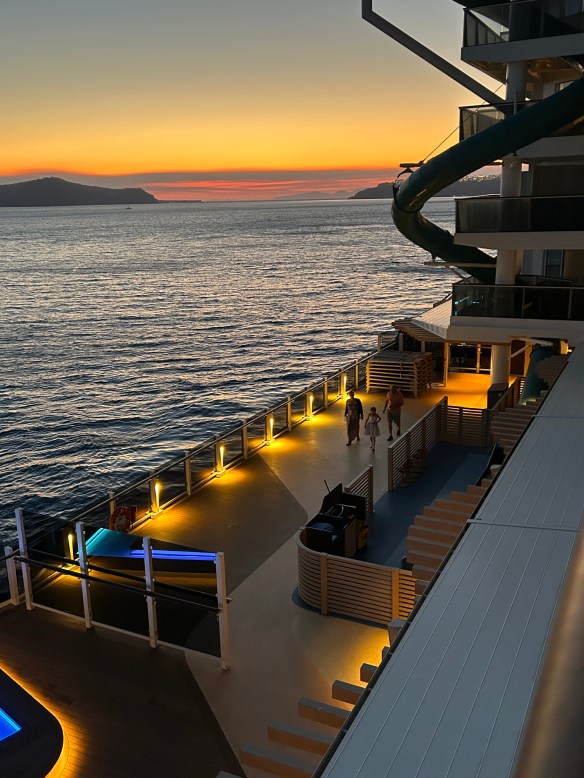
View from the other side of our balcony as we left Santorini

June 24 – RHODES, GREECE

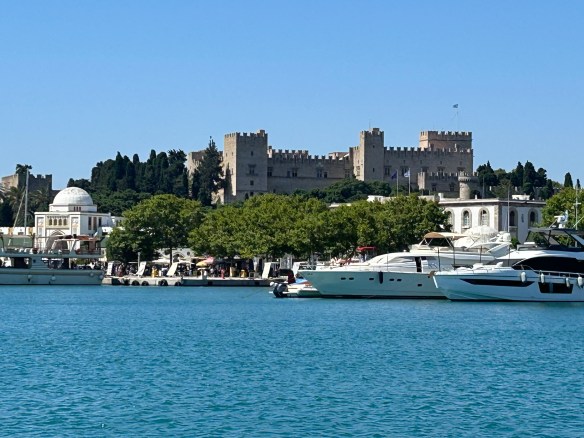
Over the centuries, Rhodes has been controlled by the Romans, Ottomans, Italians, and others. But it was the Knights of St. John who fortified the old city and gave it much of its medieval character. Also known as the Knights Hospitaller, this Catholic military order occupied Rhodes from 1309 to 1523. The old city they created is now a UNESCO World Heritage site—and our ship docked right next to it!

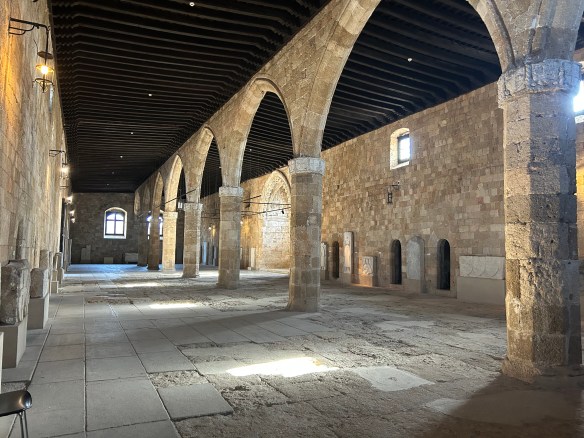
We began at the Archeological Museum, which is housed in the former hospital of the knights. It has displays of pottery, mosaics, funerary monuments, and more. It also has some pretty gardens.

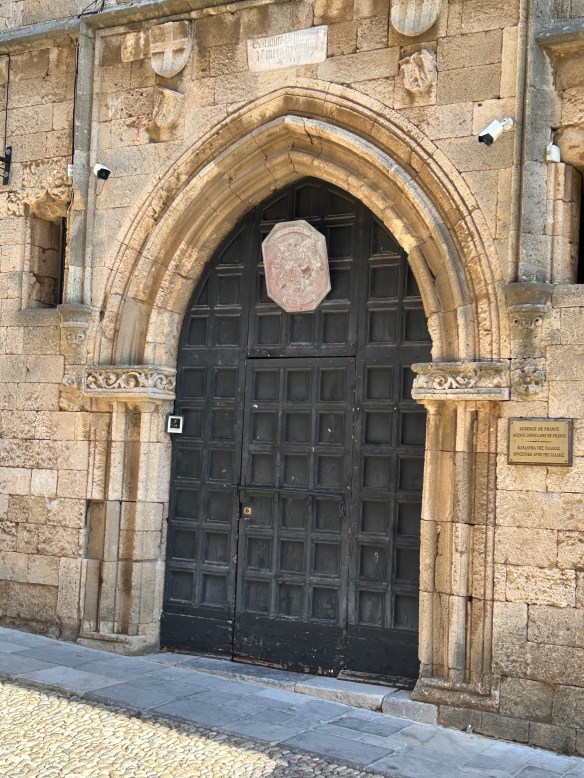
The knights were organized into seven “tongues” based on where they were from: England, Germany, Italy, France, Provence, Auvergne or Aragon. Each tongue had its own “auberge” or “inn” – a communal building that served as residence, meeting place, and dining hall. Walking along the Street of the Knights, you can still see the inscriptions on the walls that indicate which tongue of the knights lived there.

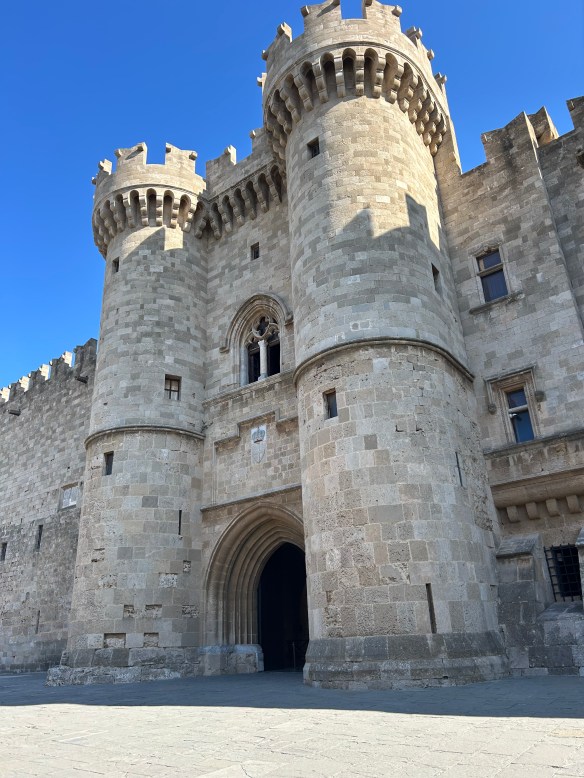
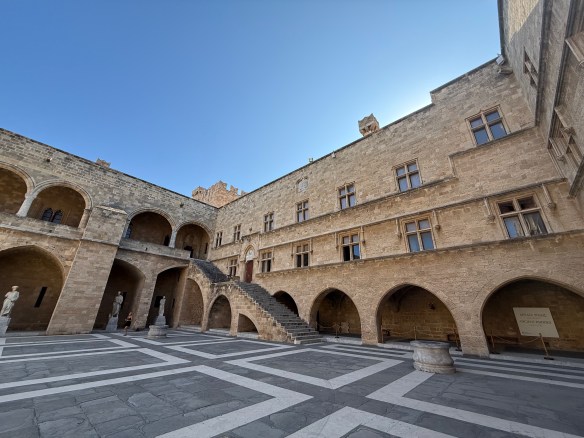
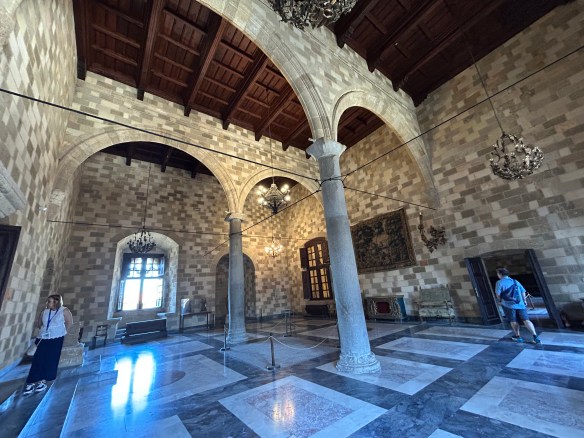
That led us to the Palace of the Grand Master. It’s super impressive on the outside, but sorely lacking on signage inside. There was lots of info on the floor mosaics, but nothing to tell us about what room we were in or how it was used. A bit of a disappointment.

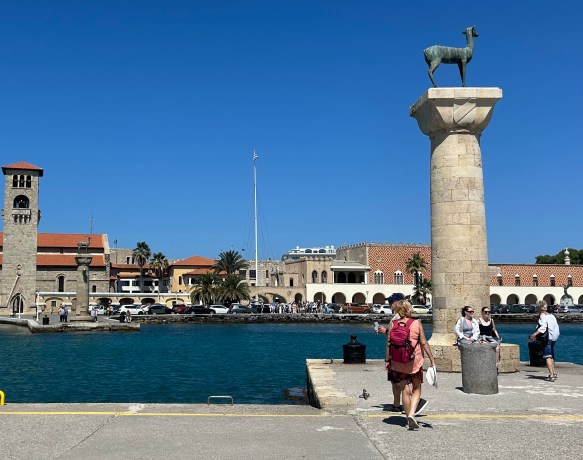
A final highlight was along the waterfront. You’ve probably heard of the Colossus of Rhodes, another one of the Seven Wonders of the Ancient World. It was a 30-metre-high bronze statue dedicated to the sun god Helios that experts believe stood at the entrance to Rhodes harbor. It was destroyed in an earthquake in 226 BC, but two statues now mark where it was believed to have been.

Overall, this definitely ranks among my favorite ports!

Tomorrow is our final stop: Crete!
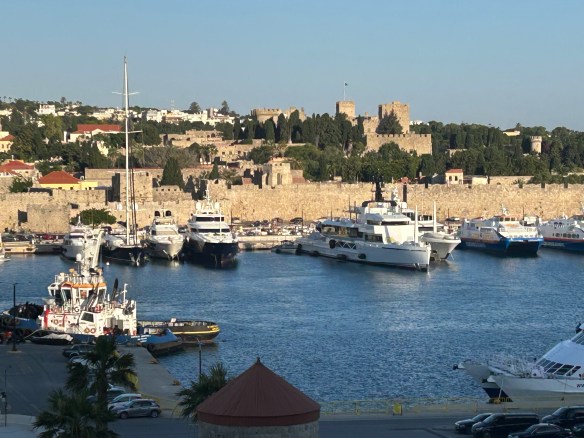
A view of the walled city from our balcony

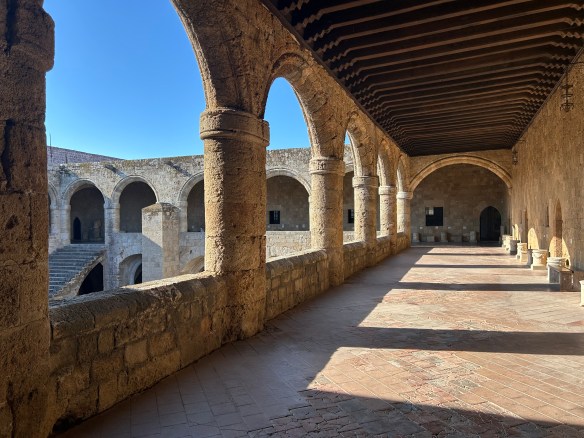
The entrance to the archeological museum, which used to be the hospital of the knights
Upper courtyard of the archeological museum
Terracotta sarcophagus from the 4th century BC
Impressive room inside the archeological museum
Tombstone of an Aragonese Knight Hospitaller from 1493
At the entrance to the museum gardens
Outer courtyard of the archeological museum
On the Street of the Knights
The inn of the French knights, now the French consulate
More Street of the Knights
Palace of the Grand Master
Inner courtyard of the palace
Inside the palace
Inside the palace
Inside the palace
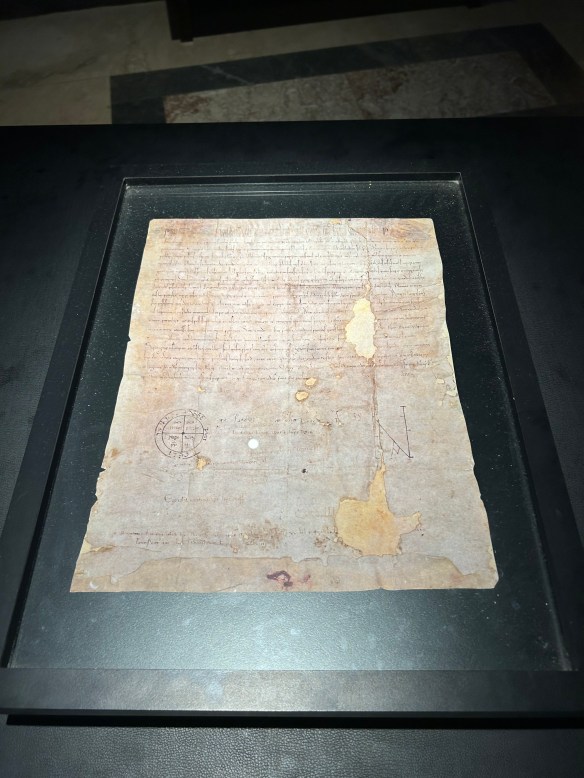
Original Papal Bull from 1113 that defined the constitution of the Order of the Hospitallers of St. John
Inside the palace
Inside the palace
Mosque of Suleiman, named for the Ottoman sultan who conquered Rhodes in 1522
The two columns with bronze statues of deer on top (look carefully on the left side of the photo to see the second one) sit on either side of the harbor entrance and are believed to mark the spot where the Colossus of Rhodes once stood
Another shot of the palace
Leaving Rhodes

June 25 – CRETE, GREECE

Our guide claimed Crete is the only place in the world that is within 200 miles of three continents: Asia (Turkey), Africa (Libya), and Europe (mainland Greece). Not sure what continent he thinks Crete is actually in, but that is a cool way to look at it.

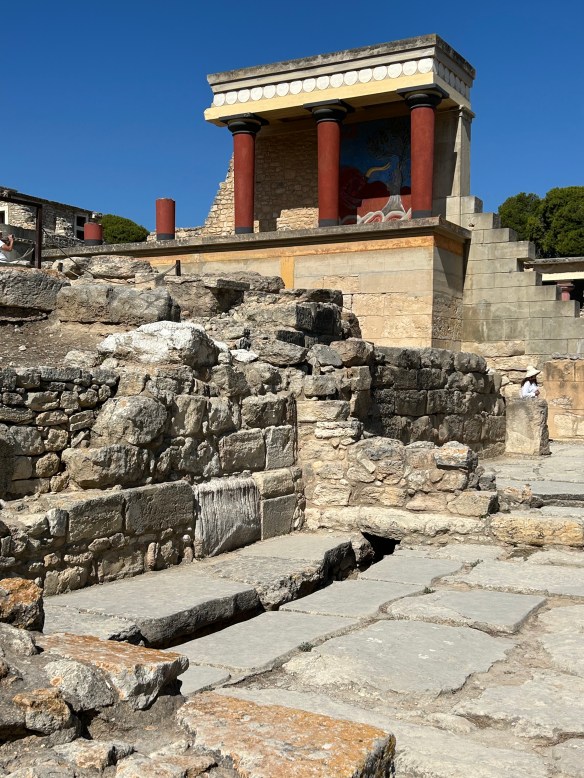
Our destination today was the Palace of Knossos, which dates from 2000 BC and was the centre of Minoan civilization and culture. It’s particularly associated with the myth of the minotaur. Like all Greek mythology, the story is long and complicated, but here it is in a nutshell:

King Minos of Crete prayed to Poseidon for a sign of his divine right to rule. The god sent a magnificent white bull from the sea. Minos was supposed to sacrifice the bull, but he kept it out of greed. As punishment, Poseidon cursed Minos’ wife, Pasiphae, to fall in love with the bull. Their union resulted in the birth of the minotaur—a creature that was half man and half bull. Enraged, Minos ordered a craftsman to build a massive maze-like structure (labyrinth) at Knossos to imprison the beast.

The cataclysmic volcanic eruption at nearby Santorini in 1600 BC (did I forget to mention that it was one of the largest eruptions in human history, with the force of 250 nuclear bombs?) hastened the decline of Minoan civilization, and Knossos was abandoned by 1350 BC.

Tomorrow we disembark in Athens and begin the long journey home. It’s been an outstanding cruise—one of the best.

And that’s a wrap!
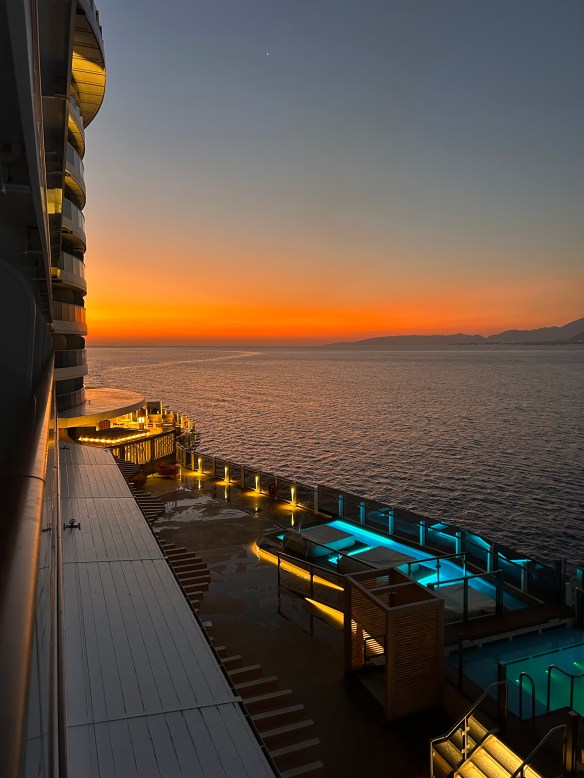
Sunrise from our balcony as we approached Crete
Large pots were used to store things like olive oil and grain
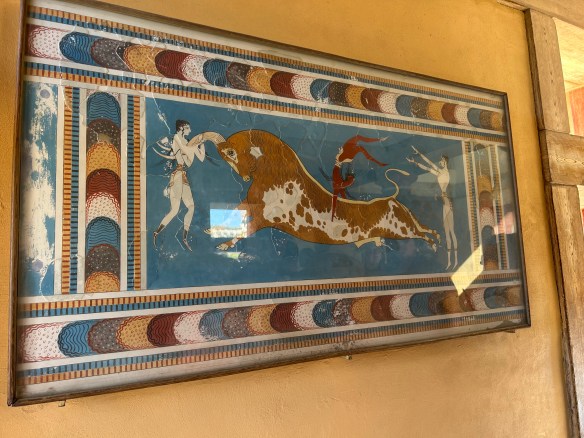
Depictions of bulls and bull-leaping featured prominently in Minoan culture
The so-called throne room was likely used for ceremonial purposes
Near the reconstructed north entrance
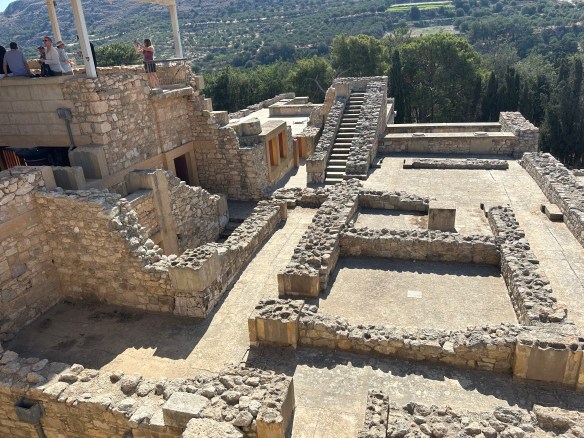
Outline of the queen’s rooms. The Minoans had an advanced system of running water and flush toilets 4,000 years ago.
The north entrance is the most photographed part of the palace
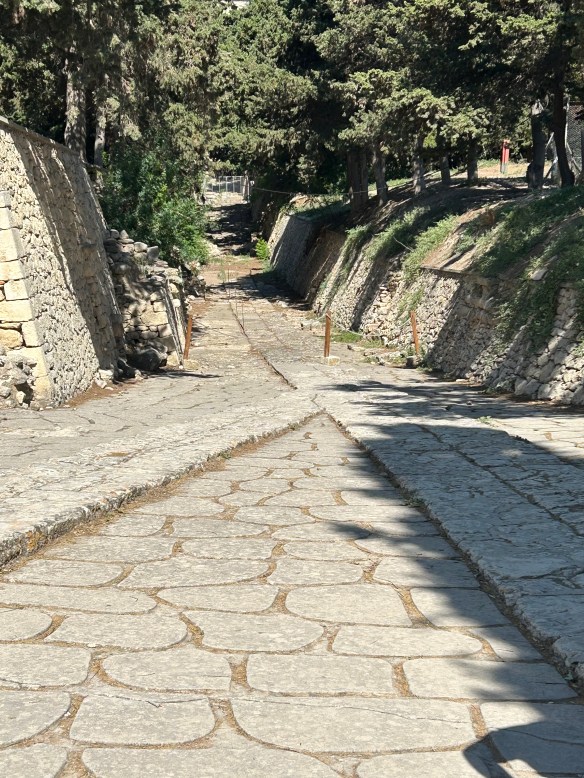
Minoan road that connected the port to the palace complex. This was the first paved road in all of Europe, built in 1900 BC.

Less History, More Chocolate

Location: Bruges, Belgium

Once we gave up listening to the history lesson and just let ourselves relax, we had a pretty good time on our tour of Bruges today. The city is full of churches, guild halls and palaces from the 13th and 14th centuries, but we’ve seen dozens of those on this trip. Chris won’t even look at churches anymore, and I stopped taking pictures of palaces a few days ago.

We were more interested in the chocolate. Our tour included a chocolate-making demonstration and a Q&A session with a master chocolatier, who explained the difference between true Belgian chocolate and the cheap imitation crap we’re all used to buying. It was actually pretty interesting, even for someone like me who doesn’t really eat the stuff.

Afterwards we had some free time, so we did a little shopping and then had some lunch on the patio of a restaurant in one of the old market squares. (This was actually a rare treat — a lot of our tours are so busy that we don’t get a chance to eat until we get back to the ship.) We just sat there enjoying the sunny weather and watching the horse-drawn carriages ferrying tourists around. Very peaceful.

Tonight we sail for Dover, and tomorrow we fly home from Heathrow. I can’t believe it’s been over two weeks since we’ve seen the kids — we’re looking forward to some big welcome-home hugs.

Now to relax…

Going Dutch

Location: Amsterdam, Netherlands

Maybe it’s vacation fatigue, or maybe it’s because I’ve been to Amsterdam before, but I really had to make an effort to be interested in what we saw today. On our canal boat tour, we heard about the 16th- and 17th-century buildings we were going by, and I couldn’t even bring myself to straighten up to snap a picture. I was just too tired, and the seats were just too comfy, and all I wanted to do was relax and let the world go by.

Of course, I might have more energy if I could get a good night’s sleep. It turns out Chris has a throat infection (he saw the ship’s doctor this morning), which explains the God-awful snoring that’s been driving me crazy this week. He’s on antibiotics now, so things should get better soon. Let’s hope.

The ship is having a special pow-wow tonight for all the Canadian passengers (happy Canada Day!), so we’ll probably check that out, and then we have reservations at the fancy steakhouse on board, and then there’s a Broadway-type show in the lounge that I’d like to see if I can stay awake that long. Wish me luck.

And now on to our last stop: Belgium…

From Sea to Sea

Location: Kiel Canal, Germany

Scenic drives usually leave me cold, but even I can appreciate the beauty around us today. The ship is going through the Kiel Canal, an artificial waterway in north central Germany that connects the North Sea with the Baltic Sea. Without it, we’d have to go up around northern Denmark, in an area known for rough seas. (And actually, most cruise lines do have to go around, as their ships are too big to fit through the canal — ha!)

The canal was built between 1887 and 1895 so the German navy could link its bases in the Baltic and North Sea without sailing around Denmark. It was internationalized in 1919, although Germany still administered it. Hitler closed it to other nations in 1936, but free navigation was reinstated after World War II, and today the canal is a major passage for shipping in the Baltic region.

I knew most of that before we got here. What I didn’t realize was how beautiful the trip would be. We’re surrounded by gorgeous countryside, quaint little towns, and plenty of wildlife in and around the water: swans, ducks, deer, cows…wow. I was up uber early this morning, so I hit the gym (which offers amazing views) and then went out on deck to get pictures. Nice.

Next up: Amsterdam…

Hitting Our Limit

Location: Warnemunde, Germany

It seems even I can suffer from castle fatigue. The brochure made today’s tour sound so good: a scenic lake cruise followed by a tour of one of Germany’s most picturesque castles and some free time in the city of Schwerin. But it rained during the cruise, the guide ran late so there was no free time, and we’ve already seen so many famous castles that it was hard to care about this relatively unknown one.

Nevertheless, we tried to look interested. Originally built in 1160 but modified many times in the centuries since, Schwerin Castle was once the residence of the grand dukes of Mecklenburg. Today most of the castle is occupied by the state parliament, but 20 rooms in the old ducal residence are open to the public. We walked through most of them in a daze, but I did perk up for the Throne Hall, which was pretty cool. But we’re just so done with castles. Thankfully that was the last one.

Tomorrow is a day at sea, although technically we’re transiting the Kiel Canal, which has Chris all excited. Maybe we’ll finally get a chance to try the pool.

Stay tuned…

Our Day in Denmark

Location: Copenhagen, Denmark

I’ve long been fascinated by Denmark: home of the Vikings, Lego, Hans Christian Andersen and the world’s oldest monarchy. None of the ship’s tours covered everything I wanted to see, so we opted to wander around on our own. The up side is that we got to see everything. The down side is that we had to walk for miles and miles and miles to do it (oh, my feet…)

After snapping the obligatory photo of the Little Mermaid statue, we made our way to Amalienborg Palace, the winter home of the Danish royal family, where we just happened to catch the changing of the guard (nice timing!) On the ground floor of the palace is a museum depicting the living quarters of former Danish kings, complete with family pictures and memorabilia. It also had a special exhibit of royal gowns and uniforms, which was pretty cool.

We also saw the royal theatre, the Danish parliament, the colorful Nyhavn harborfront, and Tivoli Gardens (the amusement park built in 1843 that inspired Walt Disney to create Disneyland).

The real highlight of the day came just after lunch: Rosenborg Castle. What began as a country residence for Christian IV in the early 1600s is now a museum that houses a wealth of royal treasures, including the Danish crown jewels. It’s the first royal treasury I’ve ever been to that allows you to take photos — awesome.

Tomorrow: Germany…

Poland: Plenty to See

Location: Gdansk, Poland

I could get used to these private tours. It’s just amazing to zip around in our own private Mercedes with a guy (a hot young Polish guy, in this case) who knows everything about everything and who can take us right to the front of the line.

I booked a private deal for this port because none of the ship’s tours went where I wanted to go: Malbork Castle. The world’s largest brick castle, Malbork was built by the Teutonic Knights in the 14th century as the headquarters of their grand master. We saw the kitchen, dining hall, living quarters (Copernicus lived here for a while) and chapel, along with a couple of interesting exhibits on amber (a huge industry in this area) and medieval armor. Pretty cool.

That’s all we’d paid to see, but since it was still early, our guide offered to give us a city tour of Gdansk at a discounted rate. Founded in 997 AD, Gdansk celebrated its 1,000th birthday just a few years ago. About 90 percent of the city was reduced to rubble in World War II, but the historic center has been carefully restored, and it’s magnificent. We thought it was much more impressive than Tallinn. I can’t believe we almost didn’t see it.

We also drove by the famous shipyard with the monument to the workers who were killed by security forces during a 1970 strike. The Solidarity movement began here, and in 1989, Poland became the first country to peacefully overthrow the communist regime. We’ve heard many stories of what life was like in Soviet times — to have a peaceful revolution after all that is nothing short of a miracle.

And now we’re off to Copenhagen…

Killing Time

Location: Somewhere in the Baltic Sea

Since we’re stuck on the ship all day (argh), I thought I’d do a post of some memorable moments from this cruise that haven’t been mentioned yet:

– In the dining room one night, the sommelier asked if she could bring us some wine or any other drinks — and Chris asked for a ginger ale. I wonder how many years of training she had to go through to pop open a can for him.

– Our Russian guide had a minor heart attack when Chris casually leaned on a priceless statue in the Hermitage. I actually heard her struggling to get air. Wow.

– Driving through the streets of St. Petersburg, I saw a billboard advertising an upcoming Nickelback concert. Go figure.

– A woman on the ship asked if we were newlyweds (nope…married 10 years), then blurted out that I looked like a kid. I was tempted to tell her she looked like an old hag, but I didn’t. (Chris had a similar experience: some guy assumed he was one of the performers from the lounge. Not that we stand out on this ship.)

And what have we done today? We had breakfast at the buffet, played Scrabble in the games room, went our separate ways for a while (I hit the treadmill, he had a massage), had lunch on the pool deck (wearing a fleece…it’s mighty chilly out there), watched a movie in the room…ho hum. Tonight we have reservations at the swanky Italian restaurant on board, and that will probably be our whole evening.

Next up: Poland…

Latvia: The Switzerland of the Baltic

Location: Riga, Latvia

Actually, only a small part of Latvia is considered to be like Switzerland, and even that is a stretch: the highest point of land here is only 80 metres above sea level. But that’s impressive for a region that’s almost entirely flat, and Latvians are pretty proud of their little patch of paradise.

And it IS something to be proud of. The area around the twin villages of Turaida and Sigulda, about an hour outside of Riga, is a beautiful river valley nestled among acres of pine forests. Rising just above the trees is the watch tower of Turaida Castle, built in 1214. A fire in the 18th century destroyed part of the castle, and what was burned was never rebuilt, so you can still see the ruins. We got some amazing views from the top of the tower.

Our next stop was the Gutmana Cave, a natural sandstone cave fed by a freshwater spring. Legend has it that washing in the water makes you prettier; drinking it makes you younger. So naturally the women all lined up to take a sip. Chris didn’t bother washing or drinking; I guess he figured he was pretty enough. Huh.

We’re supposed to be sailing for Visby, Sweden, right now, but the captain announced that high winds and choppy seas mean we have to cancel that port (nuts). We’ll stay here overnight instead and then have a day at sea tomorrow before arriving in Poland.

What to do tomorrow…

Old Town, Modern Country

Location: Tallinn, Estonia

Nobody I know has Estonia on their list of must-see destinations. Until this trip came along, all I knew was that it was a former Soviet republic, and that didn’t sound like a great place for a holiday. But a little research told me that Tallinn has one of the best preserved medieval centres in Europe. True, the climate sucks (it was 12 degrees today with rain and a cold wind, and this is the end of June), but if you want to jump back in time, this is one of the best places to go.

Walking through the winding cobblestone streets of old Tallinn is like stepping into the Middle Ages. Settled by the Danes in 1219 but occupied by Germans, Swedes and Russians in the centuries since, the city is a mish-mash of architectural styles. The town hall is from the 14th century, when German merchants dominated city life; the Alexander Nevsky Cathedral is from 1900, when the country belonged to imperial Russia.

Remarkably, Estonia is also one of the most technologically advanced countries in Europe. Citizens carry ID cards with chip technology, and they use computers for everything from voting in national elections to ordering pharmacy prescriptions. Their engineers are world leaders in the field of artificial intelligence. Huh.

I wonder if Latvia will have the same kinds of surprises tomorrow…